 7132 178 St NW,
 Call us:


 Call us780-809-1056
- Mail usinfo@inspecus.ca
- Schedule An Inspection
Call us780-809-1056

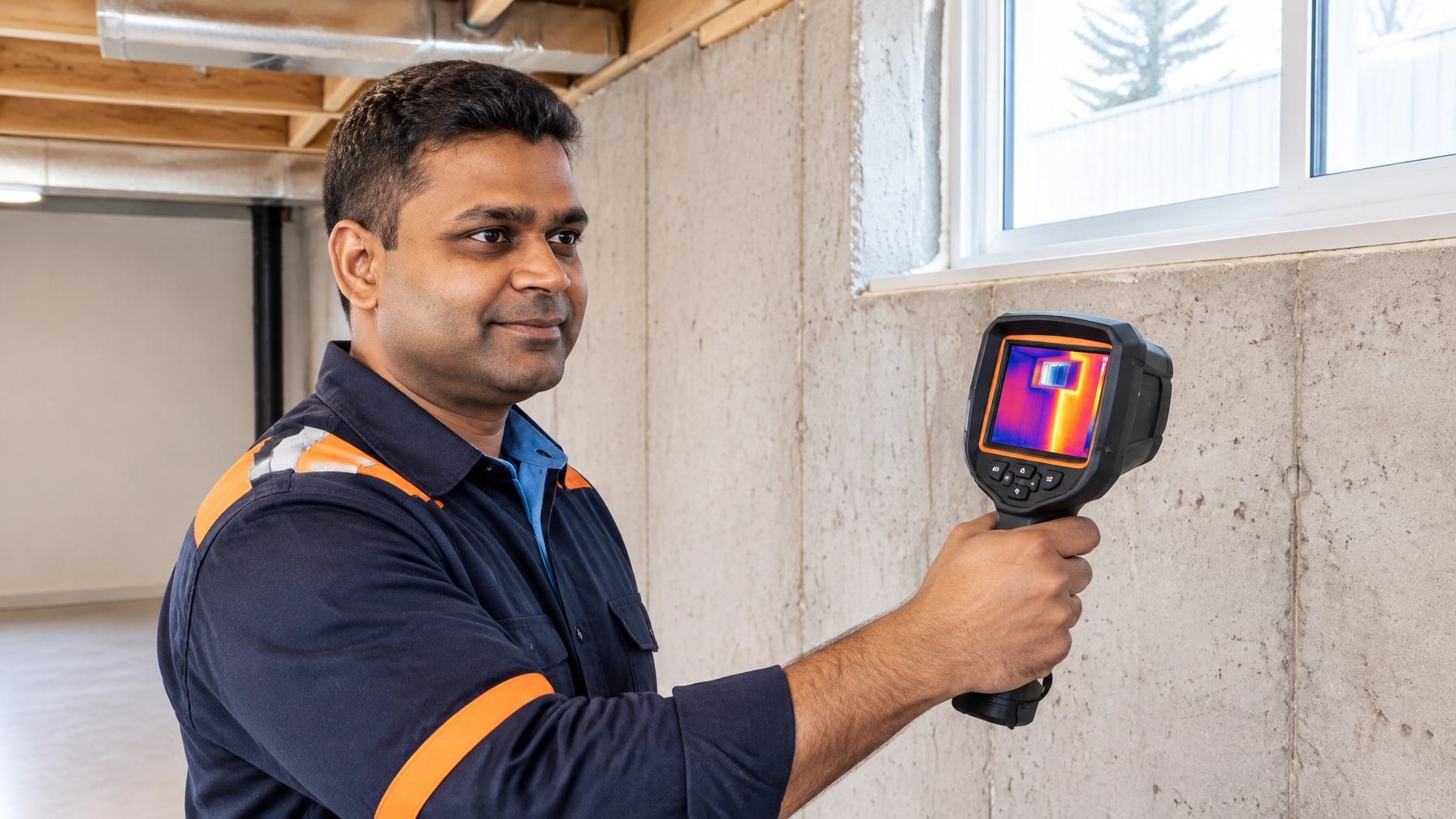
Direct answer: A standard home inspection in Edmonton is a non-invasive, visual review of accessible components. It does not test for radon, mould, asbestos, pests, sewer defects, code compliance, or concealed problems. Targeted add-on inspections may be appropriate depending on the home’s age, condition, location, and history.
Buying a home is a significant investment, so it is sensible to ask not only what a home inspection checks, but also what it does not cover.
I’m Banti K Shaw. With more than 10 years of construction and property inspection experience, I help Edmonton buyers understand the difference between a thorough visual inspection and a technically exhaustive investigation. I am also InterNACHI-certified, and my goal is not to create unnecessary worry. It is to give you enough information to make a responsible decision before your purchase becomes final.
A standard inspection is valuable because it reviews major visible systems, including the roof, foundation, exterior, plumbing, electrical, heating, ventilation, interior, attic, and accessible structure. However, the inspection has defined limits.
The Government of Alberta’s home inspection guidance recommends confirming that both the home inspection business and inspector are licensed, reviewing the written contract, and ensuring the inspection scope is clearly stated. You can also review Alberta’s home inspector licence requirements when licensing is part of your due diligence. Alberta defines a home inspection as an opinion based primarily on a non-invasive examination of readily accessible features.
Here are nine gaps buyers commonly miss.
What happens when the most important problem is behind a wall, beneath flooring, underground, or blocked by stored belongings?
A standard inspection is visual and non-invasive. An inspector does not normally open walls, remove finished flooring, dismantle equipment, excavate the property, or move heavy personal belongings. The InterNACHI Standards of Practice also state that an inspection is not technically exhaustive and will not identify every concealed or latent defect.
Pro tip: Ask your inspector to identify every area that was inaccessible, including blocked attic spaces, locked rooms, stored items, snow-covered components, and restricted crawl spaces.
Could a home look clean while still having a moisture or air-quality concern? Yes.
An inspector may observe visible mould-like growth, water staining, or conditions that support mould growth. However, visual inspection alone cannot confirm the type, concentration, or cause of mould. Standard inspections also do not measure indoor air quality.
A mould inspection should investigate the moisture source, not simply identify surface growth. Without addressing the cause, cleaning may only provide a temporary result.
Does a visual inspection detect radon gas? No. Radon is colourless and odourless, and it cannot be confirmed by looking at foundation cracks or using a regular moisture meter.
Long-term testing generally provides more representative information than a quick screening test. Testing is especially worth considering when the lowest lived-in level includes a bedroom, office, or family room.
My advice: “I never want a buyer to assume that a clean, well-maintained basement automatically means low radon. Radon is a measurement issue, not a visual issue. Testing replaces guesswork with useful information.”
Are older finishes automatically safe because they appear intact? No.
Asbestos may be present in insulation, flooring, ceiling textures, pipe insulation, siding, or other materials. It generally cannot be confirmed reliably by visual inspection. Lead paint and other environmental hazards also fall outside the normal scope.
Do not sand, cut, drill, or remove suspicious materials before determining whether testing is appropriate.
Could every sink and toilet drain normally while the buried sewer line still has a serious defect? Yes.
A standard inspection can review visible plumbing and operate accessible fixtures, but it generally does not inspect the entire underground sewer lateral between the home and municipal connection.
A sewer scope deserves extra consideration for older homes, properties with mature trees, and houses where the seller cannot provide recent documentation.

Will a general inspector perform a formal pest inspection? Usually not.
An inspector may note visible evidence of rodents, insects, nesting, or damaged wood. However, pest identification and treatment recommendations are normally handled by a qualified pest professional.
Treat visible pest evidence as a reason for further investigation rather than assuming it is minor.
Does a home inspection certify that every renovation was permitted and that the property meets today’s building code? No.
A home inspection reports observed conditions. It does not normally verify every permit, certify code compliance, determine market value, guarantee insurability, or predict the exact life expectancy of each component.
A good inspector should point out conditions that deserve specialist review without pretending to provide an engineering or legal conclusion.
Is a fireplace safe simply because it lights and produces heat? Not necessarily.
A standard inspection may review readily visible portions of a fireplace and chimney, but it does not usually include an internal flue examination, smoke test, chimney sweep assessment, or detailed WETT inspection.
This is especially important if the fireplace or stove is a major heating source or part of your purchase decision.
What about the items that make a property unique?
A general home inspection does not necessarily evaluate every appliance, alarm, security system, low-voltage cable, irrigation system, pool, spa, well, septic system, detached outbuilding, or condominium common element.
No. A home inspection is not generally required by Alberta law for an ordinary residential purchase. However, it may be required by your purchase contract, lender, insurer, or personal risk tolerance.
The more important question is whether you understand the property before your conditions expire.
Yes. Even an experienced, careful inspector can miss a problem that is concealed, inaccessible, inactive on the inspection day, or outside the inspection scope. That limitation is not a sign that an inspection has no value. It is why you should:
“My job is to give you an honest, evidence-based picture of the property on the inspection date. I will not promise that a visual inspection can reveal everything, but I will explain what I observed, what I could not access, and what deserves your next decision.”
A standard inspection is the foundation of your due diligence. Add-on testing should be selected based on the property, not automatically sold as a package.
Consider the following:
InspecUs provides comprehensive home inspection services in Edmonton, including pre-purchase inspections, thermal imaging, moisture detection, sewer scopes, and specialized property assessments. If you are preparing to buy, you can contact InspecUs to discuss the property and determine which inspection scope makes sense for you.
Meta description: Learn what a standard home inspection does not cover in Edmonton, including radon, mould, sewer lines, asbestos, pests and hidden defects before you buy.
We are licensed by the Licensed Professional and certified through InterNACHI

InspecUs Home Inspection is certified in the best practices established by Internachi. Our commitment to safety includes maintaining a 6-foot distance and using personal protective equipment (PPE) during all inspections.

© 2024 InspecUs - All Rights Reserved. | Sitemap | Developed by Integrated Marketing Platform Inc.