 7132 178 St NW,
 Call us:


 Call us780-809-1056
- Mail usinfo@inspecus.ca
- Schedule An Inspection
Call us780-809-1056

Meta description: Learn what a sewer scope inspection in Edmonton costs in 2026, what it checks, how long it takes, and when it can protect you from a $30,000 repair bill.
Are you buying an older Edmonton home and wondering what may be buried beneath the yard? A standard home inspection can assess visible plumbing fixtures and drainage, but it cannot see the complete condition of the underground sewer lateral.
After more than 10 years working in inspections and construction, I recommend treating the sewer line as a separate investment decision: especially when you are buying a pre-1990s home.
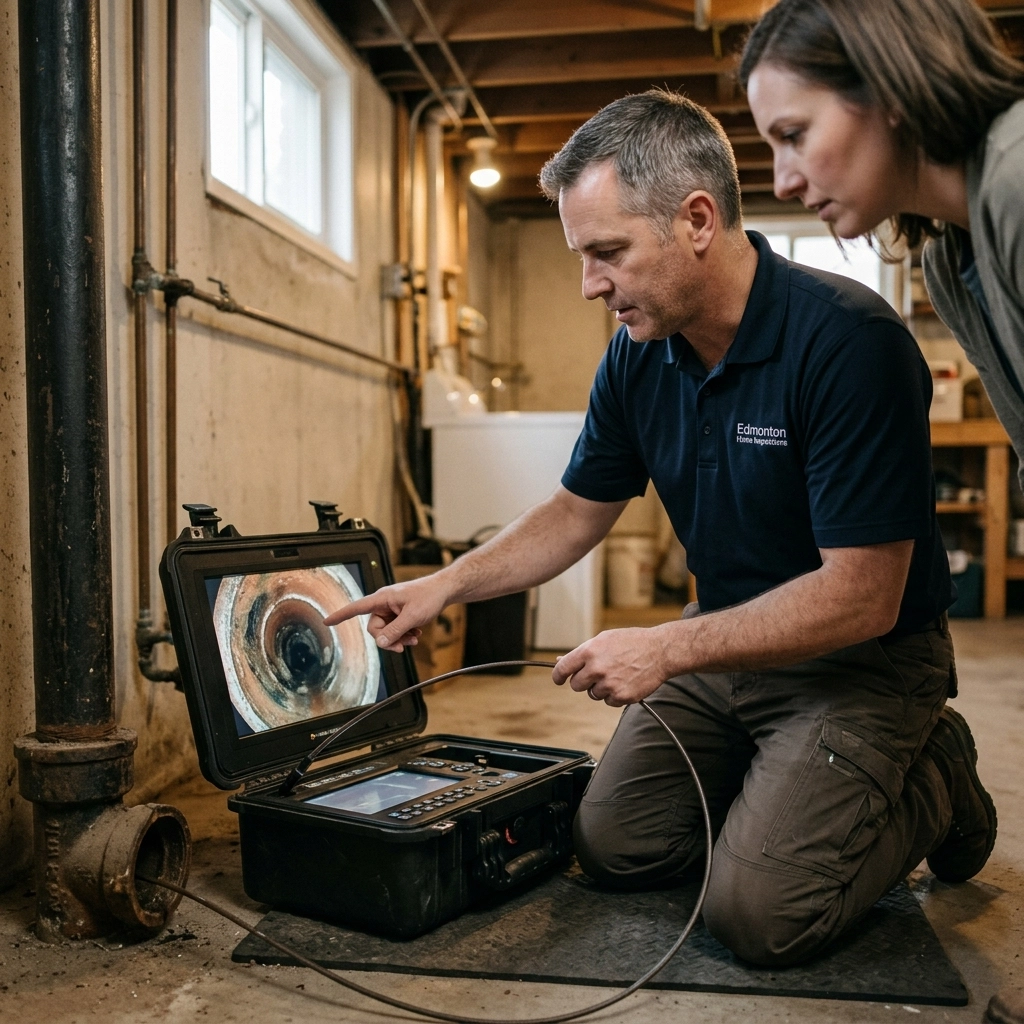
Direct answer: A sewer scope inspection is a camera examination of the private underground sewer lateral connecting your home to the municipal main. A flexible, waterproof camera reveals roots, cracks, bellies, separated joints, blockages, scale, grease, and collapses that routine plumbing checks cannot see.
Yes. Water may be flowing normally even when roots, corrosion, grease or a partial collapse are restricting the pipe. A sewer scope provides a direct visual inspection of the buried line rather than relying only on water flow through sinks and toilets.
During a sewer scope inspection, an inspector:
At InspecUs, our Edmonton sewer scope inspection service uses advanced camera equipment to assess blockages, leaks, root intrusion, corrosion and structural concerns.
A sewer scope is normally an additional service rather than an automatic part of a standard home inspection. The InterNACHI Standards of Practice explain that general home inspections do not require inspectors to inspect underground items. That is why you should request a sewer scope specifically.
A professional scope should assess more than whether wastewater is moving. The inspector should examine the entire accessible line for:

The report should also state whether the camera reached the expected destination. If the camera cannot pass a blockage or collapse, that limitation is important. It means the unseen portion of the line may require additional investigation.
“I do not want you to make a major purchase decision based on a drain that merely flows today. My job is to help you understand the condition, risk and likely next step before the problem becomes an emergency.”
: Banti K Shaw, InspecUs
Edmonton has many established neighbourhoods with mature trees and older housing infrastructure. Homes built before the 1990s may still have sewer laterals made from materials that require closer attention.
Common legacy materials include:
Edmonton’s freeze-thaw cycles can also contribute to soil movement. As the ground shifts, older or brittle sewer lines may move, crack or separate. Mature trees add another risk because roots naturally seek moisture around underground lines.
Homeowners are generally responsible for the private sewer lateral connecting the property to the municipal sewer system. The exact boundary of responsibility can depend on the location and applicable utility rules, so confirm details with the municipality or utility provider. However, you should not assume the city will pay for a failed line located on your property.
For more local context, read our article on why sewer scopes matter for pre-1990s Edmonton homes.
In 2026, a typical Edmonton sewer scope inspection costs approximately:
Pricing varies by property, pipe length, accessibility and the level of reporting provided. Ask whether your quote includes:
The cost of the inspection is small compared with a sewer replacement. Excavation, landscaping, driveway removal, depth and pipe length can make a full replacement cost approximately $10,000–$30,000 or more.
That does not mean every defect requires immediate replacement. Some findings may be manageable with cleaning, spot repair, root treatment or scheduled maintenance. The key is knowing what is there before you commit to the purchase.
I strongly recommend a sewer scope when one or more of these conditions apply:
That last point is easy to overlook. A line may appear to perform well when one or two people occupy a home and generate limited wastewater. After a family moves in, increased laundry, showers, dishwasher use and flushing can expose a marginal sewer line.
You should also consider a scope after a major renovation, addition or basement development if the sewer route or plumbing configuration has changed.

Ask for the sewer scope during your purchase condition period, not after the condition deadline. If the inspection reveals a significant defect, you want enough time to obtain repair estimates and make an informed decision.
In most purchases, the buyer orders and pays for the sewer scope as part of their due diligence. You are the party trying to understand the investment before closing.
However, the purchase agreement or negotiation may result in the seller:
Do not rely on a seller’s statement that the sewer line has “never caused problems.” Request documentation if previous repairs, replacements or camera inspections are claimed.
A sewer scope can be completed alongside a pre-purchase home inspection in Edmonton, giving you a broader view of the home’s structure, plumbing, electrical, roof and major systems.
Usually, a straightforward sewer scope takes approximately 30 to 60 minutes. The inspection may take longer when:
The inspection itself may be completed quickly, but you should allow time to review the findings. InspecUs provides detailed reports with high-resolution images and aims to deliver inspection information promptly, often the same day or within 24 hours depending on the appointment and reporting requirements.
Not necessarily. A sewer defect is a reason to investigate and negotiate: not an automatic reason to cancel.
Your options may include:
Ask the seller to repair the line.
Obtain a written scope of work and confirmation that the repair was completed by a qualified contractor.
Negotiate a price reduction.
This may help you manage the repair after possession, but make sure the reduction reflects realistic contractor estimates.
Request a repair credit.
A credit may be useful when you want control over the contractor and repair method.
Seek additional evaluation.
A plumbing contractor may need to provide repair options, locate the defect or confirm replacement requirements.
Walk away under the terms of your agreement.
If the cost, uncertainty or risk does not fit your budget, you may decide not to proceed, subject to your purchase contract and conditions.

Do not accept a vague estimate based only on a video image. Ask for a written repair estimate that explains excavation depth, landscaping or driveway restoration, permits, pipe material, replacement length and connection details.
For older Edmonton homes, homes with mature trees and properties showing warning signs, a sewer scope is one of the most practical pre-purchase services you can add. It gives you evidence, improves negotiation and reduces the chance of an expensive surprise shortly after moving in.
At InspecUs, I combine construction experience, inspection training and specialized equipment to provide clear, unbiased information. If you are buying a home, you can contact InspecUs to request a sewer scope inspection in Edmonton, Sherwood Park, St. Albert, Spruce Grove and surrounding areas.
You do not need to decide what every camera image means on your own. We can help you understand what was found and what logical next step makes sense.
We are licensed by the Licensed Professional and certified through InterNACHI

InspecUs Home Inspection is certified in the best practices established by Internachi. Our commitment to safety includes maintaining a 6-foot distance and using personal protective equipment (PPE) during all inspections.

© 2024 InspecUs - All Rights Reserved. | Sitemap | Developed by Integrated Marketing Platform Inc.