 7132 178 St NW,

 Call us:


 Call us780-809-1056
- Mail usinfo@inspecus.ca
- Schedule An Inspection
Call us780-809-1056

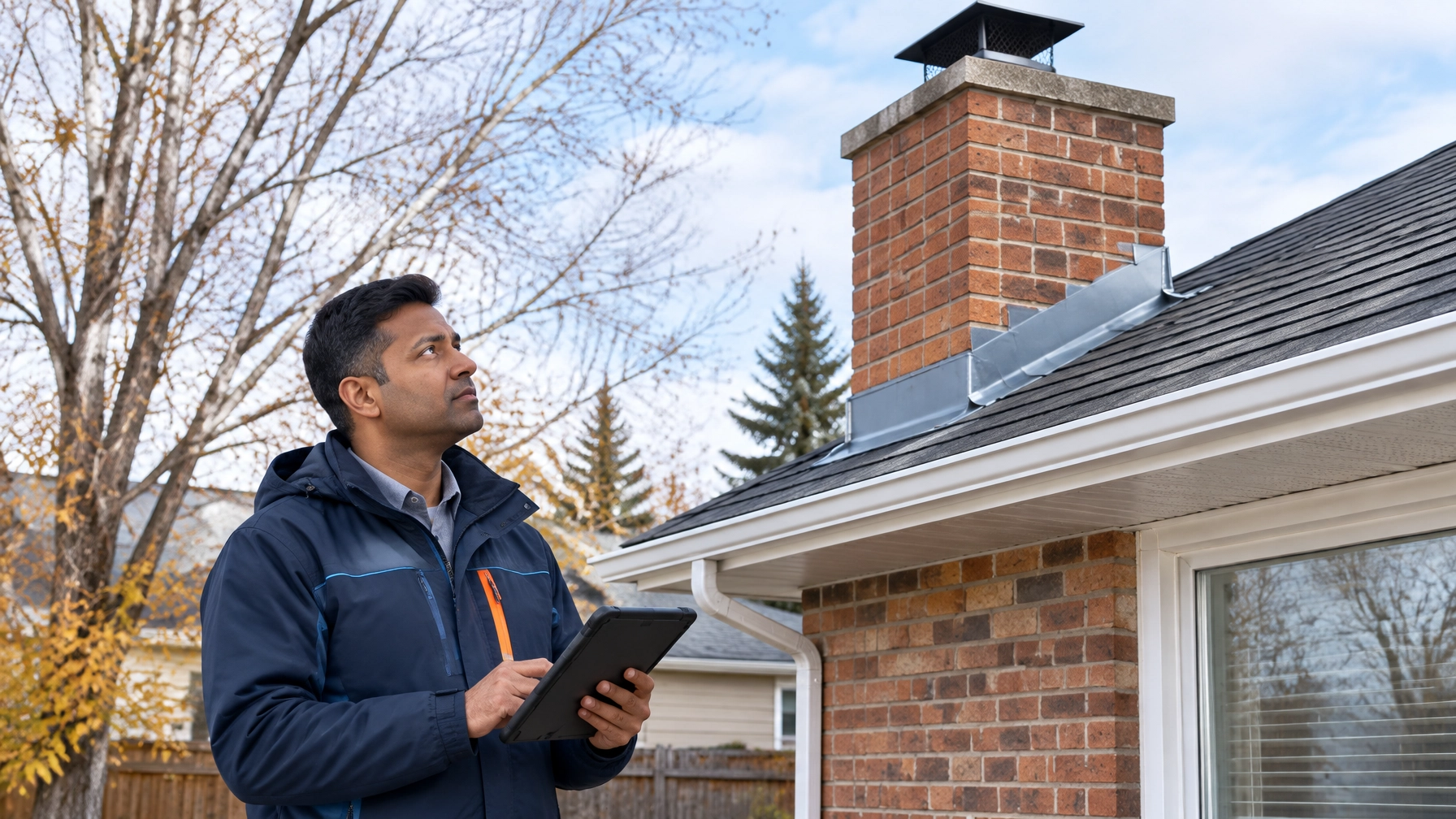
Before lighting your first seasonal fire, check the chimney cap, crown and roofline flashing from the ground for visible damage or leaks. A home inspection can flag visible exterior concerns, but a chimney sweep’s annual Level 1 inspection is needed to assess the flue and deposits.
Edmonton’s first cold evenings are a tempting reason to get the firewood in and light the fireplace. Before you do, take a few minutes to look at the parts of the chimney that keep water, debris and animals out, and help protect the home from moisture damage.
As an inspector with more than 10 years of experience and a construction background, I pay close attention to the chimney top and the place where it meets the roof. A small defect there can allow water into masonry or the home, and Edmonton’s freeze-thaw conditions can make deterioration worse over winter.
Could the chimney look fine from inside while water is already getting in from above? Yes. A sound-looking firebox does not tell you whether the cap is secure, the masonry crown is cracked or the roof flashing is leaking.
The Chimney Safety Institute of America (CSIA) points homeowners to the NFPA 211 recommendation that chimneys, fireplaces and vents be inspected at least once a year for soundness, deposits and correct clearances. Cleaning, maintenance and repairs should be done when needed. Scheduling that check before the heating season gives you time to arrange follow-up work.
A Level 1 chimney inspection is the standard annual check when the system is unchanged. If an appliance or fuel has changed, there has been a chimney fire, or a prior inspection found a concern, ask a qualified chimney professional whether a more extensive inspection is appropriate.
The focus here is the chimney exterior, not a walkthrough of firebox or damper basics. Those are different parts of fireplace readiness, and checking the exterior does not replace an annual internal flue assessment.
Are these names for the same component? No. Each has a different role, and each can be a separate route for water to enter.

Look for clues on more than one surface. Water entering at the crown can affect the bricks below; a flashing leak may show up inside as staining on the ceiling or wall beside the chimney. White staining (efflorescence) on exterior brick can indicate moisture moving through masonry. Spalling (brick faces flaking or breaking off) can follow repeated wetting and freezing.
“With my construction background, I look at the chimney top, the roofline and any interior water staining together. One small crown crack may not look urgent in October, but in Edmonton’s freeze-thaw cycle, moisture can contribute to more spalling by spring. The visible clues matter, but I’m careful not to claim they tell me what’s happening inside the flue.”
Banti K Shaw, owner of InspecUs
Could a visible defect mean it is time to stop and call a professional? It is a reason to arrange a closer assessment, especially before using the fireplace or stove.
Watch for:

Interior staining beside the chimney is a particularly useful clue: water can travel from a roofline leak before it becomes visible indoors. It does not, by itself, confirm that flashing is the cause. The source needs to be assessed.
Does a home inspection include a full chimney sweep assessment? No. A home inspection is a visual review of accessible and visible components, not an internal flue examination.
Under the InterNACHI Standards of Practice, roof components may be evaluated from the ground or eaves; an inspector is not required to walk a roof. A home inspection also does not include an internal flue inspection, smoke test or dismantling chimney components. Access and safe viewing conditions affect what can be observed.
In my inspections, I can report visible concerns such as damaged masonry, apparent flashing issues, water staining or other signs that merit further evaluation. I cannot certify the hidden liner’s condition or establish that the flue is clear.
That is why a home inspection is not a substitute for a CSIA-certified chimney professional’s Level 1 or Level 2 inspection. For chimney-fire safety and sweep recommendations, see the CSIA’s guidance on preventing chimney fires.
One useful context point: CSIA guidance recommends cleaning when soot or creosote accumulations reach 1/4 inch, and hardened glaze should be removed sooner, once it exceeds 1/8 inch. Waiting past those levels adds fuel load for a chimney fire. A visual home inspection does not measure or assess deposits inside the flue.
Can you do a useful first check without climbing onto the roof? Yes. From the ground, use binoculars if you have them, or look from an upstairs window. Do not climb onto a roof to inspect the chimney.

A ground-level check cannot confirm that the chimney is safe to use. If you see a concern, or cannot get a clear view, take a photo from a safe location and arrange the right professional assessment.
Not sure whether to call a chimney sweep, inspector, roofer or mason? Match the professional to the question:
Buying in late fall or early winter? A home inspection can help flag visible concerns before closing, but it cannot replace a chimney specialist’s internal flue assessment. Learn more about our certified home inspection in Edmonton and home inspection services in Edmonton.
At InspecUs, I bring more than 10 years of inspection experience and a construction industry background to each assessment. Our inspections cover 100+ items, and reports are delivered within 24 hours with high-resolution images. We use tools including thermal imaging and moisture detection, are InterNACHI certified, and provide unbiased reporting without third-party influence. InspecUs has earned more than 250 positive Google reviews.
If you would like a visual assessment of your home before the heating season, or you are buying a property with a chimney, send InspecUs a message. I’ll help you understand what a home inspection can clarify and when a chimney specialist should take the next step.
Meta description (159 characters): Before your first seasonal fire, learn to spot chimney cap, crown and flashing problems, understand inspection limits, and find the right Edmonton professional.
We are licensed by the Licensed Professional and certified through InterNACHI

InspecUs Home Inspection is certified in the best practices established by Internachi. Our commitment to safety includes maintaining a 6-foot distance and using personal protective equipment (PPE) during all inspections.

© 2024 InspecUs - All Rights Reserved. | Sitemap | Developed by Integrated Marketing Platform Inc.