 7132 178 St NW,

 Call us:



 Call us780-809-1056
- Mail usinfo@inspecus.ca
- Schedule An Inspection
Call us780-809-1056

Direct answer: You can assess parts of an acreage’s well and septic system in winter, but snow and frozen ground can hide defects and restrict testing. Review well and permit records, arrange water testing and specialist checks, and keep a spring follow-up if the field can’t be fully assessed.
Meta description: Buying an Alberta acreage in winter? Learn how frozen ground affects well and septic checks, water testing, records and contract conditions before you close.
What if the property looks fine, but the ground is hiding the evidence you need? Acreage transactions around Edmonton continue through fall and winter, but the weather changes what an on-site visit can establish. A clear tap does not prove drinking water is safe, and an accessible septic tank does not confirm that the buried disposal field is working properly.
In my 10+ years of inspection and construction experience, I’ve found the best approach is to separate what we can observe from what needs records, laboratory results or specialist testing. A winter inspection can document visible conditions and flag concerns. It cannot make frozen soil transparent.
“I want you to know exactly what was checked, what couldn’t be confirmed and what step would close that gap. A limitation is useful information when it helps you make a more informed decision.”- Banti K Shaw
Can paperwork tell you anything useful before the snow-covered site visit? Yes. Start by asking the seller for well and septic records, then compare them with public and municipal information.
For a well, search the Alberta Water Well Information Database. It includes records such as drilling reports and yield tests, which may help you identify the well’s reported depth and history. Records are valuable context, not a guarantee of current performance; Alberta notes that submitted data may not be complete or accurate.
Ask for:
For private sewage systems, review Alberta’s private sewage codes and standards and ask the county or municipality about permits and property records.
Pro tip: Ask the seller or agent to mark well and septic locations on a site plan before the visit. Snow can make buried features difficult to find, and guessing where they are is not a safe substitute for locating them.
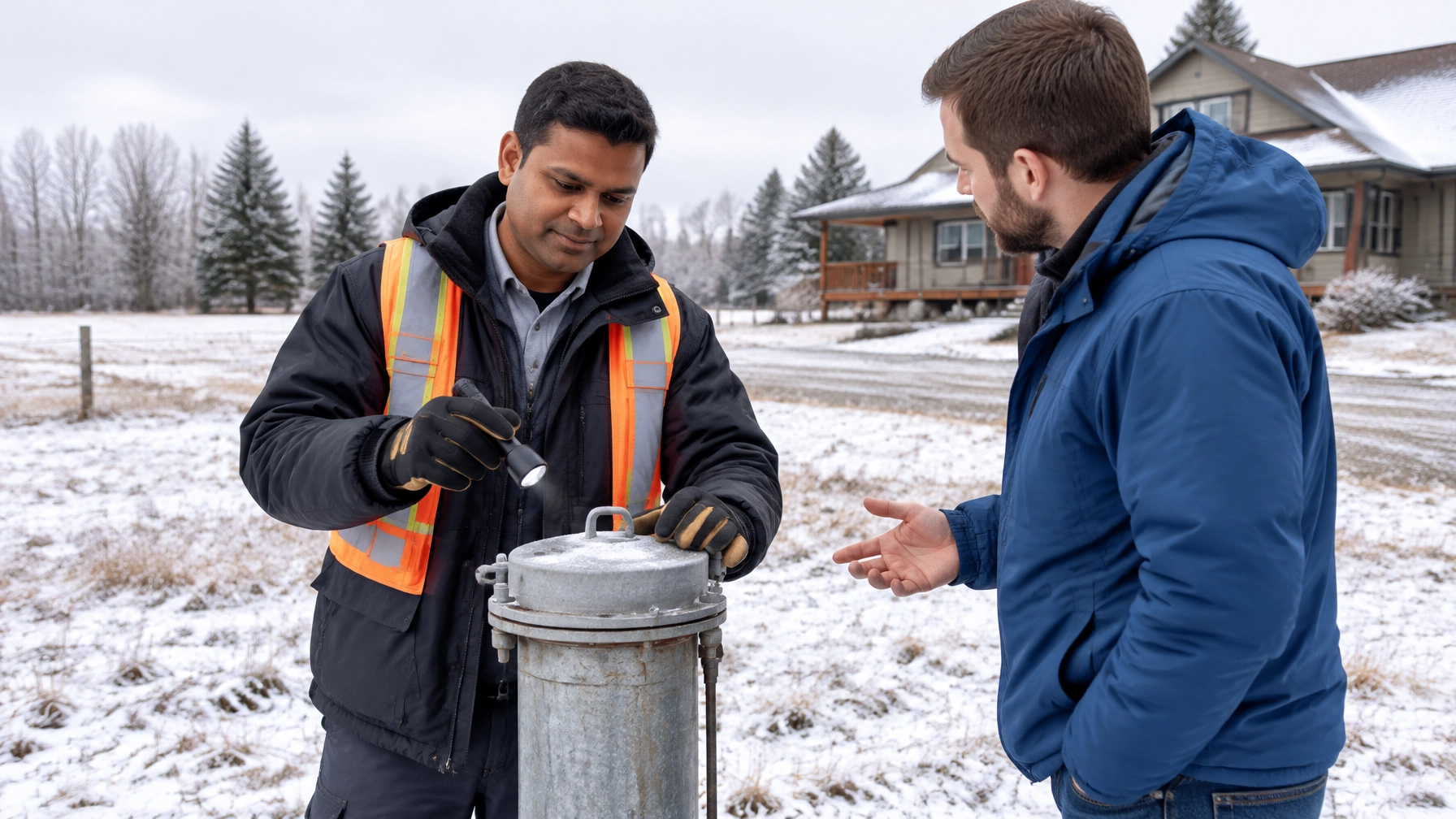
If the wellhead is visible, does that mean the whole water system has been checked? No. A winter visit can still reveal useful clues, but a visual inspection does not establish well capacity or water quality.
Where accessible, I look at the well casing, cap or sanitary seal, visible plumbing, nearby grading and evidence of leaks or corrosion. Inside, pressure and pump operation can be observed, along with accessible components such as the pressure tank and treatment equipment. A pitless adapter, the connection that allows water piping to leave a well below the frost line, may not be visible from above ground.
Snow and frozen soil can hide drainage problems, cracks at ground level or the well’s exact location. Older well pits may raise questions about access, water entry or safety; don’t enter one or treat it as an ordinary inspection point. Ask a qualified well professional to assess it.
A tap running during the visit is only an observation at that time. It does not confirm a reliable yield for a household, livestock or irrigation. Ask a well specialist about a current flow or quantity test if you need to understand supply capacity.

Can a septic tank inspection confirm that the entire system is sound? Not by itself. In winter, snow can conceal lids, cleanouts, field boundaries, settlement and signs of surfacing effluent. Frozen ground also limits probing and makes it harder to assess soil absorption or drainage conditions.
A site visit may reveal clues such as sewage odour, unusually wet or soft areas, visible ponding, settlement or a yard layout that directs runoff toward the field. During a thaw, persistent snowmelt lines or greener strips above a buried field can be a reason to investigate further, but they are not proof of failure. Sun exposure, slope and snow drifting can also affect where snow melts first.
Frozen lines, restricted access to tank lids and snow-covered fields may prevent a complete assessment. A septic specialist can explain what can be safely checked in current conditions and whether locating lids, opening the tank, pumping or further testing is appropriate. Tank pumping and internal scoping are specialist tasks; under inspection standards, a home inspector’s role is generally to document accessible conditions and flag concerns, not perform invasive work.

Pro tip: Don’t drive, park heavy equipment or pile cleared snow over a suspected septic field. Ask the seller or a specialist to identify the field before snow clearing or excavation.
For a broader look at how we assess visible acreage conditions, see our acreage inspection service in Edmonton.
Does clear, odour-free water mean it’s safe to drink? No. Testing, not appearance or taste, is how you check for contaminants that you cannot see or smell.
Alberta Health Services recommends testing private well water for bacteria twice a year and for chemicals and trace metals every three years. Its drinking water testing guidance explains sample collection and timing. For a real-estate transaction, confirm which testing route applies: AHS says its routine Environmental Public Health service does not test samples for real-estate purposes, so you may need a commercial lab.
Ask the lab or water professional to advise on the right panel for the property. Chemical samples are generally taken before water passes through treatment equipment, while bacteria sampling instructions may differ. Follow the lab’s instructions exactly so the sample is not contaminated or rejected.
If the water test is intended to answer whether the well can supply your needs, arrange a quantity assessment too. A lab result tells you about the sample tested; it does not establish the well’s production capacity.
What if winter makes a full septic assessment impossible before your condition deadline? Raise that issue early with your real estate agent and Alberta lawyer. They can help you consider conditions, timelines or other arrangements that fit the transaction; don’t rely on a verbal promise that the system “has always worked.”
Depending on the property and timing, you may want to make your due diligence subject to:
Do not assume a holdback or later inspection will happen automatically. Have your representative put any agreed terms in writing before you waive conditions.

Before you commit, have you closed the gaps between what’s visible and what’s verified? Use this checklist to organize your next steps:
At InspecUs, my construction background helps me connect visible clues to the building systems around them. We inspect 100+ items in each report, use tools such as thermal imaging and moisture detection where appropriate, and provide high-resolution reports the same day or within 24 hours. We’re InterNACHI-certified, report without third-party influence and remain available for questions afterward. Our approach has earned more than 250 positive Google reviews.
Our home inspection services can help document visible property conditions, while well-water testing and septic tank pumping or internal scoping are arranged with the appropriate specialists. Inspection standards, including the InterNACHI Standards of Practice, help define what a visual inspection can and cannot confirm.
If you’re weighing a winter acreage purchase near Edmonton, a conversation can help clarify which checks fit your property and timeline. You can send us a message when you’re ready.
We are licensed by the Licensed Professional and certified through InterNACHI

InspecUs Home Inspection is certified in the best practices established by Internachi. Our commitment to safety includes maintaining a 6-foot distance and using personal protective equipment (PPE) during all inspections.

© 2024 InspecUs - All Rights Reserved. | Sitemap | Developed by Integrated Marketing Platform Inc.