 7132 178 St NW,

 Call us:



 Call us780-809-1056
- Mail usinfo@inspecus.ca
- Schedule An Inspection
Call us780-809-1056

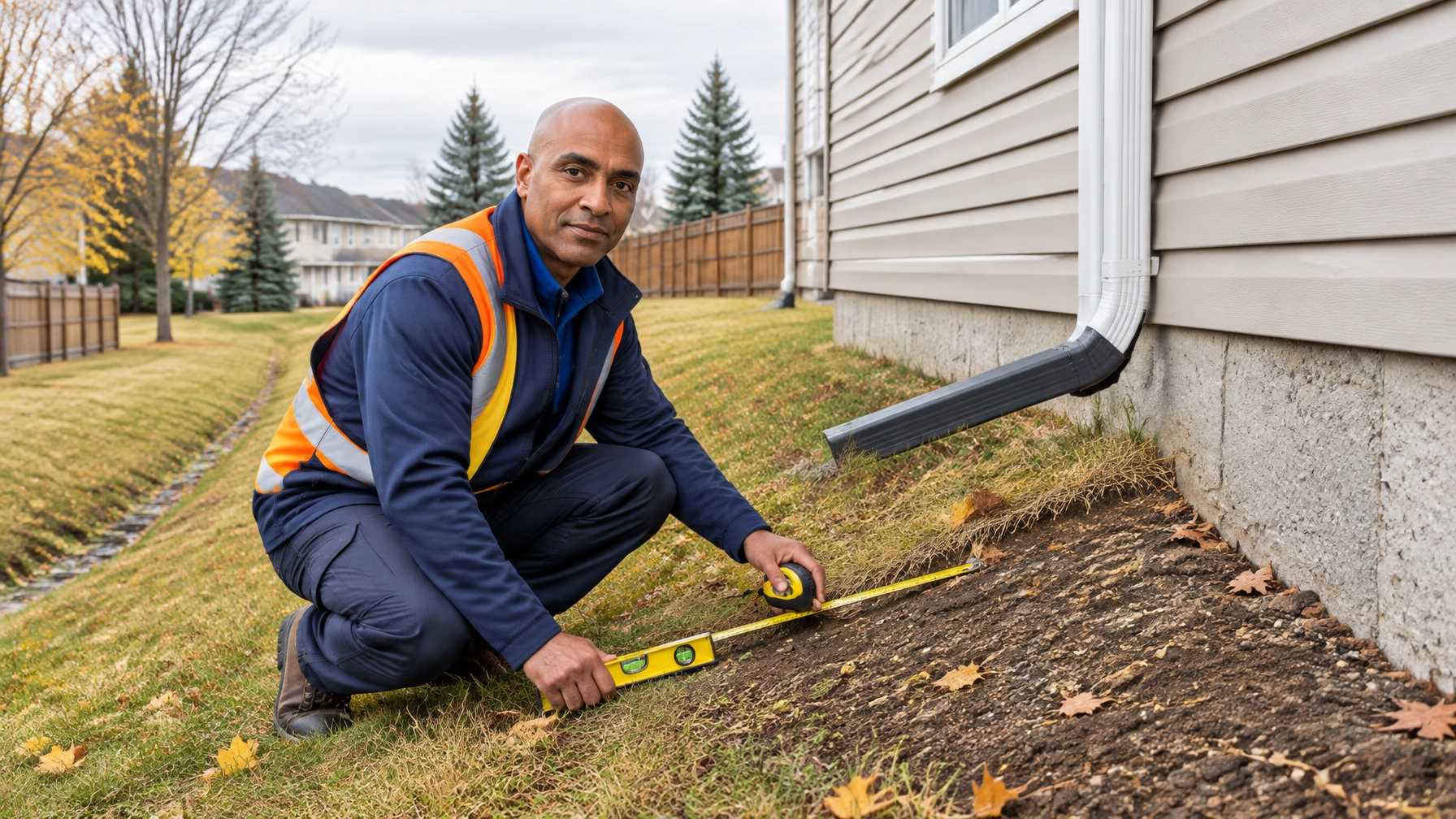
Direct answer: Before Edmonton’s ground freezes, walk the lot and confirm soil falls away from the foundation by 10–15 cm over the first 1.5–2 m, swales carry water toward the approved outlet, and downspout extensions discharge safely within your property. Fix minor settling now; ask about major regrading.
Meta description: Before Edmonton’s ground freezes, check lot slope, swales and downspout discharge. See fall grading red flags, simple fixes and what an inspection can confirm.
If you can still see and work the soil, you have a practical chance to spot grading trouble before winter. Once the ground freezes or snow covers it, low areas and the direction of the slope can be difficult to assess until spring thaw, often around April.
That matters because water follows the ground’s contours. A shallow depression beside a foundation can collect rain or melting snow where you least want it. The City of Edmonton notes that the city receives about 345 mm of rain a year. Even 10 mm of rain on an average bungalow roof produces about 1,200 litres of runoff. The grade around the home helps determine where surface water goes.
For a buyer closing in late fall, a showing may be your last chance to see the yard clearly before winter. If you’re arranging a home inspection edmonton buyers rely on, ask that the visible exterior grade and drainage clues be documented. For current owners, a small correction while the ground is workable may help reduce pooling when snow melts.

Could the ground beside your foundation be directing water toward the house instead of away? The City’s homeowner guide recommends a positive slope of 10–15 cm (4–6 inches) over at least 1.5–2 m (5–6 feet) away from the foundation. The slope should be reasonably continuous, not interrupted by a low pocket that holds water.
Look across the wider yard, too. A swale is a shallow channel that guides surface water toward an appropriate drainage route, such as the street or lane. It should be clear and shaped to move water, not create a pond beside your home or send runoff onto the neighbouring property. Since 1989, Edmonton has required homes to follow an approved lot grading plan.
Downspout extensions need to work with the grade, not against it. The City’s guide says they should direct water 1.5–2 m (5–6 feet) away from the house, at an angle of 30 degrees or more, and end at least 15 cm (6 inches) inside your property line. Discharging onto a neighbour’s property may lead to fines under Drainage Bylaw 18093.
For details and diagrams, review the City’s Homeowner’s Guide to Lot Grading and Drainage and Residential Lot Grading page.
What should make you pause as you walk around a home? Look for observable signs that water may not be moving away from the foundation:

These observations do not prove that water has entered the home, and a dry fall day can hide how a lot performs during heavy rain or rapid snowmelt. But they are worth documenting and discussing before you buy. I recommend asking the seller about any history of water entry or grading work and reviewing available records where possible.
Are you buying before winter and wondering what an inspection can tell you about grading? During a walkthrough, I look at how the visible exterior conditions relate to the home’s condition, not just one isolated patch of soil.
“With my construction background and more than 10 years of inspection experience, I look at how the ground, foundation and signs inside the home fit together. A low spot is important, but so is understanding the larger drainage picture.”
Banti K Shaw, Owner of InspecUs
A home inspection can include observations of:
An inspection is a visual assessment, not a survey or a guarantee of how the property will perform in every storm. Snow, frozen soil, landscaping and other site conditions can limit what is visible. If grading needs precise elevation checks or a substantial change, consult the appropriate grading professional and confirm requirements with the City. Learn about our certified home inspection service and other InspecUs inspection services.
Can you make a useful improvement before the ground freezes? Start with minor settling and drainage gaps that are easy to see while the soil is still workable:

Small top-ups are not the same as major regrading. If you’re changing elevations, altering a swale or working near a property line, first review Edmonton’s lot grading requirements and approval information. Significant changes may need to follow the City’s approval process. When the ground is frozen or too wet to shape properly, avoid treating a quick surface patch as a permanent repair; assess the site again when conditions improve.
Before winter limits visibility, what should you confirm? Use this short checklist during a showing, a fall maintenance walk or an inspection discussion:
If you would like a professional perspective before closing or before winter, InspecUs brings 10+ years of inspection experience and a construction-industry background to each inspection. We inspect 100+ items, provide same-day reports within 24 hours with high-resolution images, and use tools including thermal imaging and moisture detection. We are InterNACHI-certified, provide unbiased reporting without third-party influence, and offer ongoing support after the inspection. Our work is backed by more than 250 positive Google reviews.
I’m Banti K Shaw, and my approach is to give you clear observations you can use, not pressure you into a decision. If you’re planning a purchase or want to understand visible drainage concerns before the spring thaw, contact InspecUs to discuss your inspection.
We are licensed by the Licensed Professional and certified through InterNACHI

InspecUs Home Inspection is certified in the best practices established by Internachi. Our commitment to safety includes maintaining a 6-foot distance and using personal protective equipment (PPE) during all inspections.

© 2024 InspecUs - All Rights Reserved. | Sitemap | Developed by Integrated Marketing Platform Inc.