 7132 178 St NW,
 Call us:


 Call us780-809-1056
- Mail usinfo@inspecus.ca
- Schedule An Inspection
Call us780-809-1056

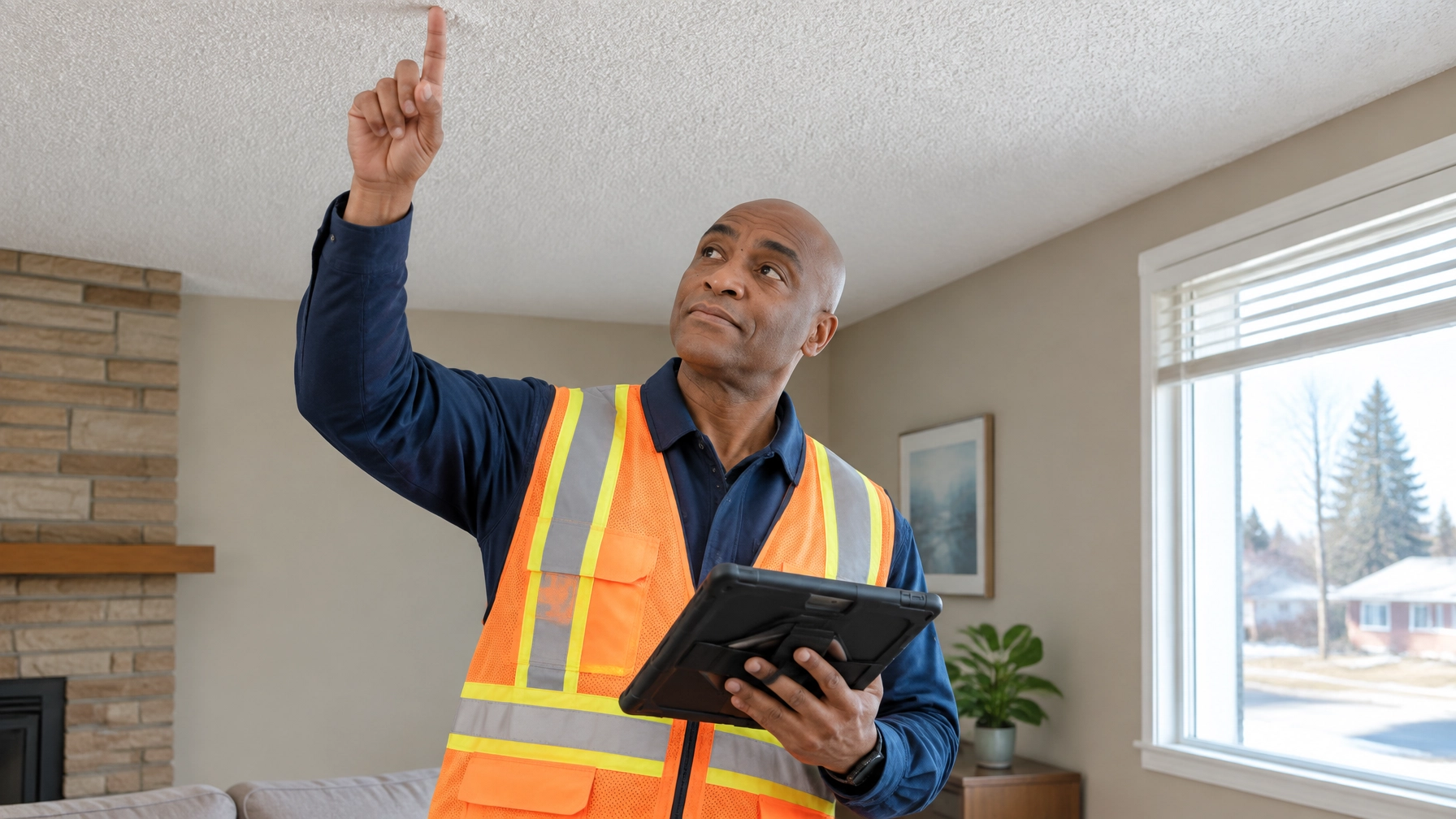
By Banti K Shaw, InspecUs
Direct answer: Canada fully banned asbestos on December 30, 2018, but older homes still contain it. Edmonton homes built before 1990 are higher risk, especially those with popcorn ceilings, old flooring, insulation, or pipe wrap. An asbestos inspection involves a professional survey, safe bulk sampling, laboratory analysis, and a written report.
Are you planning to renovate an older Edmonton home: or considering buying one? Before you remove a popcorn ceiling, replace flooring, open a wall, or demolish a garage, you need to know whether asbestos-containing materials (ACMs) are present.
I have more than 10 years of experience in construction and property inspection, and I have seen how quickly a small renovation can become complicated when suspect materials are disturbed without testing. The good news is that asbestos does not automatically mean you must leave a home or remove everything. The important step is understanding where it may be, whether it is damaged, and what your project could disturb.
Asbestos is a group of naturally occurring mineral fibres that were added to many building products because they resist heat, fire, and chemical damage. They were widely used in Canadian construction before their health risks became fully understood.
The primary danger occurs when asbestos fibres become airborne and are inhaled. Long-term exposure can contribute to serious diseases, including:
Intact, sealed, and undisturbed asbestos-containing materials may present little immediate risk. The risk increases when materials are scraped, drilled, sanded, cut, broken, or removed.
Health Canada explains the health risks and safe-management principles in its asbestos and health guidance.
Banti’s perspective: “I do not want homeowners to panic when they hear the word asbestos. I want them to stop, avoid disturbing the material, and get reliable information before work begins. Good decisions start with accurate testing.”
Canada’s Prohibition of Asbestos and Products Containing Asbestos Regulations came into force on December 30, 2018. The regulations prohibit most import, sale, use, and manufacture of asbestos and asbestos-containing products.
However, the ban did not remove asbestos already installed in homes, commercial buildings, and infrastructure. That is why a home built before 2018 may still contain ACMs: and why a home built decades earlier deserves particular attention before renovation.
Why does the construction date matter? Asbestos was commonly used in Canadian construction from the 1930s through the late 1980s and, in some applications, into the early 1990s.
For practical renovation planning, treat an Edmonton home built before 1990 as potentially containing asbestos until suspect materials have been professionally assessed. The risk is especially relevant in mature neighbourhoods with older bungalows, wartime homes, duplexes, and homes that have not undergone a complete renovation.
Age alone does not prove asbestos is present. It simply tells you that visual assumptions are not safe enough for renovation planning.
Could asbestos be hiding in an ordinary-looking finish? Yes. Common locations include:
You cannot identify asbestos reliably by sight, colour, texture, or age. Two ceilings may look identical while only one contains asbestos. A visual inspection can identify materials that deserve testing, but laboratory analysis is the only reliable way to confirm or rule out asbestos.

Are you removing, cutting, sanding, drilling, scraping, or demolishing materials in a pre-1990 building? Arrange professional testing before the work starts.
In Alberta, asbestos-containing materials that could be disturbed during renovation or demolition must be identified and properly controlled. Alberta occupational health and safety requirements and the Alberta Asbestos Abatement Manual provide guidance for surveys, sampling, worker protection, abatement, and air monitoring.
Testing is particularly important before you:
If asbestos is discovered during work, stop the project, restrict access, and contact a qualified professional. Do not continue “carefully” and hope the material is harmless.
Pro tip: Build asbestos testing into your renovation schedule before hiring trades. Waiting until demolition has started can create delays, additional containment requirements, and unexpected costs.
What happens when you book professional asbestos inspection in Edmonton? At InspecUs, the process generally includes:
Project discussion
We review the building’s age, renovation plans, previous reports, and areas you expect contractors to disturb.
Visual survey
We inspect accessible suspect materials, including ceilings, wall finishes, flooring, insulation, mechanical areas, and exterior products where relevant.
Bulk sampling
Small samples are collected from representative materials using appropriate precautions. Sampling is targeted to the work area and the materials most likely to affect your renovation.
Laboratory analysis
Samples are submitted for laboratory analysis to determine whether asbestos is present.
Written reporting
You receive documented findings, photographs where applicable, identified ACMs, and practical recommendations for your next step. InspecUs provides inspection reports within 24 hours of the inspection, subject to laboratory turnaround for sampled materials.

Do not confuse asbestos inspection with simply looking around a room. A qualified assessment combines a building survey with targeted sampling and laboratory confirmation.
You can contact InspecUs to ask about asbestos inspection and sampling.
Will a positive result automatically make your home unsafe? Not necessarily. Your report should explain the material’s condition and how your project affects the risk.
ACM means asbestos-containing material. If laboratory analysis identifies asbestos, the material should be managed according to its condition, location, and the work planned.
Friable asbestos can be crumbled, crushed, or reduced to powder by hand pressure. Examples may include deteriorating insulation or damaged sprayed materials. Friable materials can release fibres more easily and require careful controls.
Non-friable asbestos is bound into a solid product, such as some vinyl tiles or cement board. It may present lower risk when intact, but cutting, sanding, breaking, or grinding can still release fibres.
The appropriate response may be:
It can be dangerous if the ceiling contains asbestos and is disturbed. Scraping, sanding, drilling, or removing textured coating can release fibres into the air.
An intact popcorn ceiling that is in good condition may not require immediate removal. However, you should test it before renovation, especially if you plan to scrape it, install pot lights, repair water damage, or alter the ceiling.
Do not scrape a small corner yourself to “see what is underneath.” A DIY sample can spread contamination and expose you unnecessarily.
What should you budget for asbestos testing? The price depends on:
Lab-only sample analysis may cost tens of dollars per sample, but a professional inspection with site assessment, safe sampling, laboratory analysis, and reporting generally costs several hundred dollars or more. Larger homes, commercial properties, and multiple suspect materials cost more.
Remediation can range from several hundred dollars for a limited project to several thousand dollars or more for extensive ceiling, insulation, flooring, or demolition work. Obtain written quotes from qualified abatement contractors after the inspection.
What comes next after a positive result?
Banti’s advice: “My job is not to sell you fear or unnecessary removal. My job is to give you unbiased information so you and your contractor can choose the safest, most practical solution.”
Are asbestos, mould, and indoor air quality the same issue? No.
Thermal imaging and moisture detection can help locate hidden moisture and conditions associated with mould, but they cannot replace asbestos sampling. InspecUs also provides thermal imaging and moisture detection in Edmonton.
If you are buying an older property, combine asbestos planning with a thorough pre-purchase home inspection. A standard home inspection may identify suspect materials, but asbestos testing is needed to confirm them.

Are you renovating, buying, or selling a pre-1990 Edmonton property? Do not disturb suspect materials until you know what they are.
A professional asbestos inspection can help you plan renovation work, understand potential costs, protect occupants and contractors, and negotiate more confidently when buying or selling. Contact InspecUs to discuss your property and the materials that concern you.
Meta description: Planning to renovate or buy an older Edmonton home? Learn asbestos risks, Alberta testing rules, inspection steps, costs, and what to do next with InspecUs.
We are licensed by the Licensed Professional and certified through InterNACHI

InspecUs Home Inspection is certified in the best practices established by Internachi. Our commitment to safety includes maintaining a 6-foot distance and using personal protective equipment (PPE) during all inspections.

© 2024 InspecUs - All Rights Reserved. | Sitemap | Developed by Integrated Marketing Platform Inc.