 7132 178 St NW,

 Call us:



 Call us780-809-1056
- Mail usinfo@inspecus.ca
- Schedule An Inspection
Call us780-809-1056

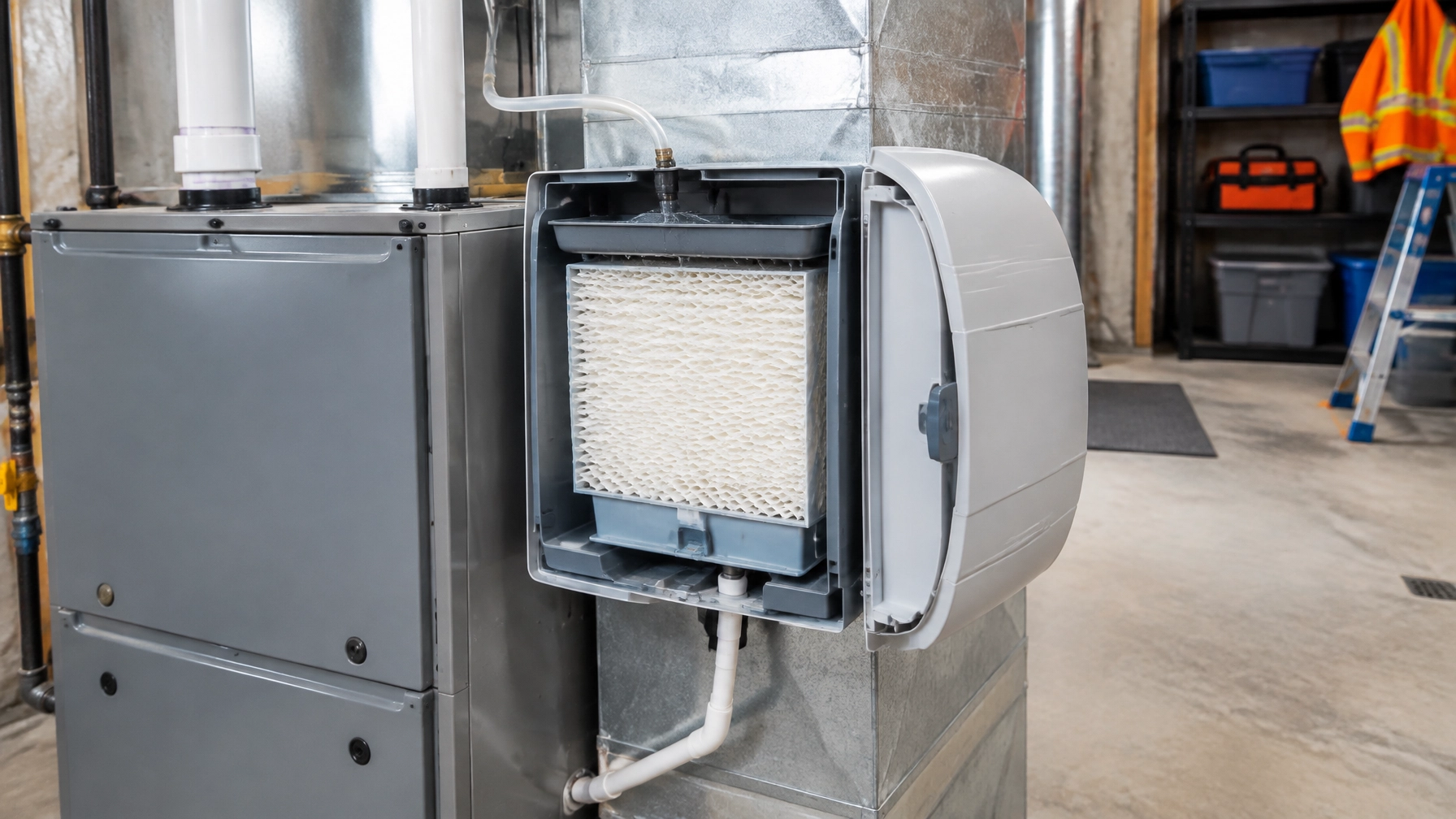
Direct answer: A home inspection includes a visual check of the furnace-mounted humidifier, its water line, drain, and nearby ductwork for leaks, rust, and mineral buildup. I flag visible maintenance concerns, but I do not service or disassemble the unit.
When you search “home inspection Edmonton,” you may wonder whether the small humidifier attached to the furnace gets checked. I’m Banti K Shaw, an Edmonton inspector with more than 10 years of inspection and construction experience. I look at the unit as part of the home’s visible systems, while keeping clear about what a visual inspection can and cannot tell you.
A humidifier with heavy scale, a leak, or a neglected standing-water reservoir can point to overdue maintenance. That does not automatically mean the appliance has failed. It does mean you should understand its condition and ask what attention it needs before heating season is in full swing.
Can you tell how your unit works just by looking at it? Often, the cabinet and duct connections offer a clue. The main types are bypass, fan-powered, and steam.
For a more detailed comparison of the three designs, see Bryant’s guide to whole-house humidifier types. Knowing the type helps you follow the correct maintenance instructions rather than assuming every unit has the same pad, controls, or service needs.

What is a practical homeowner check, and when should you call an HVAC professional? I recommend starting with the manufacturer’s instructions and model number. Do not force a stuck panel, valve, or housing, and do not work on electrical components.
For a typical bypass or fan-powered model, a sensible seasonal routine is:
A steam humidifier is different: it does not use the same evaporator pad. The canister is replaced annually, and servicing should be handled by a licensed HVAC professional, not treated as a DIY cleaning task.
Trane’s whole-house humidifier maintenance guide also recommends annual pad replacement, summer water shutoff for bypass units, and professional service for steam units.
Pro tip: Keep a note of when the pad or steam canister was last replaced, along with the unit’s model number. That simple record helps you, a future owner, and an HVAC technician understand its maintenance history.
What signs do I look for when I examine a furnace-mounted unit? I focus on visible evidence around the cabinet, supply line, drain, and nearby furnace surfaces. I do not take the humidifier apart to inspect hidden components.

Common observations include:
“I look for the evidence water leaves behind: scale, staining, rust, or a wet connection. Those clues help me explain what needs attention without claiming I have serviced or tested the inside of the appliance.”
Banti K Shaw
If there is water staining or a persistent damp area, it can be useful to document the location and have the source assessed. A general inspection can identify visible concerns, but it is not a substitute for humidifier servicing or a full HVAC diagnostic.
Are you considering a home with an older furnace humidifier or visible buildup? Ask the seller about the unit’s service history and look for records showing when the pad or canister was last changed.
During a buyer’s inspection, an older drum humidifier or a unit with heavy scale and rust on the plenum is a flag for follow-up. That does not establish that the unit is beyond repair. It tells you not to assume it has been maintained or is operating as intended.
Useful questions include:
If answers or records are unavailable, you can ask a qualified HVAC professional to assess the appliance. For steam units, professional service is particularly important. You can also see what else is included in our Edmonton home inspection checklist covering 100+ items.
Could a humidifier issue be connected to other winter moisture clues? It can be one part of the picture, especially if there is visible leakage or a recurring damp area nearby. For a separate discussion of indoor humidity and winter condensation, read our guide to window condensation and winter mould in Edmonton.
If you need a broader assessment of a property before buying, selling, or maintaining it, explore our home inspection services in Edmonton. I’ll explain the visible findings, note inspection limitations, and help you understand whether the next step is routine maintenance or a qualified HVAC evaluation.
Pro tip: Don’t wait for a leak to check whether your humidifier has been maintained. Finding the model, locating the manual, and asking about the last service are straightforward steps you can take now.
If you’re preparing for heating season or reviewing a home purchase, you’re welcome to contact InspecUs to discuss an inspection. There’s no pressure, just a chance to clarify what an inspection can cover and what kind of follow-up may be useful.
Meta description: Learn what inspectors find on neglected whole-home humidifiers, how to maintain water panels, and which furnace-mounted issues need an HVAC professional.
We are licensed by the Licensed Professional and certified through InterNACHI

InspecUs Home Inspection is certified in the best practices established by Internachi. Our commitment to safety includes maintaining a 6-foot distance and using personal protective equipment (PPE) during all inspections.

© 2024 InspecUs - All Rights Reserved. | Sitemap | Developed by Integrated Marketing Platform Inc.