 7132 178 St NW,

 Call us:



 Call us780-809-1056
- Mail usinfo@inspecus.ca
- Schedule An Inspection
Call us780-809-1056

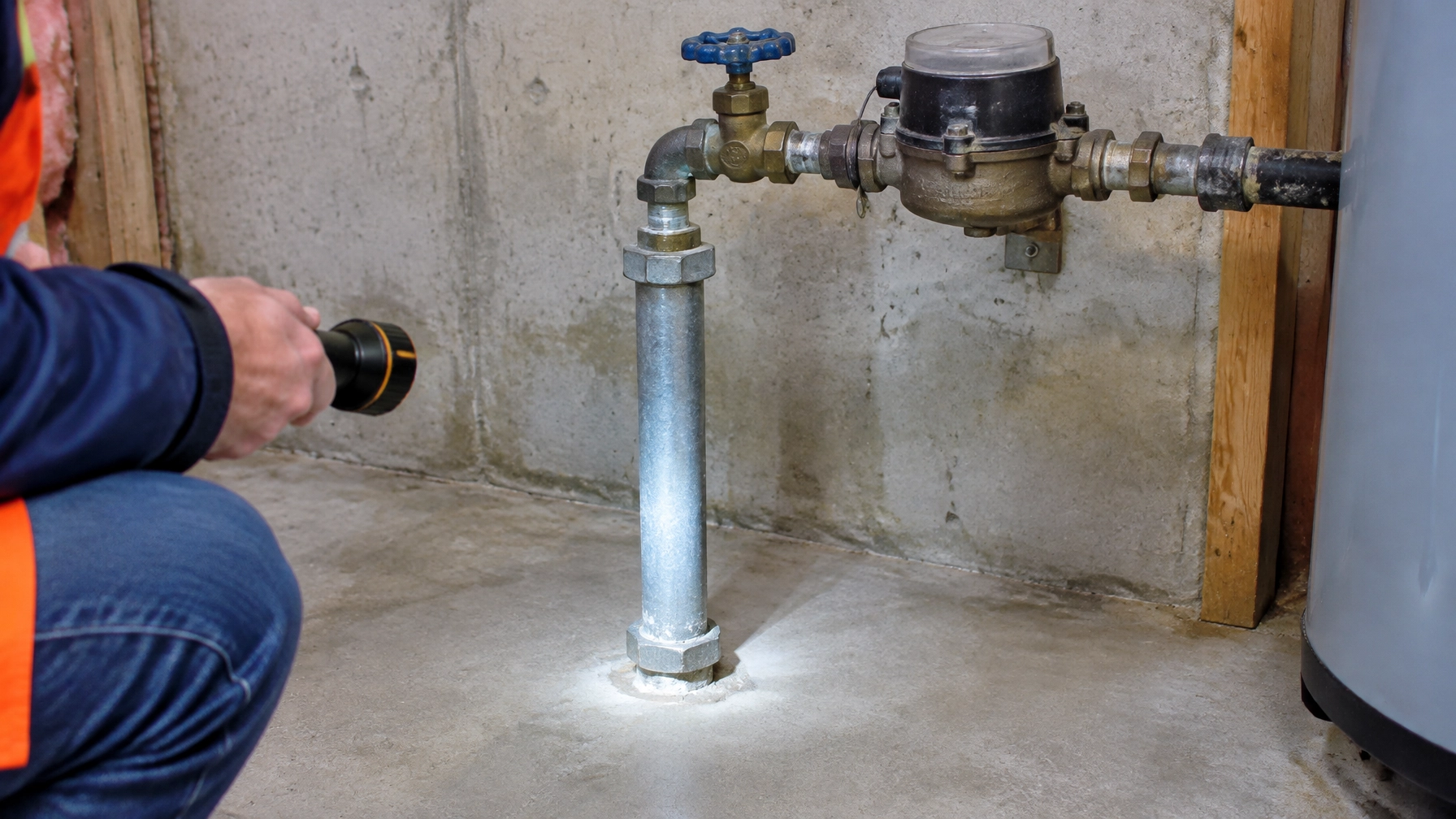
If the pipe at your water meter is grey, it is likely galvanized steel or lead. You own the run from the property line to the meter, an inspector can only judge the visible section, and a private lab water test needs to be booked early.
Meta description: A grey pipe at your Edmonton water meter means galvanized steel or lead. Here is what buyers can check, what testing costs, and who owns which half of it.
By Banti K Shaw
I’m Banti K Shaw. With more than 10 years in construction and inspection, I’ve learned that older plumbing can raise important questions, but a visible pipe is only part of the story. That’s why I make a point of checking the water service pipe at the meter in older Edmonton homes. If you’re buying, the key questions are what’s visible, which portion is yours, and how you can verify a concern before removing conditions.
Could grey metal mean lead, or is it galvanized steel? EPCOR’s scratch-test instructions provide indicators, not a guaranteed identification:
EPCOR’s method is to find the emergency shut-off, inspect the pipe coming out of the ground into the meter, and check its colour, lightly sanding if needed. If you think it could be lead, its guidance describes gently etching the surface; don’t do this if it might be plastic. A grey appearance or a scratch alone does not prove the material. EPCOR says water testing is the only way to be sure whether you have a lead service line.

Does a certain build date settle the question? No, but age can help you decide what to investigate. EPCOR, citing Health Canada, says lead service lines were widely installed in Canada until 1975, and lead solder was used in new plumbing and repairs until 1986. As a result, plumbing and distribution materials may be a source of lead in homes built before the 1990s.
EPCOR notes lead was used for service lines in homes built before 1960. Galvanized steel was common in older homes beyond that era, but there is no single cutoff year that identifies every galvanized line. The home’s age is a clue, not a test result.
If the line runs under the lawn, is it your responsibility or EPCOR’s? The split is at the property line:
EPCOR does not keep records for the homeowner’s portion. Its water-pipes guidance says the underground pipe was installed when the home was built, so it is likely the same age as the house. You can often see the material where the service pipe enters through the basement floor; that still does not reveal concealed or buried sections.
“When I find grey metal at the meter, I treat it as a reason to ask better questions, not as proof of what the entire service line is made of. You’re responsible for the section on your property, so establish what is known and what still needs testing before you make a decision.”
Banti K Shaw, InspecUs
EPCOR also notes that repairs to the homeowner’s service-line portion are not typically covered by basic homeowner’s insurance. Keep ownership and possible repair responsibility in mind as you gather information.
Does a pipe’s appearance tell you what is happening inside? Not necessarily. InterNACHI says galvanized pipe has a useful life of approximately 20 to 30 years and that internal corrosion or deterioration is not visible and is difficult to detect. The InterNACHI guidance and the Insurance Bureau of Canada’s overview explain that galvanized steel can corrode from the inside out and may develop leaks.
Possible clues include rusty or brown water on the first draw that clears after a minute, low or uneven pressure at upstairs fixtures, and pinhole leaks near threaded joints. These observations warrant follow-up; they do not confirm a pipe’s material or tell you what is in the water. The zinc coating is part of galvanized pipe, and Alberta Health Services lists that coating as a possible zinc source. AHS gives zinc an aesthetic objective of 5 mg/L or less and advises running the tap for one minute before drinking if the water system uses galvanized pipes. AHS also lists galvanized plumbing as a possible cadmium source.
Galvanized steel is not the only older material with an insurance question attached to it. The Insurance Bureau of Canada also flags poly-B, the plastic piping used during the suburban expansion years, because it is susceptible to breaking and that risk can lead to leaks and water damage. If the home dates from that stretch, it is worth asking about poly-B plumbing in Edmonton as a separate item.
Can an inspector identify the entire service line from the basement? No. During a pre-purchase home inspection in Edmonton, I can comment on the visible run at the meter and exposed pipe in accessible areas such as a basement, mechanical room or crawl space. The home’s age and other visible plumbing can provide context, but they do not confirm the hidden line’s material.
I can’t see inside the pipe wall or beneath the lawn. If the pipe is concealed or finished over, the report should say it wasn’t visible. A home inspection also isn’t a water test. See what a home inspection doesn’t cover.
“My job is to report what I can observe and be clear about the limits. I won’t claim to know what’s inside a pipe or under the yard when it isn’t visible.”
Banti K Shaw, InspecUs
One thing worth being clear about: InspecUs inspects, and that is all. We do not replace pipe, run water tests or pull permits, so the report is a starting point for those conversations, not a replacement for them. For other plumbing-related concerns, see our guide to plumbing inspections in Edmonton.
Is Edmonton’s treated water the same concern as water that passes through an older service line? EPCOR says there are no measurable levels of lead when water leaves its treatment plants. Lead can enter tap water through lead service lines or lead-containing plumbing fixtures. EPCOR has added orthophosphate to water as part of its lead management initiatives since 2008.
AHS lists the maximum acceptable concentration (MAC) for lead as 0.005 mg/L and says high lead levels in Alberta usually come from solder or lead pipes. AHS also explains that pH below 6.5 can corrode plumbing metals and allow lead, cadmium, zinc or copper to enter water. For health questions, AHS advises talking to your doctor; for water-system questions, contact a public health inspector.
If a test does confirm lead, EPCOR's interim advice is practical rather than dramatic. Run the cold tap for at least three minutes, or until the water runs cold, any time the water has sat for six hours or more and you are going to drink or cook with it, and use cold water only, never the hot tap. Flushing can be shortened by doing it alongside other water use, like running the dishwasher or flushing toilets.
Where should you start if you need evidence before closing? Work through the route that matches the property’s water supply:
Could the material affect coverage or the cost of insuring the home? Policies differ, so ask the insurer directly. IBC advises contacting your insurer if lead is confirmed: some insurers may offer discounts, credits or other incentives for risk-reducing upgrades, and considering copper or plastic plumbing may help reduce insurance costs. Don’t assume an incentive applies to your policy. The property owner’s portion of the water line is also not typically covered by basic homeowner’s insurance, making this a cost-planning conversation as well as a coverage question. You can read more about what a home inspection can do for your Edmonton insurance.
What will help you make a clear decision? Ask the seller, agent, inspector or relevant testing provider:

No, and anyone telling you otherwise from a photo is guessing. Galvanized pipe corrodes from the inside, so the outside can look perfectly sound while the bore is half closed. What settles it is how the pipe performs in service, what a water test shows, and what a plumber finds when they put hands on it. Age alone does not condemn a line.
Rusty or brown water on the first draw, clearing once the tap has run, is one of the few outward signs that a pipe is corroding from the inside. Treat it as a reason to test rather than a diagnosis, because colour alone does not tell you the pipe material or what is in the water.
Insurers may treat pipe materials differently, so ask the insurer handling your policy before removing conditions. IBC recommends asking whether confirmed lead and any risk-reducing upgrades affect coverage, discounts or other incentives.
InterNACHI gives galvanized pipe a useful life of approximately 20 to 30 years. Most Edmonton homes with galvanized plumbing are already well past that range, so establish what’s visible, test when appropriate and discuss the findings with qualified professionals.
Still unsure what the grey pipe means for the home you’re buying? Get the visible condition documented, ask who owns each portion, and arrange the appropriate water test early enough for the results to inform your purchase. If you’d like to discuss an inspection, contact InspecUs.
We are licensed by the Licensed Professional and certified through InterNACHI

InspecUs Home Inspection is certified in the best practices established by Internachi. Our commitment to safety includes maintaining a 6-foot distance and using personal protective equipment (PPE) during all inspections.

© 2024 InspecUs - All Rights Reserved. | Sitemap | Developed by Integrated Marketing Platform Inc.