 7132 178 St NW,

 Call us:



 Call us780-809-1056
- Mail usinfo@inspecus.ca
- Schedule An Inspection
Call us780-809-1056

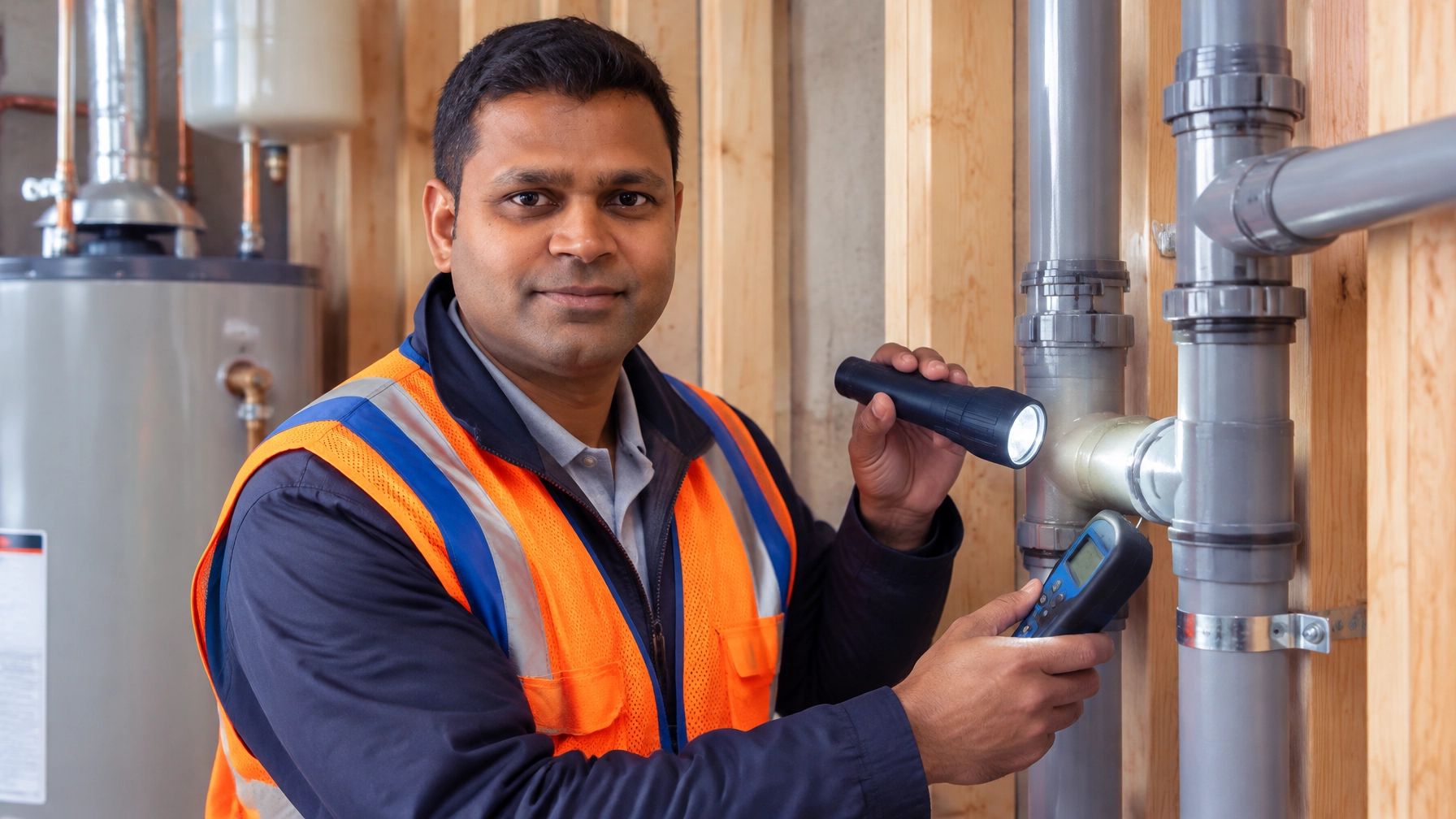
Quick answer: Poly-B plumbing is flexible plastic water-supply piping commonly installed in Edmonton and Alberta homes from the late 1970s through 1997. It can deteriorate internally, leak without much warning, and affect insurance. A home inspector can identify and document visible Poly-B, while a licensed plumber confirms replacement requirements.
Meta description: Poly-B plumbing in Edmonton affects leaks, insurance, and negotiations. Learn how inspectors identify it, replacement costs, and your next steps before buying.
Could a house look completely dry and still have a plumbing system that concerns your insurer?
Yes. Polybutylene, often called Poly-B, may operate normally for years before a pipe or fitting leaks. Because much of the plumbing can be concealed inside walls, ceilings, and finished basement areas, you may not see a problem until water damage has already occurred.
I’m Banti K Shaw, and through more than 10 years of construction and inspection experience, I’ve learned that plumbing materials deserve the same attention as roofs, foundations, and electrical systems. Poly-B is not automatically an emergency, but it is a material you should identify, document, price, and discuss before you commit to a property.
“My job is not to create panic. My job is to give you clear information about what is visible, what may be concealed, and which professional should take the next step.”
Banti K Shaw, InspecUs
If you are buying an older Edmonton home, arrange a thorough pre-purchase home inspection in Edmonton and ask specifically about the visible plumbing materials.
Was Poly-B used in the kind of home you are considering?
Polybutylene is a flexible plastic pipe that was used for interior pressurized water supply lines. It was popular because it was lightweight, inexpensive, easy to install, and less rigid than copper.
In Alberta, Poly-B was commonly installed from the late 1970s through approximately 1997, with many homes built during the 1980s and early 1990s containing it. A home built or substantially replumbed during this period deserves a specific Poly-B check.
By 2026, original Poly-B in those homes may be approximately 30 to 45 years old. Age alone does not prove that a leak is about to happen, but it does make the material important for:
For technical background, review InterNACHI’s Polybutylene for Inspectors resource.
Would you know what to look for if the basement utility room is unfinished?
Visible Poly-B commonly has these characteristics:
During a home inspection, I check accessible areas such as:

Poly-B is not used for drain, waste, or vent piping, so a grey pipe under a sink is not automatically Poly-B. Some other plastic materials can look similar. The marking and the complete visible run matter.
Pro tip: Do not inspect only the short section beside a fixture. Poly-B may connect to copper stub-outs or transition between materials. The pipe should be followed as far as it is safely visible.
If the material cannot be confirmed visually, a licensed plumber can provide a more specific identification.
What makes a pipe that looks intact become a sudden water-loss risk?
Poly-B can deteriorate from the inside out. Disinfectants in treated municipal water, including chlorine compounds, may react with the pipe material over time. This internal degradation can make the pipe more brittle and vulnerable under normal water pressure.
The failure pattern may involve:
This does not mean every Poly-B system will fail on the same schedule. There is no visual inspection that can reliably tell you how many years remain in a particular pipe. A system may have no visible leak today and still deserve replacement planning.
I also look for observable warning signs, including:
These symptoms do not prove Poly-B failure, but they justify further investigation. You can also learn more about hidden moisture through our thermal imaging and moisture detection service in Edmonton.
Could Poly-B affect whether you can obtain home insurance after making an offer?
It can. Insurance companies assess the probability and potential cost of water damage. Poly-B is often treated as a higher-risk or scheduled plumbing material because a concealed failure can release a large volume of water before anyone notices.
Depending on the insurer, the property, and the documentation available, you may encounter:
Policies vary, so do not rely on a general statement from a seller or real estate listing. Speak directly with your insurance broker before removing conditions from your offer.
Action step: Give your broker the property address, build year, inspection findings, photographs, and any plumber’s estimate. Ask in writing how active Poly-B affects coverage and whether PEX replacement satisfies the insurer’s requirements.
Are you expecting a home inspection to guarantee that the plumbing will not leak?
A professional home inspector can identify and document visible and accessible Poly-B. We can describe the material, note its condition, photograph connections, report signs of leakage, and recommend evaluation or replacement by an appropriate specialist.
However, a standard home inspection cannot:

Thermal imaging and moisture meters can help identify unusual temperature patterns or elevated moisture near accessible walls, ceilings, and plumbing areas. They are valuable tools, but they do not “see through” every wall or certify that hidden Poly-B is sound.
A home inspector Edmonton buyers can trust should be clear about these limits rather than offering false certainty.
Have you found Poly-B in a home you want to buy? You still have practical options.
Ask the inspector to document visible markings and locations. If identification is uncertain, arrange a licensed plumber’s assessment.
In Alberta, a practical planning range for whole-home Poly-B replacement is approximately $5,000 to $18,000, depending on:
Treat this as a budgeting range, not a guaranteed price. Obtain detailed local quotes before negotiating.
You may choose to:
The right choice depends on your financing, insurance approval, inspection conditions, and risk tolerance.
Many homeowners replace Poly-B with PEX because PEX is flexible, widely used, and generally easier to route through existing spaces. A licensed plumber should determine the appropriate material, design, permits, water-pressure considerations, and restoration requirements.
“A replacement estimate turns an uncertain risk into a number you can evaluate. That number gives you far more negotiating power than simply saying, ‘The plumbing is old.’”
Banti K Shaw
Would a few direct questions now prevent an expensive surprise later?
Ask the seller, agent, inspector, plumber, and insurer:
Remember, a sewer scope examines the building sewer line. It does not replace an inspection of interior Poly-B supply piping.
Is Poly-B a reason to reject every Edmonton home built in the 1980s or 1990s?
Not necessarily. The decision should be based on documented condition, insurance terms, replacement cost, negotiation room, and your comfort with future work.
The most responsible approach is to:
If you are buying, selling, or planning a replacement, InspecUs can help you understand what is visible and what deserves specialist follow-up. Book a comprehensive pre-purchase home inspection in Edmonton and take your next step with clear information.
Existing Poly-B is not automatically proof of an illegal plumbing system. However, it may be considered a higher-risk material by insurers, and replacement work must be completed according to current requirements by qualified professionals.
No. Colour alone is not enough. Look for markings such as PB2110, the pipe’s flexibility, connection style, location, and the complete accessible run. When uncertain, ask a licensed plumber.
No. A standard inspection is non-invasive. An inspector can identify and document visible material and signs of moisture but cannot dismantle piping or predict the exact date of failure.
PEX is a common modern replacement because it is flexible and practical to install. A licensed plumber should select and install the replacement system for the property’s layout and applicable requirements.
We are licensed by the Licensed Professional and certified through InterNACHI

InspecUs Home Inspection is certified in the best practices established by Internachi. Our commitment to safety includes maintaining a 6-foot distance and using personal protective equipment (PPE) during all inspections.

© 2024 InspecUs - All Rights Reserved. | Sitemap | Developed by Integrated Marketing Platform Inc.