 7132 178 St NW,

 Call us:



 Call us780-809-1056
- Mail usinfo@inspecus.ca
- Schedule An Inspection
Call us780-809-1056

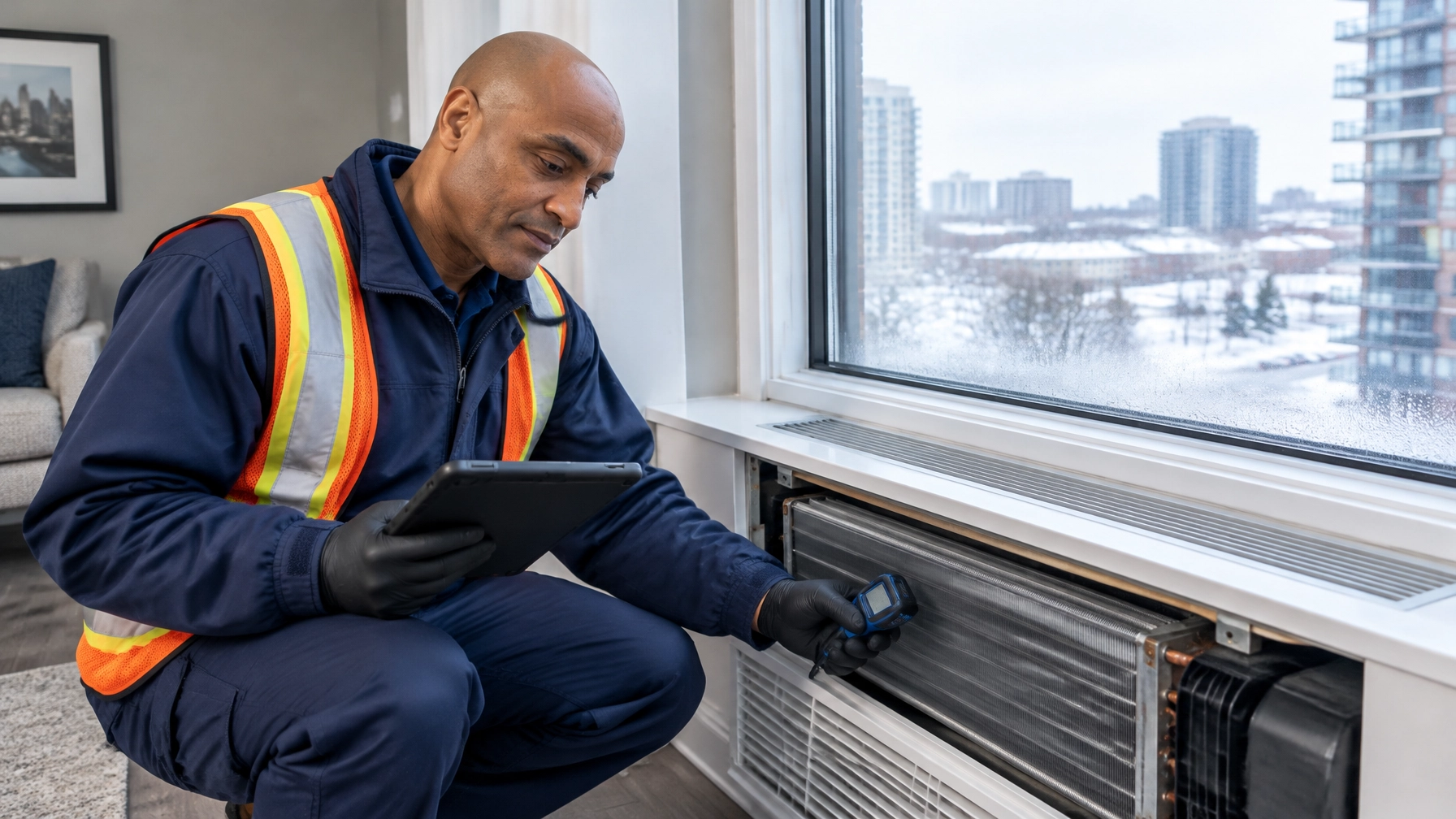
Direct answer: Can you inspect an Edmonton condo in winter? Yes; a winter viewing shows what summer showings hide, including window condensation, cold exterior walls, heating performance and management quality. Some checks, like balconies, need different winter questions.
Could cold weather reveal problems that disappear during a warm-weather showing? It can make certain conditions easier to observe: how the unit feels while the building is heating, whether windows fog or collect condensation, and whether common areas are being maintained in snow and ice.
I’m Banti K Shaw. With more than 10 years of inspection and construction experience, I look at a condo as both a private unit and part of a larger building. A winter visit doesn’t replace document review or a professional inspection, but it gives you useful seasonal evidence.
“I use winter conditions as an opportunity to observe how a unit and its accessible systems are performing right now. I don’t treat one cold-day symptom as a diagnosis; I document what I see and help you decide what needs a closer look.”- Banti K Shaw
For a broader overview of the unit inspection, see our guide to what an Edmonton condo inspection checks.
What can you observe without opening equipment or accessing restricted areas? Use this practical walkthrough, informed by the CMHC physical evaluation checklist for resale condo units.
The CMHC checklist also calls attention to snow and ice removal, parking-structure leaks and concrete deterioration, dry common locker areas, and rigid, rust-free balcony railings. These are observations to note, not a substitute for a professional assessment of common property.

Could winter conditions make some parts of the property harder to evaluate? Absolutely. Snow and cold limit what you can see or safely test, so record what is inaccessible and ask follow-up questions.
A condo inspection is a visual assessment of accessible areas. For more about the differences between unit and house inspections, read condo inspection vs. home inspection in Edmonton.
Could an everyday detail point to a maintenance or comfort concern? It might. Treat the items below as clues to discuss with your inspector or the condo manager, not as proof of a specific defect.
| What you notice | Possible explanation to investigate |
|---|---|
| Fogging between window panes in cold weather | A failed insulated-glass-unit seal may be involved. |
| Staining below a windowsill | Past or active moisture entry, condensation, or another leak source may need investigation. |
| Fan coil noise or weak airflow | The unit may need servicing, or there may be an airflow or heating-performance concern. |
| Musty lobby or locker-room odour | A moisture issue or ventilation concern may be present. |
| Parkade spalling or salt staining | Ask about water entry, concrete condition and maintenance or repair history. |
| A space heater in one unit | The resident may be addressing a cold room or heating complaint; ask whether the issue has been reported or resolved. |
| Dust or ice on window tracks | The window may need cleaning or closer review for drafts, condensation or water-related concerns. |

How can you tell whether a winter concern is isolated or part of a broader building issue? Ask clear questions and request supporting records where available.
For the reserve fund requirements, see the Government of Alberta reserve funds page. Alberta’s consumer tips for purchasing a condominium are also useful when reviewing the purchase and corporation information.
“A clean lobby is encouraging, but it can’t answer questions about the reserve fund or planned repairs. I recommend you connect what you observe on site with the corporation’s records before deciding what the building’s condition means for you.”- Banti K Shaw
Would a thermal camera or moisture meter help if you notice cold spots, staining or condensation? These tools can add information when used under suitable conditions, but they are not a stand-alone diagnosis. Thermal imaging shows temperature patterns, not what is behind a wall; moisture readings need context and may require further assessment.
If you see a suspicious area, ask your inspector whether conditions are suitable for additional testing. Learn more about thermal imaging and moisture detection in Edmonton or window inspection signs such as failed seals and drafts.
Want to make your visit more useful? These steps can help you collect details without over-interpreting what you see.
Still deciding what a winter inspection can tell you? Here are direct answers to common questions.
Yes. If the building is heating, you may be able to observe window condensation, cold areas, heating operation and winter maintenance. The inspection still has limits, especially where snow or restricted access prevents viewing.
It can assess accessible, visible conditions, but snow and ice may conceal the surface or make access unsafe. Ask about balcony inspections, maintenance and repair records instead of trying to test a covered balcony yourself.
No. Fogging between panes can indicate a failed sealed-glass unit. Condensation on the room-side surface may relate to indoor humidity, ventilation or cold surfaces. Have the specific condition assessed before deciding on repairs.
Ask the seller or condo manager what heating or utility information is available and whether heating costs are included in condo fees. Compare available records over time and clarify which costs apply to the unit versus the corporation.
The inspection focuses on agreed, accessible areas. Access to common property may require permission, and a unit inspection is not a full building assessment. Confirm the scope in advance and review corporation records for broader building information.
A winter viewing gives you useful clues, but it works best alongside a professional inspection and careful review of the condo documents. At InspecUs, we inspect 100+ items, provide reports within 24 hours with high-resolution images, and offer ongoing support after the inspection. Our service is backed by 250+ positive Google reviews.
To discuss your purchase or arrange an inspection, visit our Edmonton condo inspection service page or send us a message. There’s no pressure, just a practical next step before you make your decision.
Meta description: Winter condo inspection Edmonton guide: what the heating season reveals about windows, fan coils, parkades and building management before you buy in 2026.
We are licensed by the Licensed Professional and certified through InterNACHI

InspecUs Home Inspection is certified in the best practices established by Internachi. Our commitment to safety includes maintaining a 6-foot distance and using personal protective equipment (PPE) during all inspections.

© 2024 InspecUs - All Rights Reserved. | Sitemap | Developed by Integrated Marketing Platform Inc.