 7132 178 St NW,

 Call us:


 Call us780-809-1056
- Mail usinfo@inspecus.ca
- Schedule An Inspection
Call us780-809-1056

Direct answer: Choose a condo inspection in Edmonton when you own the unit and the corporation owns the building envelope. Choose a full home inspection for a detached or freehold townhome. In either case, pair the physical inspection with document review; neither replaces the other.
Buying a condo or townhome in Edmonton can feel simpler than buying a detached house. There may be less exterior maintenance, fewer systems to manage and no large yard to inspect. However, the inspection question is not simply about property size.
It is about what you own, what the condo corporation owns and which risks can only be identified through a physical inspection or document review.
I’m Banti K Shaw, and after more than 10 years in construction and property inspection, I’ve learned that buyers make better decisions when they understand this division before removing an inspection condition.
Are you buying the entire building, or only a defined unit within it?
The central difference is scope:
Under the InterNACHI Standards of Practice, a standard condominium inspection is focused on the individual unit. Common elements and areas the buyer does not own are generally outside the required scope.
“In my experience, the biggest condo inspection mistake is assuming the corporation’s responsibility means the buyer has no exposure. You still need to understand your unit’s moisture, plumbing, electrical and HVAC conditions, and how the building’s shared systems could affect you.”- Banti K Shaw
What can an inspector actually assess inside your unit?
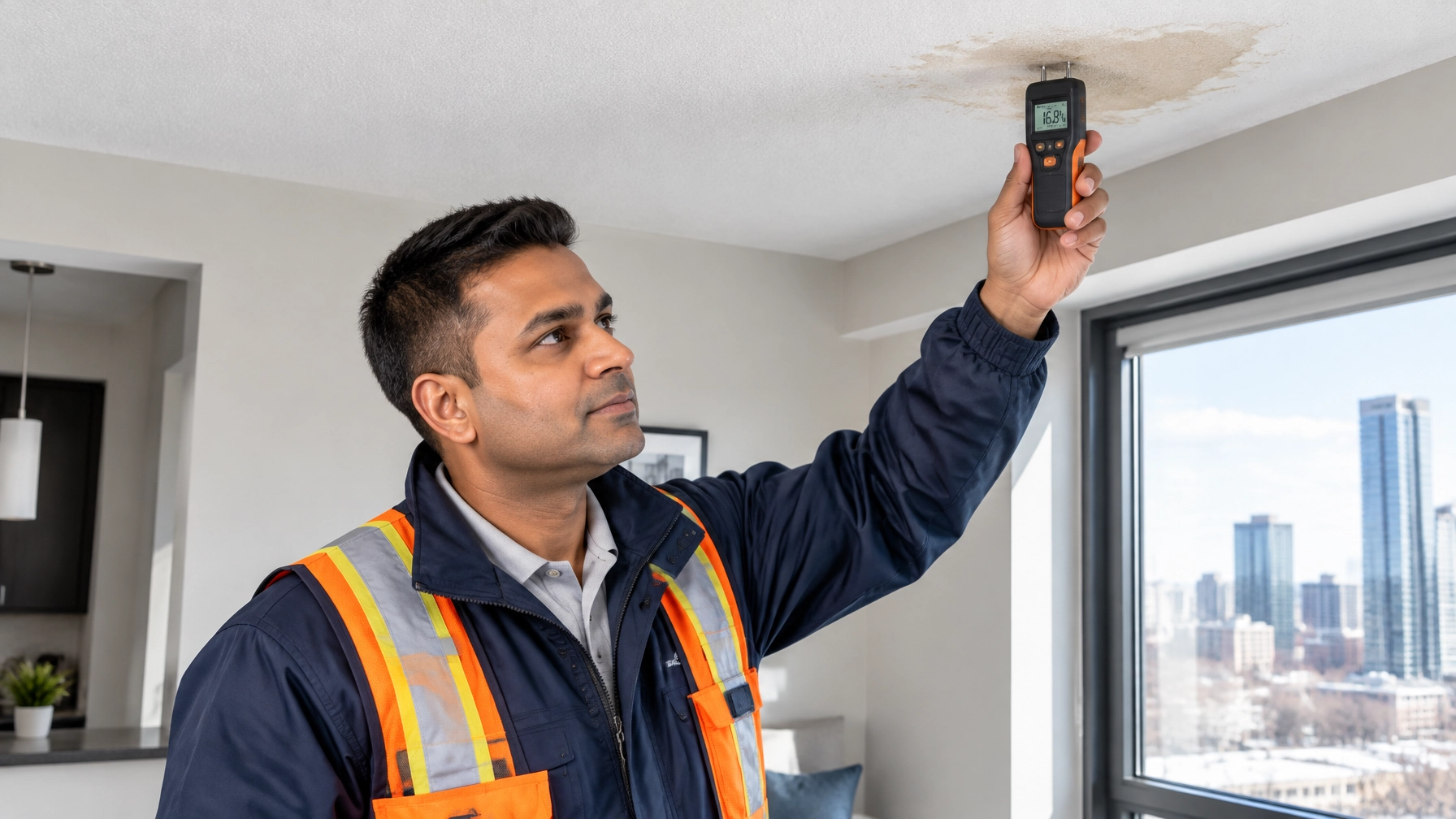
A thorough condo inspection in Edmonton should focus on accessible, visible and safely operable components within the unit, including:
A moisture meter or thermal imaging camera may help identify unusual readings near windows, ceilings, bathrooms or exterior-facing walls. These tools do not replace professional judgment, but they can reveal patterns that are not visible during a basic walkthrough.

For more detail, review our guide to what a condo inspection in Edmonton checks, costs and why you need one before buying.
A standard unit inspection does not provide a complete assessment of:
An inspector may identify an obvious issue in an accessible common area as a courtesy, but that should not be confused with a full building-envelope or common-element assessment.
Would you be responsible for the roof, drainage and foundation if something failed?
If you are buying a detached house or a freehold townhome, you generally need a full home inspection. You own, or are directly responsible for, far more of the property.
A full inspection typically includes:
You can learn more about the process through our pre-purchase home inspection service.
Which inspection matches your ownership responsibilities?
| Area | Condo inspection | Full home inspection |
|---|---|---|
| Interior of your unit | Included | Included |
| In-unit plumbing fixtures | Included | Included |
| In-unit electrical panel | Included | Included |
| In-suite HVAC | Included where accessible | Included |
| Roof | Usually corporation responsibility; not fully inspected | Included |
| Exterior walls and cladding | Usually common element; not fully inspected | Included |
| Foundation and site drainage | Limited or excluded | Included |
| Plumbing stacks | Only visible portions; concealed sections not verified | Visible plumbing is reviewed, but concealed lines remain limited |
| Central mechanical rooms | Usually excluded | Not applicable if part of the home |
| Appliances | Commonly tested if included | Commonly tested if included |
| Condo documents | Separate review | Not applicable |
| Reserve fund and special assessments | Separate document review | Not applicable |
The corporation commonly manages shared components such as:
The exact responsibility depends on the condominium plan, bylaws and registered documents. Do not rely only on a verbal explanation from a seller or listing agent.
Could a serious issue remain outside both the inspector’s and the corporation’s routine review?
Yes. Standard inspections are visual and non-invasive. They normally do not verify:
That is why a good inspection report should explain limitations clearly rather than promise certainty.
Can you skip the physical inspection if the documents look healthy?
No. Alberta does not use the term “status certificate” in exactly the same way some other provinces do. Buyers typically review a condominium document package that may include:
The Government of Alberta’s condominium information is a useful starting point for understanding the documents available to owners and buyers.
These records may reveal building-wide concerns such as:
However, documents do not physically test your unit. They will not necessarily reveal:
Reserve fund documents can also discuss plumbing stacks as common property without proving their present condition in the wall beside your unit. Document review and physical inspection answer different questions.

Is a townhome inspection the same as a condo inspection?
It depends on ownership structure.
If the townhome is part of a condominium corporation, you typically need:
Read our guide to the best townhome inspection in Edmonton for additional planning guidance.
If the townhome is freehold, treat it more like a detached house. You may be responsible for:
In that situation, a full home inspection is usually the appropriate choice.
Does “new” mean defect-free?
No. New construction can still have:
For a new condo, arrange a unit inspection and review the corporation’s available documents. For a new freehold townhome, arrange a full inspection. Documenting concerns early may make warranty discussions much easier.
Is the lower price of a condo inspection worth the risk of skipping it?
Typical Edmonton market ranges in 2026 are approximately:
Pricing varies with size, age, accessibility, inspection scope and optional services. Ask what the report includes, whether thermal imaging is used and how quickly you will receive the report.
How can you protect yourself without overcomplicating the purchase?
Use this simple process:
“My goal is not to tell you whether to buy. My job is to give you clear evidence about the property, explain what matters now and identify what deserves further investigation.”- Banti K Shaw
If you are buying a condo, townhome or house in Edmonton, the right inspection can give you more than a list of defects. It can show you where your ownership responsibility begins and ends. Contact InspecUs to discuss the property type, inspection scope and next practical step.
Meta description: Condo or home inspection in Edmonton? Compare costs, scope, townhome coverage and condo documents before buying in 2026 with expert guidance.
We are licensed by the Licensed Professional and certified through InterNACHI

InspecUs Home Inspection is certified in the best practices established by Internachi. Our commitment to safety includes maintaining a 6-foot distance and using personal protective equipment (PPE) during all inspections.

© 2024 InspecUs - All Rights Reserved. | Sitemap | Developed by Integrated Marketing Platform Inc.