 7132 178 St NW,
 Call us:


 Call us780-809-1056
- Mail usinfo@inspecus.ca
- Schedule An Inspection
Call us780-809-1056

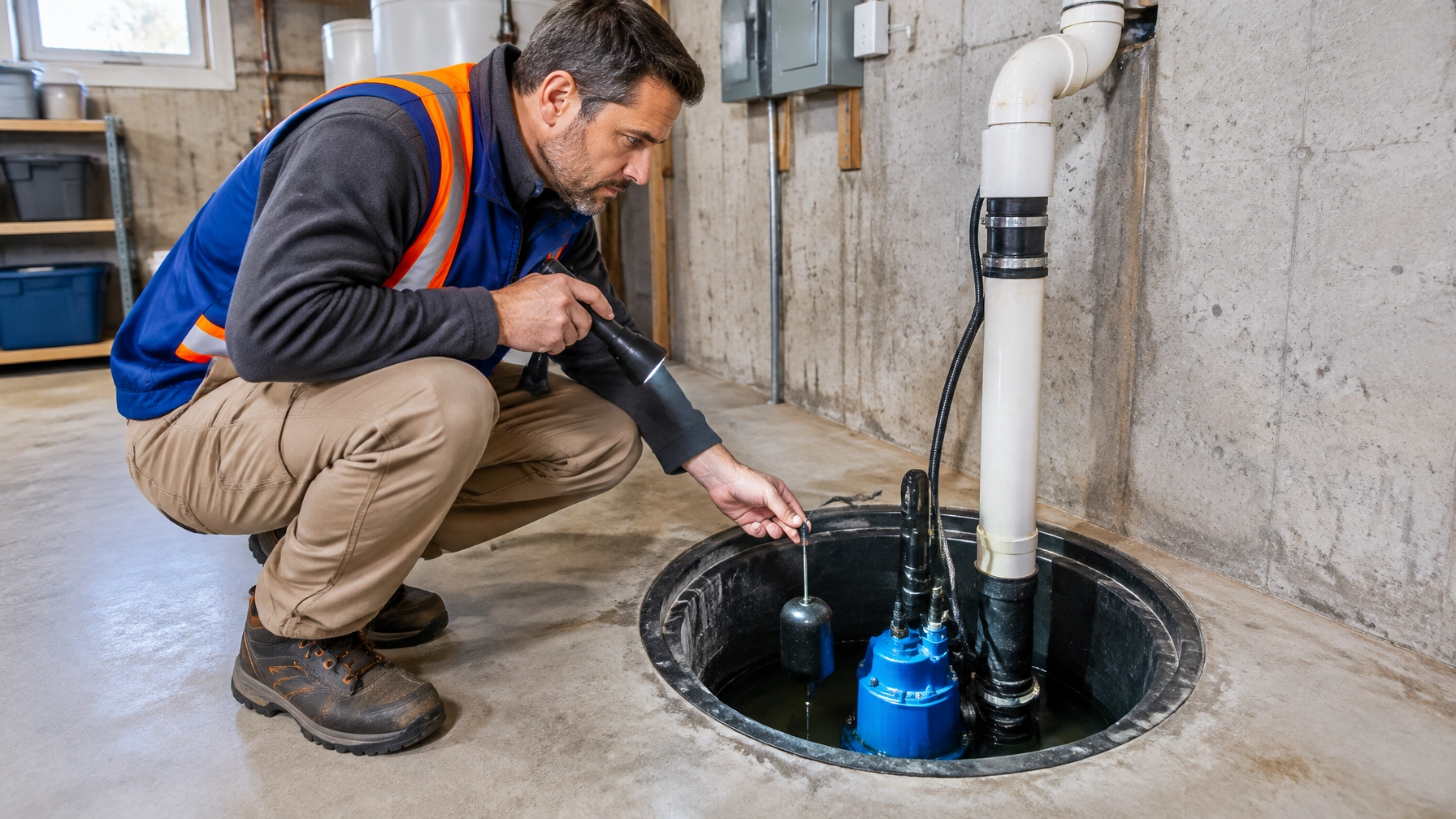
Does your Edmonton home need a sump pump and backwater valve inspection before winter? If your home has a sump pump, backwater valve, or a history of basement moisture, a fall check is a smart step. Test the pump, check the discharge route, and confirm the valve is accessible and maintained before freezing weather makes problems harder to spot and fix.
Meta description: Protect your Edmonton basement before freeze-up. Learn pump and backwater valve checks, warning signs, costs and fall fixes from local inspector Banti Shaw.
In mid-October, there is still time to check drainage, run a pump test, and arrange repairs before freeze-up. Once the ground freezes, outdoor discharge problems and drainage defects can be more difficult to investigate. In spring, melting snow and saturated soil can reveal weaknesses that went unnoticed all winter.
I have spent more than 10 years inspecting and working in construction in Edmonton. In my experience, the best time to address basement water risk is before you need the system in a storm or during spring thaw.
Edmonton has experienced serious localized rainfall and flooding. City records describe intense storms in June 2013; reporting documented basement flooding in Cloverdale on June 25. A significant thunderstorm brought heavy rain and hail to Edmonton on July 16, 2020. These events are reminders to plan for heavy rainfall, but they should not automatically be described as “100-year storms.” A 100-year storm is a probability and planning term, not a prediction that a storm happens only once every century. The City’s flood mitigation strategy explains how it plans for drainage and flood risk.
Homes in older neighbourhoods may also have legacy drainage connections or be served by combined sewer infrastructure. What that means for your property depends on its age, service layout, and past upgrades.
A visual inspection can identify concerns, but it is not a substitute for pump servicing or a plumber’s repair assessment. At the property, I look at accessible components and note when specialist follow-up is needed.

Key checks include:
A backwater valve addresses sewer backup; a sump pump handles groundwater collected by foundation drainage. They are different protections. Have a qualified plumber determine the correct valve type and installation. Foundation drains should not be connected in a way that causes water to back up at the home when a valve closes.
“I want you to know what the system can, and cannot, do before the weather tests it. A pump and a backwater valve serve different purposes, so I look at the whole drainage picture rather than treating one device as a complete solution.”
Banti K Shaw, InspecUs
Could a small clue point to a larger drainage issue? It can. These symptoms do not prove a specific failure, but they are good reasons to investigate:
| What you notice | Possible cause to investigate |
|---|---|
| Water ring or residue in the pit | Previous high water, sediment, or a pump that has not kept up |
| Pump running constantly | High groundwater, a stuck float, an undersized or failing pump, or water returning through the discharge |
| Gurgling drains | Possible blockage or pressure changes in the drainage or sewer system |
| Sewage smell | A dry or faulty trap, sewer issue, or concern with a valve or plumbing connection |
| Damp concrete or efflorescence | Moisture moving through concrete or an ongoing foundation drainage concern |
| Rust streaks | Water repeatedly contacting metal or carrying rust from nearby components |
| Ice at the discharge outlet | Discharge freezing or being poorly routed, creating a blockage risk |

If you notice water near electrical equipment, avoid entering the water or touching the equipment. Contact a qualified professional. For persistent moisture, InspecUs also offers moisture detection in Edmonton. If sewer concerns are present, a sewer scope inspection can assess the accessible underground sewer line.
Which repair deserves attention first? Prioritize any condition that could prevent water from being discharged or leave you unaware of failure.
EPCOR offers a free flood-prevention home inspection for eligible residential properties within Edmonton. The backwater valve subsidy may provide up to $800 for eligible installations, subject to program terms and available funding. EPCOR’s program information can change, so check the current requirements before arranging work or counting on a subsidy.
Are these fixed prices? No. The following are approximate planning estimates in Canadian dollars, not quotes. Access, materials, permits, excavation, concrete restoration, and the discharge route can substantially change the final cost.
| Work | Approximate 2026 Edmonton estimate |
|---|---|
| Sump pump replacement using an existing pit | $450–$1,100 |
| Backwater valve installation | $1,800–$4,500 |
| Discharge-line repair or rerouting | $150–$1,200 |
Ask for an itemized quote that identifies the work, permit costs, restoration, and any electrical or excavation requirements. An Edmonton sump pump cost guide offers additional local pricing context. EPCOR’s subsidy applies to eligible backwater valve installation, not automatically to pump replacement or discharge-line repairs.
Could a drainage concern affect your purchase decision? It could affect your repair budget and the questions you ask before conditions are removed. During a pre-purchase home inspection in Edmonton, look for visible moisture, efflorescence, rust, pump condition, discharge routing, and whether the backwater valve is accessible. Ask the seller about previous basement flooding, pump replacement, valve installation, and maintenance records.
Insurance requirements vary by insurer, policy, property, and claims history. A backwater valve is not a universal guarantee of coverage or a universal mortgage requirement. Ask your insurer and lender directly whether they have property-specific conditions, and review what water damage your policy covers.
An inspection can document visible conditions, but it cannot certify future performance or replace specialist testing. For related foundation concerns, review InspecUs’ foundation inspection information.
Not universally. Requirements and coverage terms vary by insurer and policy. Confirm directly with your insurer whether a valve is required for your specific home or affects sewer-backup coverage.
The pump is generally indoors, but its exterior discharge hose or outlet can freeze and become blocked. EPCOR advises disconnecting the exterior hose in winter. If your system uses a fixed discharge line, ask a qualified plumber how to protect it.
Follow the manufacturer’s instructions and arrange qualified maintenance as needed. InterNACHI recommends testing by adding water to the pit and confirming the pump operates, while taking care around electricity and water. See its sump pump inspection and operation guide.
A home inspector can typically observe accessible components and may test operation within the inspection’s scope and safety limits. A standard inspection is not a full pump service, repair, or guarantee. Ask your inspector what will be tested.

A little attention in fall can give you time to investigate and arrange repairs before winter conditions complicate the work. If you are buying a home or want a broader assessment of visible drainage and foundation concerns, you can contact InspecUs to discuss an inspection. I’ll help you understand what I can see, what needs specialist attention, and what a sensible next step may be.
We are licensed by the Licensed Professional and certified through InterNACHI

InspecUs Home Inspection is certified in the best practices established by Internachi. Our commitment to safety includes maintaining a 6-foot distance and using personal protective equipment (PPE) during all inspections.

© 2024 InspecUs - All Rights Reserved. | Sitemap | Developed by Integrated Marketing Platform Inc.