 7132 178 St NW,
 Call us:


 Call us780-809-1056
- Mail usinfo@inspecus.ca
- Schedule An Inspection
Call us780-809-1056

Direct answer: Keep the heat on, drain and disconnect outdoor hoses, and insulate accessible pipes in cold areas before Edmonton freezes. Pipes can freeze in exterior walls, garages, crawl spaces, or where the water line enters the home. If flow stops, look for frost and call a plumber.
Meta description: Prepare Edmonton plumbing for the first hard freeze: pipe freeze risks, a winter prep checklist, safe thawing steps, inspection limits and 2026 repair costs.
By Banti K Shaw | October 10, 2026
Could one cold corner of your home put the plumbing at risk? Yes. In Edmonton, freezing risk is often about a pipe’s location and exposure, not just the outdoor temperature. Lines can freeze when cold air reaches them through drafts, thin insulation, or an unheated space.
Pay particular attention to:
InterNACHI explains why plumbing in exterior walls and unconditioned spaces is vulnerable: pipes need protection from cold air, and insulation should be appropriately placed around them. A visual inspection cannot establish what is inside a closed wall cavity, but visible pipe placement and insulation can point to areas worth addressing.

What can you still check in mid-October? This is a useful time to address accessible plumbing, outdoor faucets, and heat in cooler areas. Before snow or a cold snap makes the work harder.
EPCOR recommends keeping water moving. Sometimes even a slow drip can help protect a vulnerable line. That is not a substitute for insulation, adequate heat, or a plumber’s advice. If you’re going away, keep the heat on, follow your insurer’s requirements, and arrange regular visits. EPCOR suggests a house sitter run taps, including showers, for about five minutes each visit.

Is a faucet running only a trickle, or not at all? EPCOR identifies no water or reduced flow as possible signs of a frozen line. Frost or ice on exposed plumbing under a sink or in an unfinished basement is another warning. A blockage or municipal service issue can also affect flow, so check whether other fixtures are affected.
If you suspect a freeze:
A frozen pipe can split, and the leak may become apparent only as it thaws. Keep checking for water as flow returns. If there is water damage, document it and contact your insurer promptly.
Can a home inspection confirm that your plumbing will not freeze? No. A visual, non-invasive inspection can report on visible conditions; it cannot certify future performance or rule out a freeze.
During a pre purchase home inspection edmonton, I can assess accessible plumbing for visible damage, corrosion, leaks, frost, missing insulation, and signs of past moisture. I can also check the operation of accessible fixtures within the inspection’s scope and note conditions that may need a plumber’s attention.
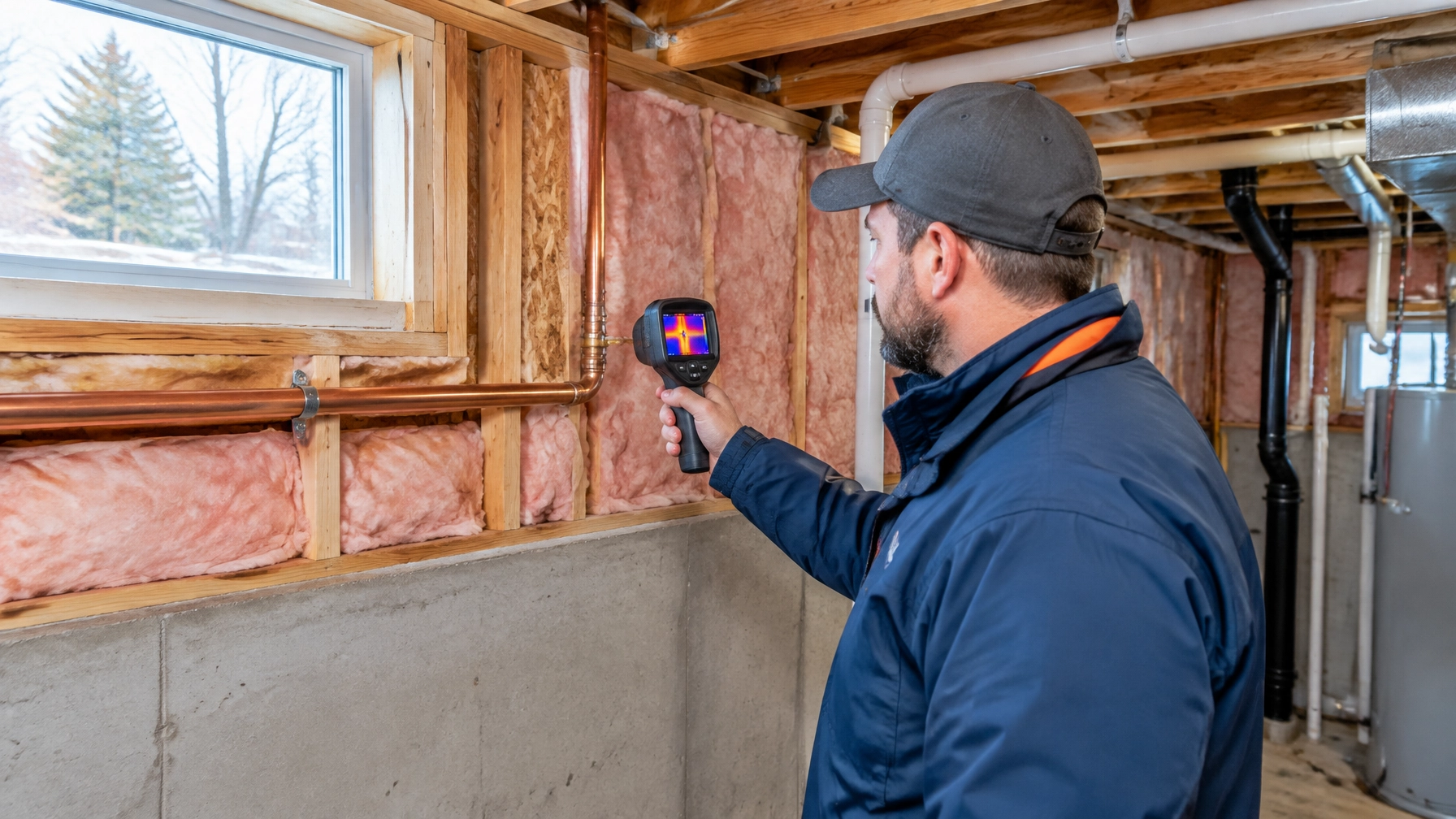
But much of a home’s plumbing is concealed. I cannot verify insulation inside a closed wall, see every section of pipe, or replace a plumbing specialist’s assessment. Thermal imaging and moisture detection can help identify temperature differences or suspicious moisture patterns, but they do not prove a pipe is insulated or guarantee there is no concealed leak.
“After more than 10 years working around homes and construction, I’ve learned that a careful inspection is about describing what is visible, and being clear about what isn’t. I would rather flag a limitation and recommend the right follow-up than offer a guarantee no visual inspection can support.”
— Banti K Shaw, InspecUs
If you’re buying, learn more about our pre-purchase home inspection in Edmonton or thermal imaging and moisture detection service.

What questions can help you uncover a freeze history? Ask the seller or agent, and request documents when available:
A home inspector can report visible conditions and concerns, but seller statements and invoices provide a different kind of history. If the inspection finds evidence of a prior leak, an inaccessible vulnerable line, or uncertain repairs, ask a licensed plumber to investigate before your purchase conditions are removed.
What should you budget? The figures below are approximate 2026 Edmonton planning estimates in Canadian dollars, not quotes. Actual costs depend on access, pipe length, materials, urgency, and whether walls or ceilings must be opened.
| Work | Approximate planning range |
|---|---|
| DIY foam insulation materials for accessible pipes | About $1–$4 per linear foot |
| Professional insulation of a small accessible area | About $150–$450 |
| Heat tape/heat trace for a vulnerable section | About $150–$450+; electrical work or longer runs may cost more |
| Service call to thaw an accessible frozen pipe | About $200–$600 |
| Repair of a burst pipe | About $450–$1,200+ |
| Opening and restoring a finished wall or ceiling | Often additional; scope varies considerably |
Treat these as budgeting ranges only. Ask contractors what the estimate includes, and confirm that any heat tape is suitable for the application and installed according to its instructions.
It depends on your policy and circumstances. The Insurance Bureau of Canada says standard home policies typically cover resulting damage from freezing and burst pipes when the pipes are in the heated portion of the home and reasonable steps were taken to maintain heat. A failed furnace is generally treated as a maintenance issue, so the furnace itself is usually not covered even where the resulting water damage is. Most policies also exclude frozen-pipe and water damage where the home is vacant, and policies usually set out how often an unoccupied home must be checked by a competent person. Coverage and conditions vary by insurer, policy, property, vacancy status, and claims history. Contact your own insurer before leaving for an extended period or assuming a loss is covered.
Edmonton has sub-zero winter weather and severe cold spells, including temperatures below −20°C. Conditions vary from day to day and year to year. Check the current forecast and prepare plumbing before freezing weather arrives.
There is no single outdoor temperature that freezes every pipe. Exposure time, drafts, insulation, pipe location, and heat inside the home all matter. Treat sustained below-freezing weather as a cue to prepare, rather than waiting for an extreme-cold warning.
A slow drip may help reduce risk for a vulnerable line, and EPCOR recommends keeping water running, even slowly. It is not a complete prevention plan. Consider which fixture is supplied by the exposed pipe, and ask a plumber or your insurer for advice specific to the property.
You can ask a plumber or your insurer whether shutting off and draining the system is appropriate for your home. EPCOR advises keeping heat on and arranging house-sitter visits; insurance requirements may differ, particularly for an unoccupied property. Confirm your policy’s monitoring and vacancy conditions before you leave.
The October checklist is a practical first step, not a guarantee against freezing. If you’re preparing to buy or want a professional review of accessible plumbing and signs of moisture, learn about our certified home inspection or contact InspecUs with your questions.
We are licensed by the Licensed Professional and certified through InterNACHI

InspecUs Home Inspection is certified in the best practices established by Internachi. Our commitment to safety includes maintaining a 6-foot distance and using personal protective equipment (PPE) during all inspections.

© 2024 InspecUs - All Rights Reserved. | Sitemap | Developed by Integrated Marketing Platform Inc.