 7132 178 St NW,

 Call us:



 Call us780-809-1056
- Mail usinfo@inspecus.ca
- Schedule An Inspection
Call us780-809-1056

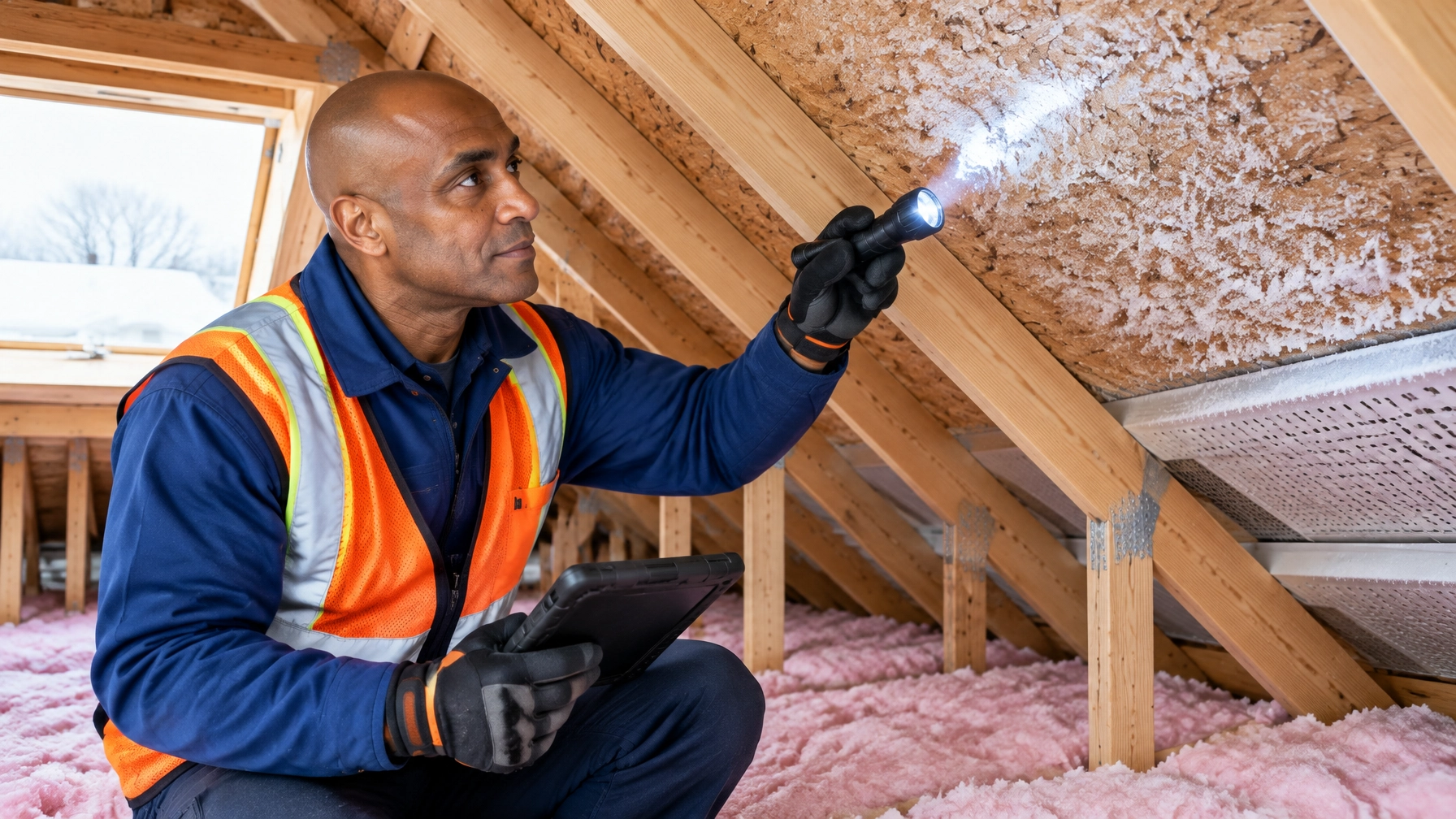
Direct answer: Attic rain is water from frost that forms on the cold underside of roof sheathing when warm, moist air leaks into the attic. During a thaw, the frost melts and may drip through insulation or ceilings, mimicking a roof leak. Checking for moisture, air leaks and blocked ventilation can help identify the cause.
Meta description: Learn what causes attic rain in Edmonton, seven red flags to check before the thaw, how to tell it from a roof leak, and what an inspection can uncover.
Could a ceiling drip after a warm spell even though your roof has no obvious leak?
Attic rain is moisture from inside your home, not necessarily rain entering through the roof. Warm, humid indoor air escapes through gaps in the ceiling and enters the cold attic. When it contacts cold roof sheathing, moisture condenses and freezes as frost. A sudden warm spell melts that frost, and the water can drip onto insulation, framing, drywall or light fixtures.
Edmonton’s deep cold and sudden temperature swings can set up this cycle. CBC reported Calgary calls after temperatures shifted from about -30 or -40°C to around +5°C in two days. That’s a Calgary example, but the same cold-snap-then-thaw pattern can affect Edmonton homes. Read the CBC report on attic rain in Alberta.
I’m Banti K Shaw, an InterNACHI-certified home inspector with more than 10 years of inspection experience and a construction background. I look beyond the drip to find the conditions that may have allowed moisture to build up.
“A ceiling stain tells you that moisture has been present; it does not, by itself, tell you where the water came from. I look for the pattern, the weather conditions and the attic evidence before drawing a conclusion.”
Banti K Shaw
What can you look for safely before Edmonton’s next cold snap?
If you can see the attic hatch without entering the space, check for signs of moisture. Don’t step onto insulation or unstable framing. Look for these seven clues:
For a fuller seasonal checklist, see our guide to what an attic inspection in Edmonton checks before winter.
Are you trying to work out whether water came from inside the house or through the roof?
Timing and location offer clues, but they cannot confirm the source on their own. Attic rain often appears after a cold spell followed by a thaw. A roof leak may be more closely associated with rain, wind-driven precipitation, snow melt or a specific roof penetration. Both can leave stains, and attic moisture may travel along framing before appearing on a ceiling.
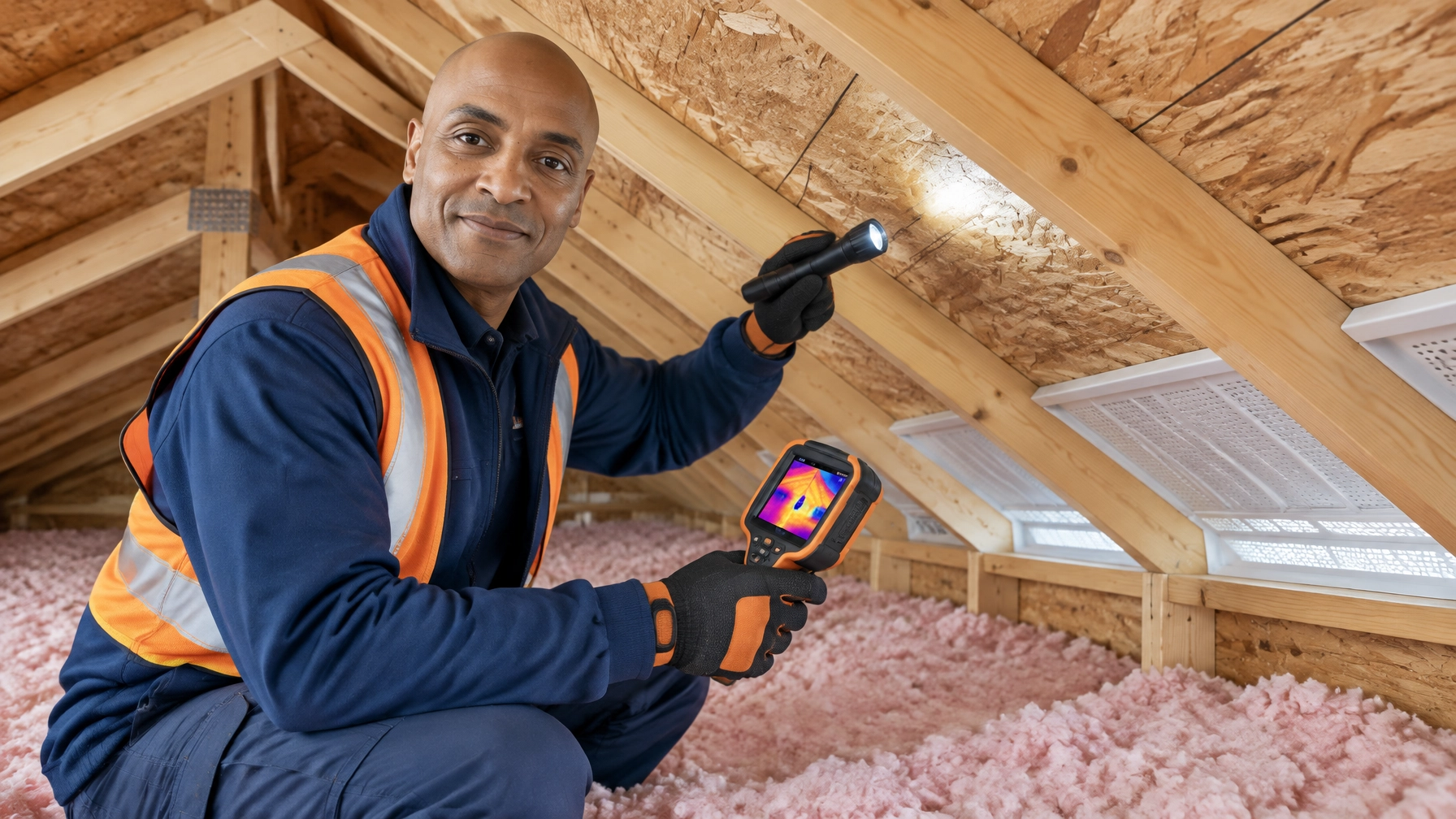
An inspection can compare the interior symptoms with visible attic and roof conditions, including:
The Canada Mortgage and Housing Corporation moisture guide discusses attic signs such as frost or stains on sheathing, moisture near fixtures and vents, and water dripping from soffits. If the evidence remains unclear, a roofing or insulation contractor may need to investigate further.
Would extra vents solve the problem, or could they hide the real cause?
Not necessarily. If warm, moist indoor air is leaking through ceiling bypasses, more attic vents may not stop the moisture from entering. The first priority is usually to identify and address indoor air leakage, manage household moisture, and confirm existing ventilation is open and functioning as intended.
Common leakage points include:
CMHC and Natural Resources Canada’s attic guidance emphasize air sealing. NRCan cautions homeowners not to automatically increase ventilation: some fan setups can draw more house air into the attic. Keep soffit pathways clear, but ask a qualified contractor to assess ventilation changes rather than adding vents as a quick fix.
Is there one humidity setting that works for every home during an Edmonton winter?
No. The suitable indoor humidity depends on the outdoor temperature, windows and building conditions. CMHC notes that in very cold weather, some homes may need 30% relative humidity or less to limit condensation; its guide advises keeping winter humidity at or below 45%. Treat those figures as general guidance, not a guarantee for every home. Persistent window condensation is a practical warning sign to check your humidity and moisture sources.
Before winter and during severe cold:
For broader moisture advice, consult the CMHC guide. If your separate home-buying checklist includes radon testing in Edmonton, remember that an attic inspection cannot measure radon. Health Canada recommends a long-term test; see its guidance on testing your home for radon.
How does an inspection move from “there’s a drip” to a useful next step?
Where the attic is accessible and safe, I visually assess conditions that may help explain the moisture, including insulation, roof sheathing, ventilation pathways, duct connections, attic-hatch fit and visible air-leak locations. Thermal imaging can help locate temperature patterns that suggest heat escaping through a ceiling or around a penetration. It does not prove that a spot is wet or identify the cause by itself; findings need to be interpreted alongside visible conditions.

At InspecUs, inspection observations are documented with high-resolution photos. Our thermal imaging and moisture detection service can provide additional information when temperature patterns or suspected moisture need closer attention. For roof-edge issues that may overlap with attic rain, see our guide to preventing ice dams in Edmonton.
A scope note: Home inspectors visually assess accessible areas; they do not open finished ceilings or dismantle building components as part of a standard inspection. If repairs are needed, an insulation or air-sealing contractor can investigate and complete the work. A roofer may be appropriate if evidence points to exterior water entry.
“My job is to give you a clear, unbiased picture of visible conditions and help you understand what to do next. If an area is inaccessible or needs specialist testing, I’ll say so rather than guess.”
Banti K Shaw
What small steps can you take now without disturbing the attic?
If you see recurring drips, widespread frost, wet insulation or deteriorating sheathing, consider a professional assessment before the next thaw. You can contact InspecUs to discuss an attic inspection in Edmonton and the surrounding area, no pressure, just a practical next step.
We are licensed by the Licensed Professional and certified through InterNACHI

InspecUs Home Inspection is certified in the best practices established by Internachi. Our commitment to safety includes maintaining a 6-foot distance and using personal protective equipment (PPE) during all inspections.

© 2024 InspecUs - All Rights Reserved. | Sitemap | Developed by Integrated Marketing Platform Inc.