 7132 178 St NW,
 Call us:

 Call us780-809-1056
- Mail usinfo@inspecus.ca
- Schedule An Inspection
Call us780-809-1056

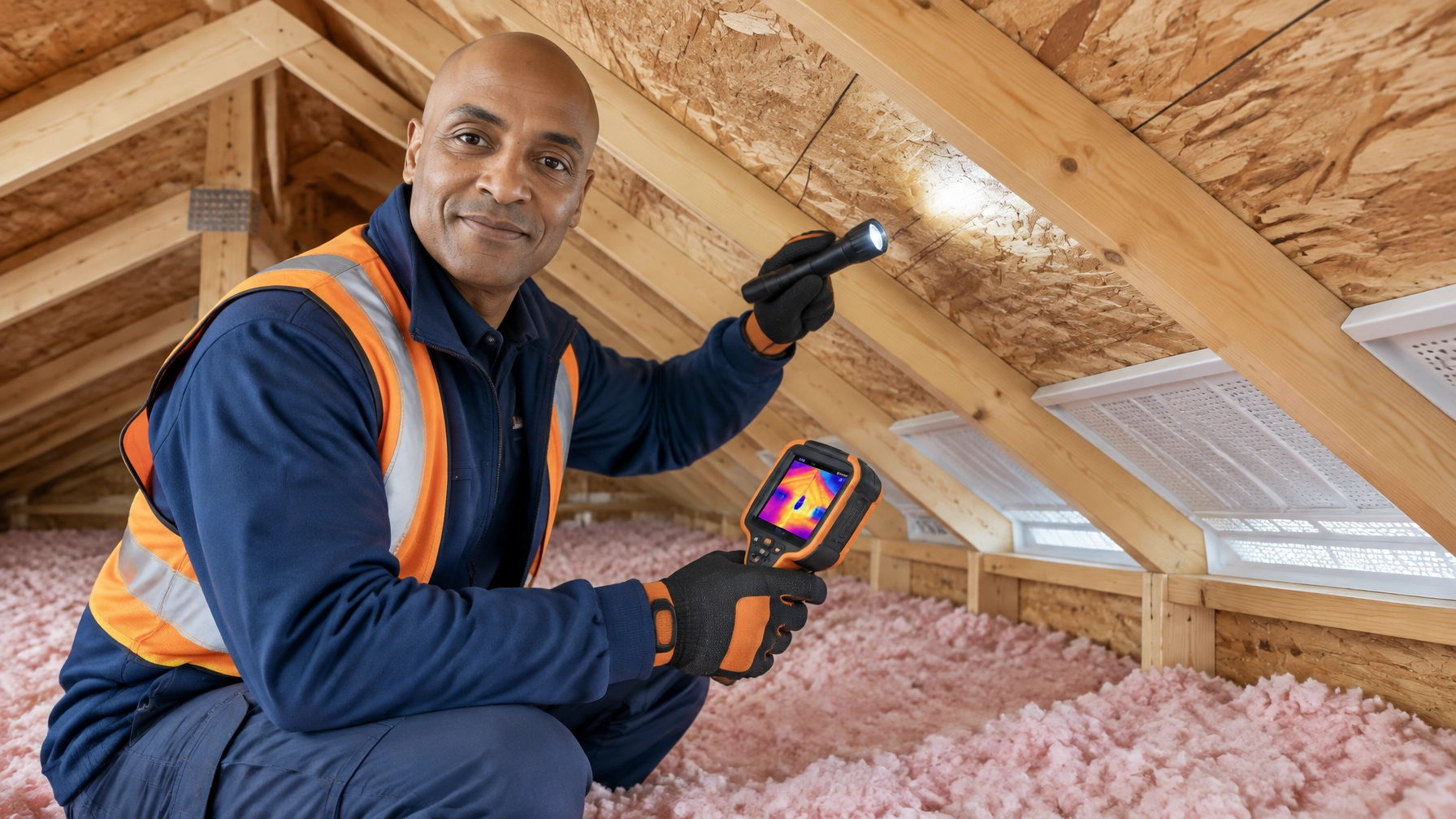
Direct answer: An Edmonton attic inspection before winter reviews the roof structure, insulation, ventilation, moisture, wiring, ducts, hatch, pests, and leak evidence. The goal is to keep the attic cold and dry, reduce heat loss, and identify conditions that can lead to attic rain, mould, or ice dams.
Meta description: Edmonton attic inspection checks before winter: insulation, ventilation, moisture, wiring, ducts and leaks: and explains how to reduce ice-dam risk for homeowners.
Could the space above your ceiling determine whether your home develops ice dams, attic rain, mould, or uncomfortable cold rooms?
In Edmonton, your attic is not simply an empty storage area. It is the building system that separates warm indoor living space from freezing outdoor temperatures. When insulation, air sealing, and ventilation work together, the roof deck stays close to outdoor temperature and winter moisture can escape.
When they do not, heat and humid indoor air may rise into the attic. Snow can melt unevenly, refreeze at the eaves, and create ice dams. Condensation can form frost on the roof sheathing, leading to attic rain when temperatures rise.
I’m Banti K Shaw, founder and chief inspection officer at InspecUs. With more than 10 years of inspection experience and a construction background, I assess the attic as part of the complete home: not as an isolated space.
“In my experience, a healthy winter attic should be cold, dry, and properly ventilated. If it is warm, damp, or showing frost, the attic is telling you that heat, moisture, or water is moving where it should not.” : Banti K Shaw
For a broader seasonal review, see our fall home inspection checklist for Edmonton.
Are you wondering what is actually examined during an attic inspection Edmonton homeowners can rely on?
Where the attic is accessible and safe, I typically review the following areas.
I look at the attic side of the roof for:
A home inspector can identify visible concerns and recommend the appropriate next step. If the structure appears significantly damaged or altered, an engineer may be required for a formal structural opinion.
What good is insulation if it is thin, uneven, wet, or blocking the soffits?
I document the approximate insulation type and depth, including whether the attic contains fibreglass batts, blown fibreglass, cellulose, or a combination. I also check for:
Edmonton homes need substantial insulation because of our long, cold heating season. The City of Edmonton’s Climate Resilient Home Guide recommends improving attic insulation and ventilation to reduce ice-damming risk.
Does your attic have vents, or does it actually have a functioning airflow path?
I check whether air can enter through the soffits and move upward toward ridge, roof, or gable exhaust vents. This includes looking for:
Soffit baffles, also called vent chutes, preserve an open channel between the soffit and the attic. Without them, insulation can block incoming air and leave the roof edge cold in some areas but warm in others: an arrangement that increases condensation and ice-dam risk.
A commonly referenced ventilation guideline is the 1:300 rule: approximately one square foot of net free vent area for every 300 square feet of attic floor area when an appropriate vapour barrier is present. Without that vapour barrier, the commonly referenced ratio is 1:150.
However, 1:300 is not a substitute for a complete assessment. Vent type, net free area, roof design, intake location, air sealing, and local requirements all matter. Under the InterNACHI Standards of Practice, a typical home inspection describes insulation and ventilation but does not necessarily include a formal ventilation-area calculation.

Could a small amount of frost be the early warning of a much larger attic-rain problem?
I look for:
A light frost event may disappear when weather changes, but repeated or heavy frost indicates that warm, moist air is reaching a cold surface. When the attic warms, that frost can melt and drip into the insulation or ceiling.
What happens when electrical work is incomplete or poorly protected in an insulated attic?
I inspect visible wiring for conditions such as:
I do not perform an electrician’s full diagnostic evaluation, but visible safety concerns should be documented. Significant electrical defects should be reviewed by a qualified electrician.
Bathroom fans, kitchen exhausts, and plumbing vents require careful attention because they can introduce moisture or create leak points.
I check whether:
An exhaust fan venting into the attic can add a surprising amount of moisture during winter. This is one of the most common causes of frost and attic-rain conditions.
Is your attic hatch acting like an open window into the house?
I check whether the hatch is:
I also look around plumbing stacks, electrical penetrations, light fixtures, ductwork, and top plates for obvious attic bypasses. Air sealing is essential because ventilation cannot fully compensate for large amounts of warm, humid indoor air leaking into the attic.
Could rodents or wasps be damaging the attic without making themselves obvious inside your home?
I look for:
Pest-related damage may require a qualified pest-control company. Electrical damage caused by rodents should also be assessed promptly.

Shouldn’t your attic be warm because warm air rises?
A properly insulated and ventilated attic should remain relatively close to outdoor temperature during winter. Insulation keeps heat in the living space, while ventilation helps remove small amounts of heat and moisture that reach the attic.
A warm roof deck can melt snow above the heated areas of your home. Water then runs toward the colder eaves and refreezes, forming an ice dam. That ice can force water beneath shingles and into the roof assembly.
This is why the Natural Resources Canada guidance on attic insulation and ventilation emphasizes insulation, ventilation, and air sealing as connected parts of home performance.
Have you noticed any of these conditions before calling an inspector?
Do not climb onto the roof or walk across attic insulation if you are unsure of the structure or access conditions. Photograph what you can safely observe and tell the inspector about past leaks, repairs, or ice dams.
Should you wait until you see water?
For most Edmonton homeowners, I recommend:
A yearly visual check does not always require a full inspection. However, if you see frost, moisture, staining, pests, or cold-room patterns, professional documentation can help identify the cause before damage spreads.
Are you comparing prices without comparing the inspection scope?
As a general 2026 planning range, an attic-focused or roof-attic review may cost approximately $150 to $400, depending on access, property size, roof design, and whether thermal imaging or moisture detection is included. A comprehensive home inspection that includes the attic commonly falls around $400 to $600, although prices vary by provider and service level.
Ask whether the inspection includes:
Our thermal imaging and moisture detection service may provide additional information when temperature patterns or suspected moisture require closer attention.
Do you need an engineer, a home inspector, or a roofing contractor?
Call a home inspector when you need a broad, unbiased assessment of visible attic conditions, insulation, ventilation, moisture evidence, wiring, ducts, pests, and roof-related symptoms.
Call a structural engineer when you see or suspect:
Call a qualified roofing or insulation contractor for repair estimates, replacement work, ventilation installation, or insulation upgrades. The best sequence is often an inspection first, followed by the appropriate specialist when the report identifies a specific concern.
Could one inspection now prevent an emergency during the next deep freeze?
My pro tips are:
At InspecUs, we inspect more than 100 items, use advanced tools where appropriate, and provide an unbiased report with high-resolution images within 24 hours.
If you are concerned about frost, ice dams, cold rooms, mould-like staining, or attic rain, contact InspecUs for an Edmonton home inspection. A clear pre-winter assessment can help you prioritize the right repair before a small attic problem becomes expensive interior damage.
We are licensed by the Licensed Professional and certified through InterNACHI

InspecUs Home Inspection is certified in the best practices established by Internachi. Our commitment to safety includes maintaining a 6-foot distance and using personal protective equipment (PPE) during all inspections.

© 2024 InspecUs - All Rights Reserved. | Sitemap | Developed by Integrated Marketing Platform Inc.