 7132 178 St NW,

 Call us:



 Call us780-809-1056
- Mail usinfo@inspecus.ca
- Schedule An Inspection
Call us780-809-1056

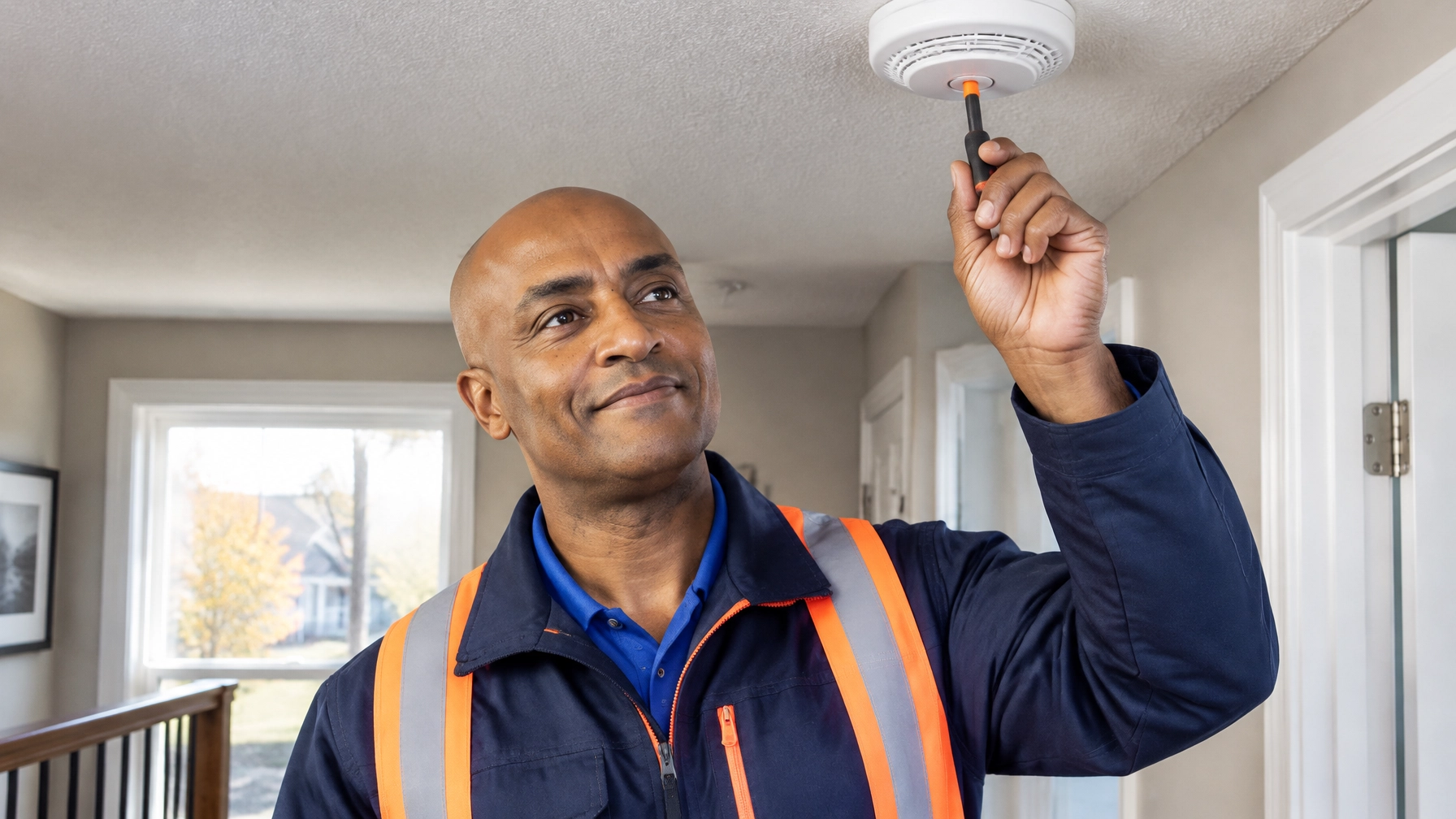
Meta description: Check smoke and CO alarms in Edmonton before heating season: placement, expiry, monthly tests and seven red flags, with Alberta guidance and inspection tips.
Direct answer: Before Edmonton’s heating season, check that smoke alarms cover every required storey and sleeping area, and that CO alarms are correctly placed near bedrooms if your home has fuel-burning appliances or an attached garage. Test monthly and replace units at their marked expiry.
When furnaces and fireplaces start running again, your alarms need to be ready too. Winter brings closed windows and more time indoors, making fall a practical time to test alarms, check their dates, and replace units that are missing or no longer reliable.
I’m Banti K Shaw, an Edmonton-based, InterNACHI-certified inspector with more than 10 years of inspection and construction experience. In a home inspection in Edmonton, I look at smoke and carbon monoxide (CO) alarms as part of the home’s visible safety picture, but there are useful checks you can make before booking an inspection.
Do you know whether an alarm on the main floor protects the whole house? Alberta’s homeowner guidance describes smoke-alarm installation requirements; “Smoke Alarm Act” is sometimes used informally, but it is not the formal name of a standalone provincial Act.
In general, Alberta guidance calls for smoke alarms that conform to CAN/ULC-S531 and are installed:
For a specific home, applicable requirements can depend on its age, renovations, layout, and whether it has a secondary suite. Check the Alberta smoke-alarm installation guidance and confirm code questions with the local authority.
Does your home have a gas furnace, fireplace, or attached garage? Alberta’s CO-alarm guidance identifies homes with a fuel-burning appliance and/or an attached storage garage as needing CO alarms. CO alarms should conform to CAN/CSA-6.19.
For a bedroom location, the guidance says a CO alarm should be inside each bedroom or outside it within 5 metres of the bedroom door, measured along corridors and doorways. Follow the manufacturer’s instructions for mounting height and location. An attached garage matters because vehicle exhaust can enter the home.
See the Alberta CO-alarm home installation guidance and the City of Edmonton’s home fire safety equipment guidance.

What should you look for before the first cold night? Walk through the home and check each alarm rather than assuming one unit covers everything.
“A working alarm is only useful if it can warn you where you sleep. I check the number, location, visible condition and test response, not just whether a device is present.”- Banti K Shaw
Could an alarm that worked last spring be unreliable now? Heating season is a sensible time to check because furnaces, fireplaces, and other fuel-burning appliances may be used more often while windows remain closed. That makes it important to have functioning CO alarms in the right locations.
This doesn’t mean a functioning alarm replaces appliance maintenance. Have fuel-burning equipment serviced by a qualified technician as recommended by its manufacturer, and keep vents and chimneys clear. If a CO alarm sounds, treat it as an emergency: leave the home and call emergency services from outside.
Pro tip: Check alarms when you test your furnace for the season, and again whenever you move into a property or change the sleeping-room layout.
When was the last time you tested each unit? The City of Edmonton recommends testing smoke and CO alarms monthly. Press and hold the test button according to the device instructions, and confirm you hear the alarm. A test button checks the unit’s response; it does not replace checking its expiry date or following all manufacturer maintenance instructions.
A simple routine:

Alberta guidance calls for smoke alarms on every storey, including the basement, and in each sleeping room. On storeys with sleeping rooms, an alarm should also be between the sleeping rooms and the rest of the storey, often in the hallway. Follow installation instructions and confirm requirements for your home’s layout and any secondary suite.
A high-efficiency furnace does not remove the need to check CO-alarm requirements. Alberta guidance identifies fuel-burning appliances and attached storage garages as reasons CO alarms are required. Place alarms near sleeping areas as directed by the guidance and product instructions.
Test both types at least once a month using the test button, following the manufacturer’s instructions. Testing does not replace regular maintenance, battery replacement when applicable, or checking the alarm’s expiry date.
Use the replacement date or end-of-life instructions printed on the unit or provided by the manufacturer. Smoke alarms are commonly replaced after 10 years, but always check the label. CO alarm replacement intervals can vary, so don’t assume every model has the same lifespan.
What can you expect when an inspector looks at these devices? During a visual home inspection, I check whether alarms are present, their visible locations, their apparent age or date markings, and whether they respond to the test button when accessible and safe to test. I also note visible concerns such as a missing unit or an alarm that appears disconnected.
An inspection is not a substitute for a dedicated alarm-system assessment or a code compliance review. If a device’s certification, wiring, interconnection, or compliance is uncertain, ask a qualified professional or the local authority to confirm what applies to your home.
“My construction background helps me look at how a home’s systems fit together, but an inspection is also about being clear about what I can and can’t verify. If an alarm is expired or its history is unknown, I’ll say so plainly.”- Banti K Shaw
For a broader look at the property, explore our certified home inspection service in Edmonton or pre-purchase home inspection service. You can also review our fall home inspection checklist for other seasonal checks.
Before heating season starts, test your alarms, confirm their locations, and check the dates on every unit. If you’re buying or selling a home, or want a professional to assess visible safety concerns as part of a broader property review, contact InspecUs to discuss the next step.
We are licensed by the Licensed Professional and certified through InterNACHI

InspecUs Home Inspection is certified in the best practices established by Internachi. Our commitment to safety includes maintaining a 6-foot distance and using personal protective equipment (PPE) during all inspections.

© 2024 InspecUs - All Rights Reserved. | Sitemap | Developed by Integrated Marketing Platform Inc.