 7132 178 St NW,

 Call us:



 Call us780-809-1056
- Mail usinfo@inspecus.ca
- Schedule An Inspection
Call us780-809-1056

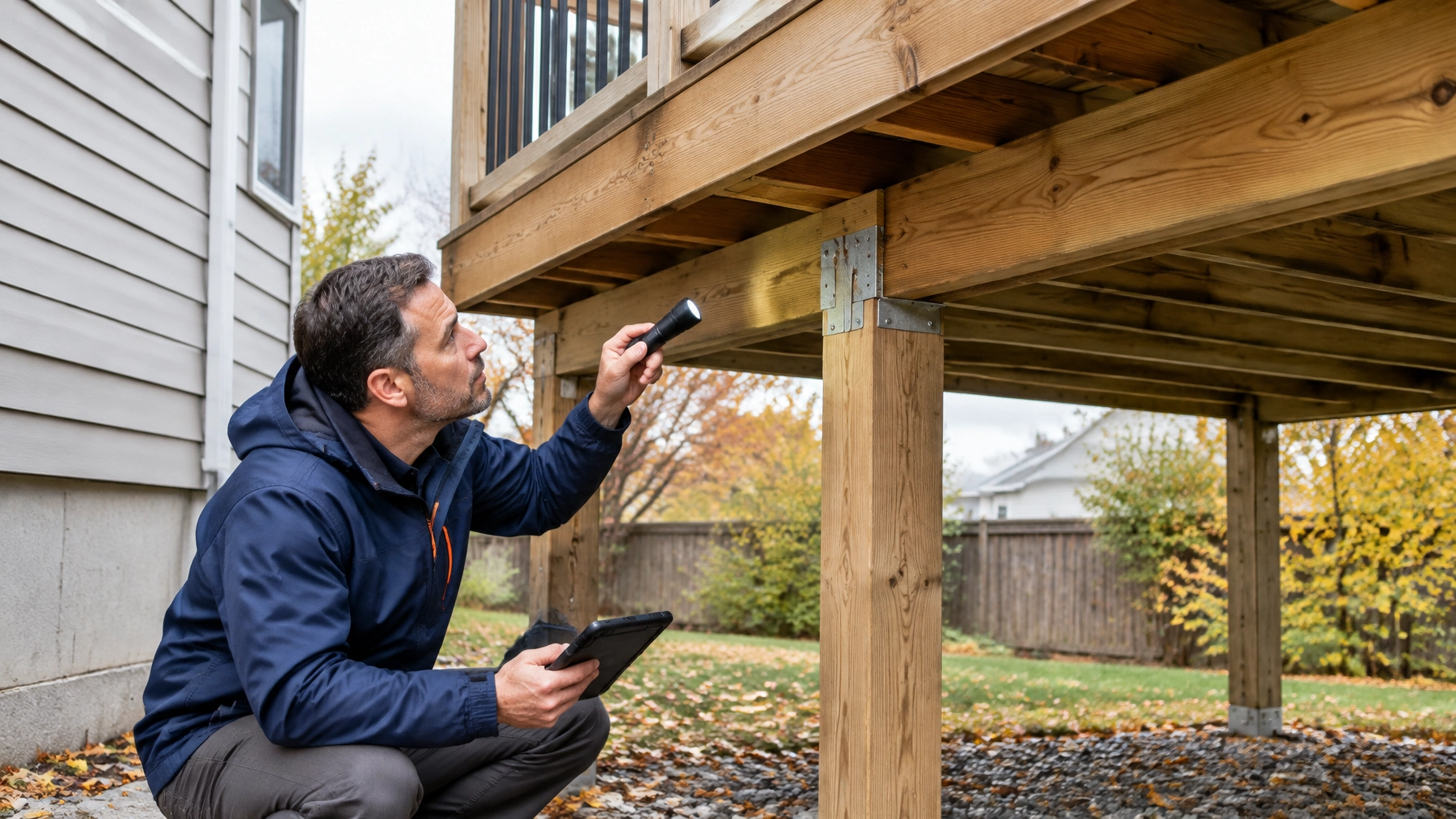
Quick answer: Before winter, inspect your Edmonton deck or porch for a separating ledger, wood rot, loose or missing guards, unsafe stairs, corroded connectors, moving posts or footings, and damaged or slippery boards. If you see major movement or connection failure, keep off it and arrange a qualified assessment.
Meta description: Before Edmonton winter, use this 7-point deck and porch checklist to spot loose ledger connections, rot, unsafe railings, stair defects, corroded fasteners and snow concerns.
Could your deck or porch look fine from above but hide a safety problem underneath? I’m Banti K Shaw, owner of InspecUs. With more than 10 years of construction and inspection experience, I know that decks are structures, not just outdoor finishes. A fall check can help you spot concerns before snow, ice, and freeze-thaw cycles complicate repairs.
I use this checklist to help you know what to look for. It’s not a substitute for a structural assessment, and you shouldn’t walk onto a deck that appears unstable. InterNACHI’s illustrated deck inspection guidance also advises starting below and stopping if the structure looks unsafe.
The ledger is the board that connects an attached deck to the house. InterNACHI identifies ledger separation as a common cause of deck collapse, so I pay close attention to this connection.
From a safe position, look for:
Without effective flashing, water can get behind the ledger and damage both the deck connection and the house framing. Snow and freeze-thaw can add stress or worsen moisture concerns, which makes fall a useful time to look.

Banti’s perspective: “I don’t judge a deck by its surface alone. I want to understand how the load travels through the framing and whether the visible connections look sound.”
If the ledger seems loose or you can’t verify the connection, keep people off the deck and ask a qualified professional to assess it. Don’t try to confirm safety by bouncing or gathering people on it. You can also read InterNACHI’s guidance on deck connections.
Wood damage often starts in places that stay wet or are difficult to see. Check accessible areas around:
Soft, crumbling, split, or discoloured wood deserves a closer look. Paint or a surface coating can also hide deterioration, so don’t treat a fresh-looking finish as proof that the framing underneath is sound.

Pro tip: Look for where water comes from as well as where it ends up. A downspout, sprinkler, or poorly draining area that keeps a post wet can contribute to decay over time.
A loose railing can create a fall hazard even if the deck framing is sound. Check that guards are present where needed and that the railing doesn’t shift or feel loose during a gentle hand check.
Look for:
The City of Edmonton’s uncovered deck information outlines local requirements. Rules depend on the structure and site, so use the City’s current guidance rather than assuming a railing is compliant based on appearance alone.
Deck stairs get slippery and harder to use once snow and ice arrive. Before winter, look for separation between stairs and the deck, cracked or decayed stringers, loose treads, and uneven step heights that could catch your foot.
Also check that:
If the stairs move or a stringer looks damaged, avoid using them until they’ve been assessed. A small defect can become harder to navigate when the surface is icy.

Could rust be telling you that a connection is deteriorating? Check visible joist hangers, brackets, bolts, screws, and nails for heavy corrosion. Other clues include rust-coloured streaks on the wood, popped nail heads, missing fasteners, or connectors that look loose or bent.
Corrosion can affect the connector and the wood around it. Not every rust mark means the deck is unsafe, but widespread or advanced corrosion, especially near a major connection, is worth having assessed.
Look from a safe position at the support posts and their bases. Warning signs include posts in direct ground contact, cracked footings, leaning or shifted supports, and a deck that appears to sag or move.
Be cautious of repairs that look improvised: sistered lumber that doesn’t appear properly connected, mismatched materials, or new structures added to an existing deck. A repair or addition may need professional review and, depending on the work, a permit. I recommend checking current requirements with the City of Edmonton. A permit history alone doesn’t confirm a deck’s present condition.
Splintering or loose boards can catch feet and collect water. Check for raised fasteners, gaps that trap debris, and slick areas where water tends to sit and freeze. Also check that the area below the deck can drain instead of holding water that may affect supports.
Before snow arrives, remove leaves and loose debris and address damaged boards. If you have a deck with visible movement, weakened framing, or a questionable connection, don’t assume it can take a heavy snow pile. Snow weight varies with its depth, density, drifting, and the deck’s design and condition. I can’t give you a safe universal snow amount based on a visual glance.
There isn’t one reliable snow-depth limit for every Edmonton deck. Capacity depends on the structure’s design, condition, span, supports, snow density, and drifting. If you’re unsure about your deck’s capacity, or it has a hot tub, roof discharge, or signs of weakness, ask a qualified structural professional. Don’t wait for a visible problem to test its strength.
If snow accumulation concerns you, follow the deck manufacturer’s guidance if available and consider advice from a qualified professional. Avoid climbing onto an icy or unstable deck, and don’t use heavy or sharp tools that could damage the surface. If the deck is already showing movement or deterioration, keep off it and seek an assessment before attempting snow removal.
Start with visible warning signs: a ledger pulling away, soft or rotted framing, a loose guard, unstable stairs, corroded connectors, or moving posts and footings. If you find any of these, stop using the deck until it has been reviewed. I can help document accessible concerns during a certified home inspection in Edmonton, but questions about structural capacity may require an engineer.
Replacement may be worth discussing when deterioration affects several major components, the deck has significant movement, or repairs cannot reliably restore the load path and connections. Localized damage may be repairable, but I can’t determine that from one visible symptom alone. A qualified contractor or structural engineer can assess the scope and recommend whether repair or replacement makes sense.
Could an inspection help you decide what needs attention first? I’m Banti K Shaw, an InterNACHI-certified inspector with a construction background. I focus on clear, unbiased findings so you can make informed decisions about your property.
If you’re buying a home, you can learn more about my pre-purchase home inspection service. For a broader seasonal checklist, see my guide to Edmonton pre-winter home checks.
If you’d like to discuss your deck, porch, or home inspection, call 780-809-1056 or request a free quote.
We are licensed by the Licensed Professional and certified through InterNACHI

InspecUs Home Inspection is certified in the best practices established by Internachi. Our commitment to safety includes maintaining a 6-foot distance and using personal protective equipment (PPE) during all inspections.

© 2024 InspecUs - All Rights Reserved. | Sitemap | Developed by Integrated Marketing Platform Inc.