 7132 178 St NW,
 Call us:

 Call us780-809-1056
- Mail usinfo@inspecus.ca
- Schedule An Inspection
Call us780-809-1056

Meta description: Learn what a chimney inspection checks in Edmonton, 2026 costs, fireplace and wood stove safety, WETT requirements, creosote risks, and first-fire tips.
Direct answer: A chimney inspection checks the chimney’s masonry, crown, cap, flashing, clearances, height, accessible flue, damper, firebox, hearth, connector pipes, and creosote or soot. It can identify visible damage, water entry, blockages, and unsafe conditions before you light your first fire.
Early October is the right time to think about your chimney, fireplace, or wood stove in Edmonton. After sitting unused since spring, the system may have developed masonry damage, water entry, animal blockages, rust, or creosote buildup.
I’m Banti K Shaw, founder of InspecUs. With more than 10 years of construction and inspection experience, I look at fireplaces and venting systems practically: what is visible, what may be unsafe, and when a specialist should investigate further.
Could a chimney look acceptable from the ground but still have a serious problem?
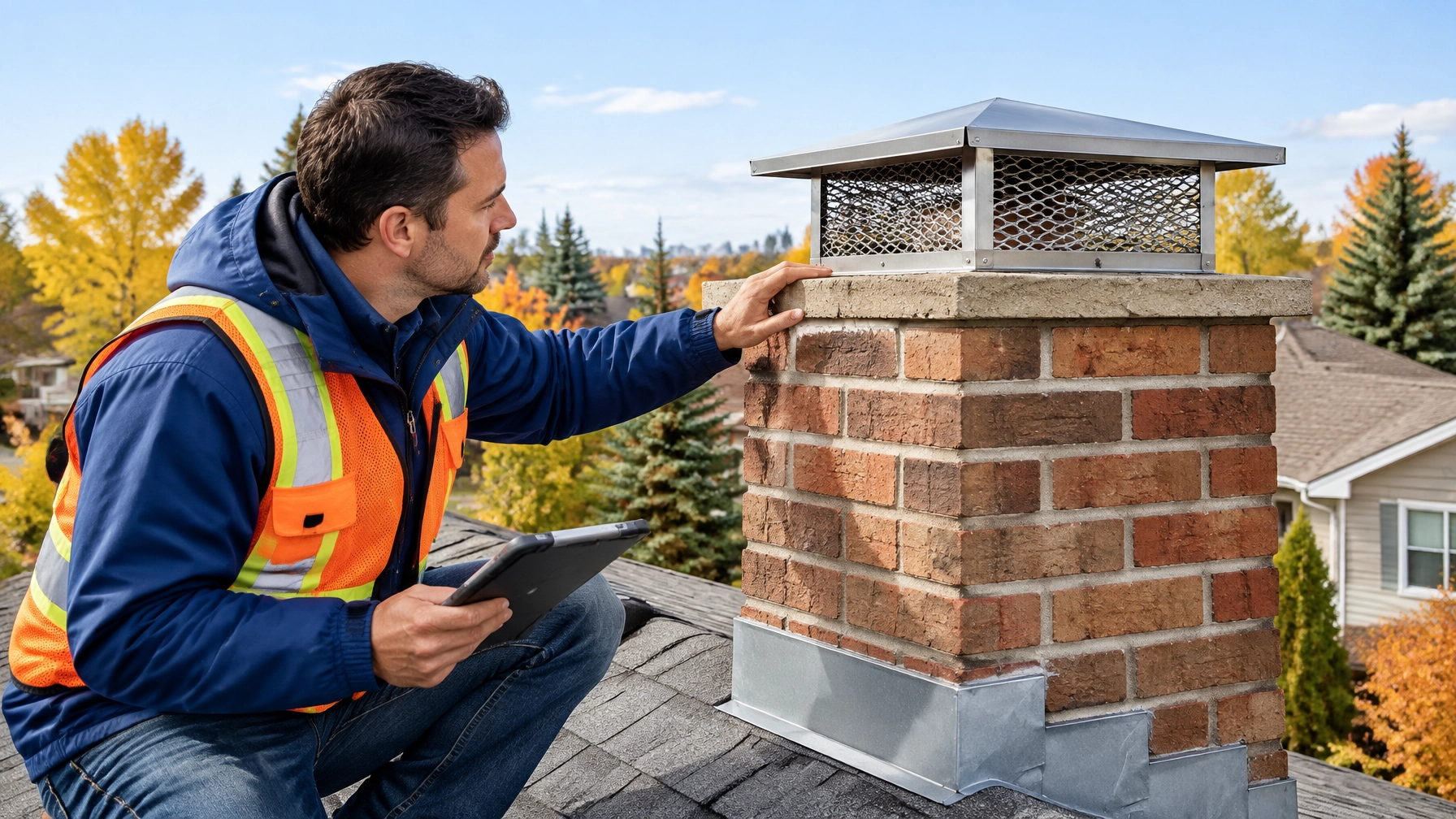
A proper review begins with the visible exterior and continues through the accessible fireplace, flue, appliance, and venting components.
From safe and accessible viewpoints, I check for:
A chimney is heavy, exposed to Edmonton’s wind and temperature swings, and connected to one of the most important combustion systems in your home. InterNACHI’s chimney guidance emphasizes looking for deteriorated mortar, insufficient support, tilting, and separation from the building.

What happens inside the fireplace opening?
Where safely accessible, I inspect and report on:
For wood stoves, I also inspect accessible connector pipes, joints, supports, clearances to combustible walls, and the hearth pad. Similar visible venting concerns may apply to chimneys and connectors serving furnaces or water heaters.
A general inspection is not a substitute for a full internal flue examination. I will explain that important limitation below.
Could the black material inside your flue be more than ordinary dust?
Creosote is a combustible deposit produced when wood smoke condenses inside the chimney. It is commonly described in stages:
If you see heavy, tar-like, or glazed buildup, do not light the fireplace or wood stove. Arrange professional cleaning and inspection first.
Why do Edmonton chimneys develop problems even when they appear to be in reasonable condition?
Our freeze-thaw cycles are hard on masonry. Water enters small cracks, freezes, expands, and gradually breaks down brick, mortar, crowns, and flashing.
Common findings include:
“I do not treat a chimney defect as a reason to panic. I document the observable condition, explain the risk, and help you identify the right next professional step.”- Banti K Shaw
If moisture is suspected around the chimney or fireplace, thermal imaging and moisture detection in Edmonton may help identify temperature or moisture patterns that are not obvious during a visual review.
Are you confident the fire is venting properly before you add the first log?
Keep these safety practices in place:
Pro tip: Before the first burn, open and check the damper. During the first few minutes, pay attention to draft, smoke movement, and unusual odours. A brief dusty smell may occur after months of inactivity, but a persistent smoky, chemical, or acrid smell deserves investigation.

What is the difference between a home inspection and a dedicated chimney inspection?
A standard home inspection is generally a visual, non-invasive assessment of accessible components. Under the InterNACHI Standards of Practice, a home inspector may inspect readily accessible portions of fireplaces and chimneys, visible lintels, manually operable dampers, and cleanout doors.
However, the standard inspection does not include:
This distinction matters. A home inspection may identify visible cracks, a damaged damper, missing alarms, deteriorated masonry, or unsafe clearances. It cannot confirm that a concealed flue is intact.
A WETT-certified technician is the appropriate professional for Level 1, Level 2, or Level 3 chimney and solid-fuel appliance inspections in Canada.
Which level is appropriate depends on the history and condition of your system.
Many insurers request proof of a WETT inspection before insuring a home with a wood-burning fireplace, wood stove, or other solid-fuel appliance. Ask your insurer exactly what level and documentation they require before booking.
What should you budget before the heating season begins?
Typical Edmonton planning ranges in 2026 are:
These are realistic budgeting ranges, not a fixed quote. Confirm whether cleaning, travel, video inspection, additional appliances, and insurance documentation are included.
If you are buying a home, our pre-purchase home inspection in Edmonton can help identify visible concerns before you remove conditions.

Have a wood-burning chimney and appliance inspected at least annually, especially before the first use of the season. Sweep frequency depends on how often you burn, the wood quality, and the amount of creosote present.
Not until you understand the concern. A visible crack, blocked flue, heavy creosote, damaged connector, smoke leakage, or suspected chimney fire should be reviewed by a qualified chimney or WETT professional before use.
Many insurers require WETT documentation for wood-burning fireplaces and stoves, but requirements vary. Contact your insurer before arranging the inspection so you receive the correct level and report.
Clear access to the fireplace or stove, gather previous service records, avoid using the appliance before the inspection if a problem is suspected, and tell the inspector about unusual odours, smoke, poor draft, or previous chimney fires.
The safest first fire is the one you prepare for before lighting. If you are buying, selling, or maintaining an Edmonton property, you can schedule a certified home inspection with InspecUs to obtain a clear, independent assessment and practical next steps.
We are licensed by the Licensed Professional and certified through InterNACHI

InspecUs Home Inspection is certified in the best practices established by Internachi. Our commitment to safety includes maintaining a 6-foot distance and using personal protective equipment (PPE) during all inspections.

© 2024 InspecUs - All Rights Reserved. | Sitemap | Developed by Integrated Marketing Platform Inc.