blog1

Air Quality Testing Edmonton: When You Need It & What It Can (and Can’t) Find in 2026

SEO title: Air Quality Testing Edmonton: When You Need It in 2026

Meta description: Air quality testing Edmonton: know when testing is worthwhile, what radon, mould, VOC and CO assessments reveal, and how to improve indoor air inside your home.

Air quality testing in Edmonton is most useful when you have radon concerns, a carbon monoxide event, persistent odours or symptoms, recent renovations, or a known moisture problem. Health Canada generally discourages routine broad air sampling; start with source control, ventilation and moisture investigation, with radon testing as a priority.

I’m Banti K Shaw, and I bring more than 10 years of home inspection and construction experience to every property assessment. In my experience, indoor air concerns are best handled with evidence, not fear and not unnecessary testing.

“My goal is not simply to collect a sample. It is to help you understand what may be affecting your indoor environment, identify the likely source and choose a practical next step.” , Banti K Shaw

What pollutants are common in Edmonton homes?

Could the air inside your home contain more than you can see or smell? Yes. Indoor air quality problems can come from the soil beneath your home, combustion appliances, moisture, household products and new construction materials.

Common concerns include:

  • Radon: A naturally occurring, odourless radioactive gas that can enter through foundation cracks, sump pits, floor drains and service penetrations.
  • Carbon monoxide: A dangerous, invisible gas produced by fuel-burning appliances, fireplaces, attached garages and improperly vented equipment.
  • Mould spores: Often associated with leaks, flooding, condensation, high humidity or prolonged basement moisture.
  • Volatile organic compounds (VOCs): Chemicals released by paints, flooring, adhesives, cabinetry, cleaning products, furnishings and air fresheners.
  • Particulate matter: Fine particles from cooking, wood smoke, dust, combustion, candles and outdoor pollution entering the home.
  • Off-gassing from new materials: Newly installed flooring, furniture, insulation, paint and composite wood products may release chemicals for a period after installation.

Edmonton’s conditions make some of these concerns especially important. Many homes have basements, and local soil conditions, including clay and moisture-retaining soils in some areas, can contribute to foundation movement, cracks and moisture pathways. During long, cold winters, homes are kept tightly closed. This improves energy efficiency but can reduce natural air exchange and allow pollutants to accumulate.

When is air quality testing worth it, and when is it not?

Should you order a broad air test simply because you are buying a home? Usually, no.

Health Canada generally does not recommend routine, broad indoor air sampling as the first step for most homes. Results can be difficult to interpret without a defined question, and the recommended solution is often the same regardless of the test number: remove the source, improve ventilation or control moisture.

You should consider targeted air quality testing or monitoring when:

  1. You need a radon test. Health Canada recommends testing buildings in contact with the ground. A long-term test of at least 91 days is generally preferred, especially in the lowest regularly occupied level.
  2. A carbon monoxide alarm has activated. Leave the property and seek emergency assistance first. After the immediate danger is addressed, targeted CO measurements and appliance evaluation may help identify the source.
  3. You have persistent, unexplained odours. A professional assessment can help distinguish between moisture, sewer gas, combustion, chemical or ventilation-related concerns.
  4. Occupants experience recurring symptoms indoors. Headaches, dizziness, nausea, unusual fatigue, eye irritation or respiratory discomfort should be taken seriously. Testing does not diagnose a medical condition, but it can help investigate environmental factors.
  5. The home has recent renovations or new materials. Targeted VOC testing may be appropriate when odours or symptoms continue after painting, flooring, cabinetry or furniture installation.
  6. There has been water damage or a history of flooding. The priority is finding and correcting the moisture source. Air sampling may be considered for specific insurance, legal or documentation requirements, but it should not replace a building investigation.
  7. You are assessing a workplace or commercial property. Occupancy, industrial processes, cleaning chemicals, combustion equipment and ventilation demands may justify a more formal indoor air quality assessment.

Routine mould air sampling is often not the best use of your money. Visible mould, a persistent musty odour or known water damage already indicates that the moisture problem should be investigated and corrected.

For more detail, review Health Canada’s guidance for indoor air quality professionals.

What symptoms may suggest an indoor air problem?

How can you tell whether your home: not seasonal illness: is contributing to discomfort? Look for patterns rather than one isolated symptom.

Possible warning signs include:

  • Symptoms that improve when you leave the home and return when you come back
  • A persistent musty, chemical, smoky or sewer-like smell
  • Condensation on windows or cold exterior walls
  • Visible mould, staining, efflorescence or peeling finishes
  • Headaches, dizziness, nausea or unusual fatigue near fuel-burning appliances
  • Eye, nose or throat irritation after renovation work
  • Excessive dust or soot
  • Stuffy rooms, especially bedrooms or lower levels
  • A basement that feels damp or has a dehumidifier running continuously

These signs do not prove a specific contaminant is present. They tell you that a structured investigation may be worthwhile. If you suspect carbon monoxide exposure, do not wait for an inspection: leave the building and call emergency services.

What does a professional air quality assessment include?

Is air quality testing just someone placing a monitor in a room? A responsible assessment should begin with the building, not just the instrument.

Depending on your concern, my process may include:

1. A detailed interview

I ask about:

  • The age and construction of the property
  • Recent renovations or new furnishings
  • Odours, symptoms and when they occur
  • Plumbing leaks, flooding or roof damage
  • Heating equipment and fireplaces
  • Attached garages
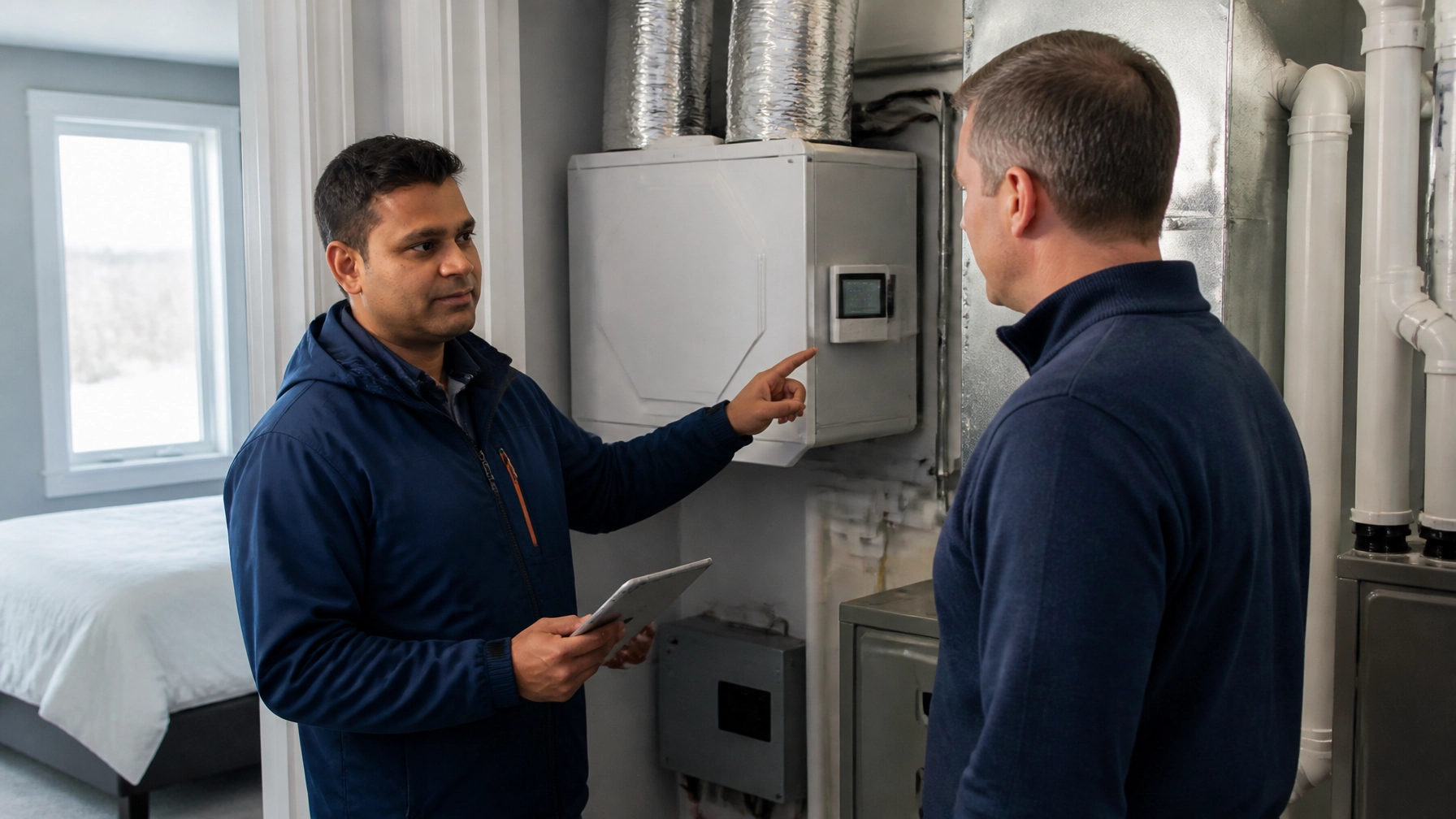
  • Ventilation and HRV operation
  • Basement use and occupancy
  • Previous mould remediation or radon results

2. Visual inspection

I look for observable sources and conditions, including:

  • Water staining and active leaks
  • Foundation cracks and damp areas
  • Condensation and cold surfaces
  • Mould-like growth
  • Poor bathroom or kitchen exhaust
  • Combustion appliance and venting concerns
  • Blocked or disconnected ductwork
  • Stored chemicals, paints and fuels
  • Dust accumulation and filtration issues

3. Moisture and thermal investigation

Thermal imaging can reveal temperature differences associated with missing insulation, air leakage or damp materials. Moisture meters can help identify elevated moisture in targeted areas.

Home inspector using thermal imaging and moisture detection equipment near an Edmonton basement foundation

Our thermal imaging and moisture detection service in Edmonton combines these tools with practical interpretation. A thermal image is not proof of mould or a leak by itself; it identifies patterns that require further investigation.

4. Targeted measurements

Depending on the question, testing may involve:

  • Long-term radon measurement
  • Carbon monoxide monitoring
  • Carbon dioxide as a ventilation indicator
  • Temperature and relative humidity
  • Particulate matter
  • VOCs or a specific chemical, when justified
  • Mould sampling only when required for a defined purpose

The important question is not “What can we test?” but “What decision will this result help you make?”

How is this different from a standard home inspection?

If you already have a home inspection, do you still need air quality testing? Sometimes: but the two services answer different questions.

A standard home inspection evaluates the visible and accessible condition of the property’s structure and systems. It may identify:

  • Roof and foundation concerns
  • Electrical and plumbing deficiencies
  • Heating and cooling issues
  • Safety hazards
  • Ventilation deficiencies
  • Moisture indicators
  • Visible mould-like growth

Air quality testing focuses on conditions in the air or on a specific contaminant. It may measure something that cannot be confirmed visually, such as radon or carbon monoxide.

However, air testing cannot replace a home inspection. A sample represents conditions at a particular place and time. It generally cannot:

  • Prove that a home has no hidden moisture
  • Locate every source of mould spores
  • Identify every chemical in the air
  • Determine the cause of a medical symptom
  • Confirm that a building is free of structural defects
  • Guarantee that levels will remain unchanged

For buyers, the best approach may be a pre-purchase home inspection followed by targeted air or radon testing when the property history and inspection findings justify it.

What should you do after testing?

What happens after you receive an elevated result or identify an indoor air source? Focus on correcting the cause.

Practical next steps may include:

  1. Improve ventilation: Run kitchen and bathroom exhaust fans that vent outdoors. Avoid relying on recirculating fans alone.
  2. Review HRV operation: In newer or airtight Edmonton homes, a properly balanced heat recovery ventilator can provide fresh air while reducing heat loss.
  3. Control moisture: Repair leaks, improve drainage, use a dehumidifier when appropriate and keep basement humidity under control.
  4. Reduce pollutant sources: Choose low-VOC products, store chemicals outside living areas and avoid unnecessary air fresheners, candles and indoor combustion.
  5. Address radon: If long-term results exceed Health Canada’s guideline of 200 Bq/m³, consult a qualified radon mitigation professional. Sub-slab depressurization is a common mitigation approach.
  6. Maintain combustion equipment: Have furnaces, fireplaces, boilers and water heaters serviced. Install certified CO alarms near sleeping areas and fuel-burning appliances.
  7. Consider duct cleaning carefully: Duct cleaning may help where there is substantial dust, construction debris, pest contamination or confirmed contamination. It is not a universal solution for every air quality concern.

Inspector and homeowner reviewing an indoor air quality report and monitor at a kitchen table

At InspecUs, I provide an unbiased explanation of findings, high-resolution images and a same-day report within 24 hours. You receive practical information you can use: not a list of alarming numbers without context.

Final answer: Do you need air quality testing in Edmonton?

If you are buying a home, radon testing is a sensible priority for any ground-contact property. Broader air quality testing is most valuable when you have a defined concern: a CO event, persistent symptoms or odours, recent renovations, moisture damage, unusual occupancy or a commercial ventilation question.

If you are unsure where to begin, a visual inspection with moisture and thermal imaging may be more useful than an all-purpose air sample. You can contact InspecUs to discuss your property and determine which next step fits your situation.

Licensed Professional
Home Inspector

We are licensed by the Licensed Professional and certified through InterNACHI

Covid-19 protocols

InspecUs Home Inspection is certified in the best practices established by Internachi. Our commitment to safety includes maintaining a 6-foot distance and using personal protective equipment (PPE) during all inspections.

Get a Free Quote
Get a Free Quote
close slider