 7132 178 St NW,
 Call us:

 Call us780-809-1056
- Mail usinfo@inspecus.ca
- Schedule An Inspection
Call us780-809-1056

Direct answer: A mold inspection in Edmonton usually costs about $300–$700 for a standard home, depending on size and whether lab samples are needed. A home inspector looks for visible growth, musty odours, moisture sources, and hidden dampness; testing is separate from a routine home inspection.
Meta description: Explore our 2026 mold inspection Edmonton guide: signs, costs, testing, winter risks, black mold, insurance, ozone treatment, and what inspectors find.
If you are buying, selling, or maintaining a property in Edmonton, how can you tell whether a stain or musty smell is a minor issue or a sign of hidden mold?
I’m Banti K Shaw, an InterNACHI-certified inspector with more than 10 years of construction and inspection experience. I have seen how a small plumbing leak, foundation seepage, bathroom condensation, or attic ventilation problem can create long-term moisture damage.
This guide explains what a professional mold inspection in Edmonton includes, what it costs in 2026, and when moisture detection, air quality testing, or ozone treatment may be appropriate.
Could your property have a mold problem even if you cannot see obvious black spots?
Common warning signs include:
A musty smell does not prove that mold is present, but it does suggest that moisture is or was present. You can also review our guide to musty basement smells and hidden moisture for additional warning signs.
Banti’s Pro Tip: “I never recommend treating only the visible stain. The important question is why that area became damp. If the moisture source remains, surface cleaning will usually be temporary.”
Are you wondering whether you should budget a few hundred dollars or several thousand?
In Edmonton, a professional mold inspection commonly falls within these planning ranges:
The final cost depends on:
A visual inspection with moisture detection may be appropriate when the source is obvious. Laboratory testing may be more useful when mold is suspected but not visible, when occupants have health concerns, or when you need written evidence for a specific dispute or insurance claim.
A mold inspection is not the same as mold remediation. Inspection identifies conditions and helps define the next step; remediation involves containment, removal, cleaning, and repairs.
Does a standard pre-purchase inspection automatically include mold testing?
Usually, no. A regular home inspection may identify:
However, a routine inspection generally does not include laboratory mold testing, destructive investigation behind finished walls, or a complete indoor air quality assessment unless those services are specifically requested.
At InspecUs, I treat suspected mold as a condition requiring careful investigation. I can document visible concerns and moisture patterns, then explain whether a dedicated mold assessment, air quality test, or remediation professional is the next appropriate step.
If you are purchasing a property, consider combining a certified home inspection in Edmonton with additional testing when the property history or visible evidence warrants it.
What actually happens during a professional mold inspection?
A responsible inspection usually follows this sequence:
I ask about previous leaks, flooding, renovations, insurance claims, plumbing repairs, basement odours, and recurring condensation. These details help identify patterns that may not be visible during a single visit.
High-risk areas commonly include:
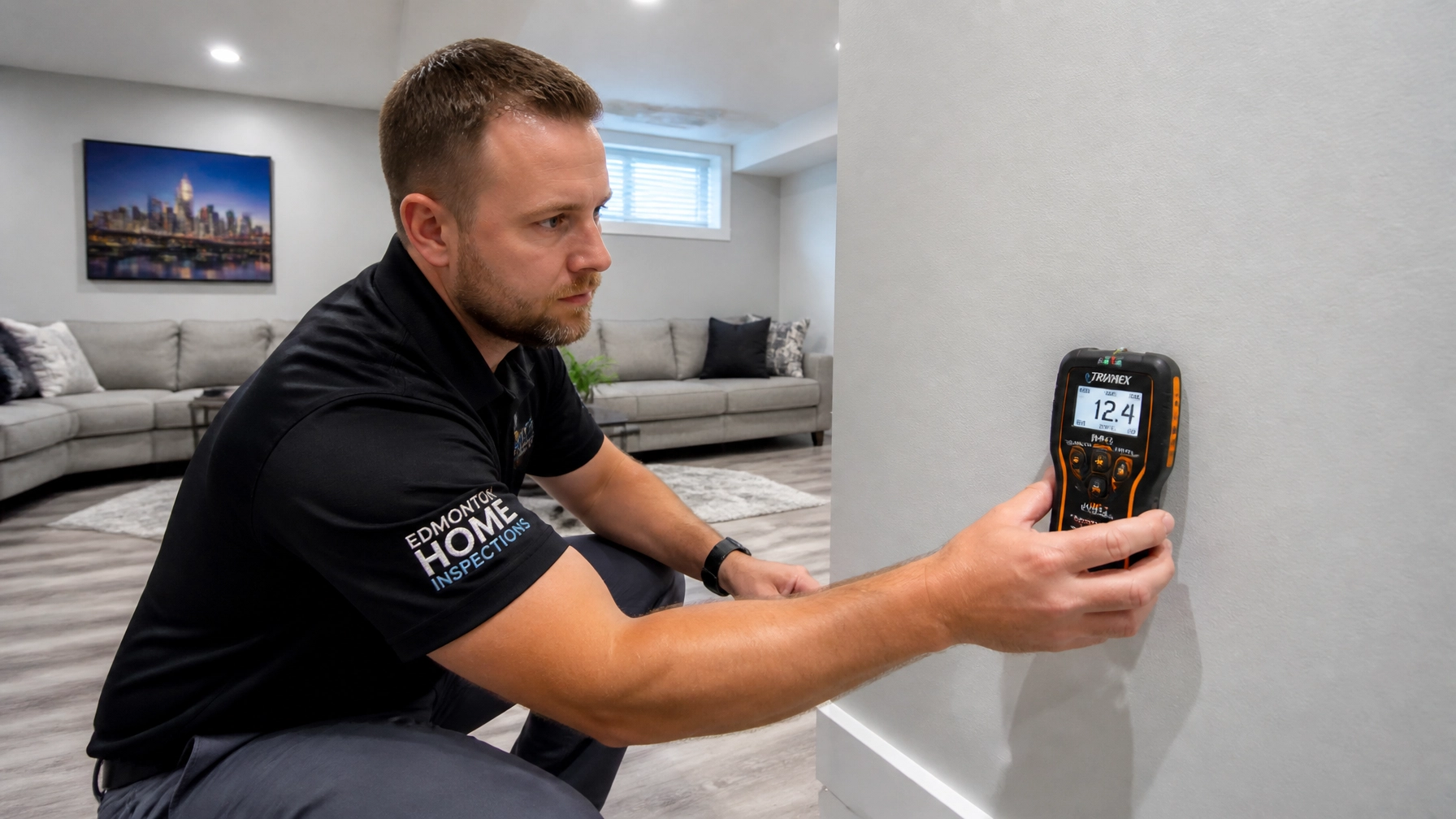
Moisture meters help identify elevated moisture in drywall, wood, flooring, and other materials. Thermal imaging can also highlight temperature differences that may indicate wet materials, missing insulation, air leakage, or condensation.
Our thermal imaging and moisture detection service explains how these tools help uncover problems that may not be visible during a basic walk-through.

Depending on the circumstances, testing may include:
When needed, I may recommend mould inspection and sampling in Edmonton to collect air or surface samples and better document what is happening in the property.
Sampling is not always necessary. Visible mold combined with a known moisture source may already provide enough information to recommend correction. Testing should answer a practical question rather than create unnecessary expense.
A useful report should explain:
Are you concerned about indoor air but cannot find visible mold?
Air quality testing may be useful when:
Air testing has limits. It provides information about airborne particles at the time and location of sampling. It does not automatically identify every hidden mold source or prove that a property is safe in every respect.
Read our detailed guide to air quality testing in Edmonton to understand what the process can and cannot determine.
Does the colour of mold tell you how dangerous it is?
Not reliably. “Black mold” is a general household term, not a complete risk assessment. Some molds may appear black, green, brown, or grey, and colour alone cannot identify the species or determine health risk.
The practical concerns are:
Health Canada recommends controlling moisture and removing visible mold rather than relying only on species identification. You can review Health Canada’s guidance on mould in homes.
If you are experiencing serious or worsening symptoms, seek medical advice. An inspection can help identify building conditions, but it cannot diagnose a health condition.
Can you inspect for mold when Edmonton temperatures are below freezing?
Yes. Winter can be an especially useful time to investigate condensation and indoor humidity problems.
During Edmonton winters, I commonly pay close attention to:
Exterior drainage problems can be more difficult to assess when the ground is frozen, but indoor moisture patterns remain observable year-round. Winter inspections can reveal issues that may be less obvious during warmer, drier conditions.
Could ozone eliminate a mold problem or only hide the smell?
Ozone treatment should not be used as a substitute for mold removal or moisture correction. Ozone may help with certain odours after the underlying issue has been addressed, but it does not remove mold colonies from drywall, wood, insulation, or other building materials.
A sound order of work is:
Ozone can irritate the lungs and should not be used around people, pets, or plants. If you are considering ozone treatment in Edmonton, first confirm whether the odour is caused by mold, moisture, sewage gas, smoke, or another source.
Will your home insurance pay for testing or remediation?
Coverage depends on your policy, the cause of the moisture, and the circumstances of the loss. Many policies are more likely to respond when mold results from a sudden and accidental covered event, such as a burst pipe. Gradual seepage, poor maintenance, long-term condensation, or neglected leaks may be excluded or limited.
Before arranging major work:
Insurance decisions are made by your insurer and policy documents, not by an inspector. A professional report can provide useful factual documentation, but it does not guarantee coverage.
What are the most common underlying causes behind mold concerns?
In Edmonton homes, I frequently investigate conditions such as:
The most important finding is usually not the type or colour of mold. It is the source of moisture and whether affected materials can be safely cleaned or need removal.

Are you unsure whether your concern requires testing, remediation, or simply better moisture control?
Start by documenting what you see and smell. Note when the odour is strongest, where staining appears, whether humidity changes seasonally, and whether the property has a history of water damage.
Then arrange an assessment if:
At InspecUs, I provide unbiased inspection findings, high-resolution images, moisture assessment, and clear next-step recommendations. With more than 10 years of construction and inspection experience, my goal is to help you understand the condition of your property without unnecessary alarm or pressure.

If you have noticed a musty smell, visible staining, or recurring moisture, contact InspecUs to discuss a mold or property inspection.
We are licensed by the Licensed Professional and certified through InterNACHI

InspecUs Home Inspection is certified in the best practices established by Internachi. Our commitment to safety includes maintaining a 6-foot distance and using personal protective equipment (PPE) during all inspections.

© 2024 InspecUs - All Rights Reserved. | Sitemap | Developed by Integrated Marketing Platform Inc.