 7132 178 St NW,
 Call us:

 Call us780-809-1056
- Mail usinfo@inspecus.ca
- Schedule An Inspection
Call us780-809-1056

Direct answer: Before booking a home inspector in Edmonton, verify the inspector’s Alberta licence, qualifications, insurance, inspection standards, scope, tools, report format, turnaround time and follow-up support. Ask whether you can attend and confirm exactly which systems and limitations apply to your property.
Meta description: Looking for a home inspector in Edmonton? Use these 12 questions to verify credentials, insurance, inspection scope, tools, reports and support before you book.
Buying a home is a major financial decision. The right inspection can give you a clearer understanding of the property’s condition before you finalize the purchase. The wrong choice may leave you with an unclear report, missed concerns or unrealistic expectations.
I’m Banti K Shaw, and I bring more than 10 years of construction and inspection experience to every property I assess. My construction background helps me look beyond surface appearance and understand how building systems work together, and where they commonly fail.
If you are comparing companies and searching for the best home inspector in Edmonton, use these 12 questions before you book.
This is the first question you should ask any home inspector Edmonton service provider.
Alberta requires home inspectors and home inspection businesses to meet provincial licensing requirements. Ask to see the inspector’s current licence and confirm that the business is properly authorized to operate.
You can also review Alberta’s consumer information about home inspector licensing.
Ask for:
“I believe transparency should begin before I arrive at the property. You should know who is inspecting your home, what qualifications they hold and what service you are purchasing.”- Banti K Shaw
A licence is important, but it is not the only factor. Ask about formal inspection education, professional designations, continuing education and practical construction experience.
You may also want to confirm whether the inspector belongs to a recognized professional organization. InspecUs is InterNACHI-certified, and InterNACHI publishes a Standards of Practice and Code of Ethics that help define professional inspection expectations.
Look for experience with properties similar to yours, including:
The more closely an inspector’s background matches your property, the more useful the inspection process is likely to be.
Should a home inspector carry insurance? Yes, and you should ask what type.
Errors and omissions insurance generally relates to professional mistakes or oversights. General liability insurance relates to accidental property damage or bodily injury that may occur during the inspection.
Ask whether the inspector carries:
Do not hesitate to ask for confirmation of coverage. A professional inspector should be comfortable answering this question clearly.
What separates a consistent inspection from an informal walk-through? A defined process.
Ask whether the inspector follows InterNACHI’s Standards of Practice or another recognized standard. Standards should explain:
A standard also helps you compare inspection companies fairly. One provider may use a detailed, repeatable procedure, while another may offer a much less structured service.
What exactly does a home inspection cover? A typical inspection is a visual, non-invasive assessment of readily accessible components.
At InspecUs, I assess more than 100 items in every report, including areas such as:
For a more detailed overview, visit our home inspection services in Edmonton.
Remember that the exact scope can vary by property type and service agreement. Ask for the inclusions in writing before booking.
Is a home inspection a guarantee that nothing will go wrong? No. It is an assessment of the property’s observable condition at a specific time.
A standard inspection usually does not involve:
A responsible inspector should explain these limitations rather than overpromise.
“My responsibility is to report what I can reasonably observe, operate and document. I will also tell you when something is inaccessible, unsafe or outside the scope of a standard inspection.”- Banti K Shaw
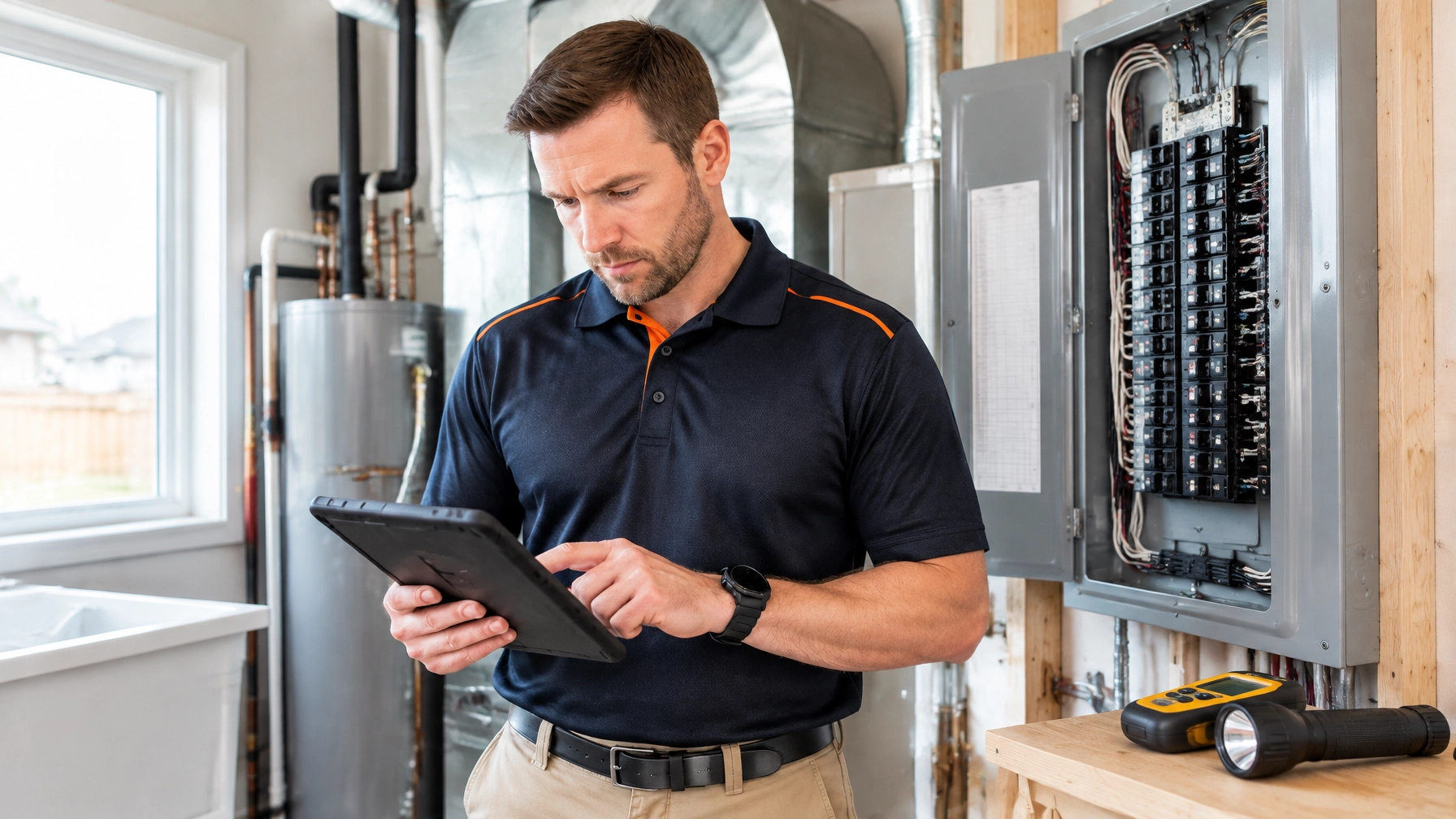
What should you ask about inspection tools? Ask which tools are included as part of the standard service and how they support, not replace, the inspector’s professional judgment.
Useful tools may include:
At InspecUs, thermal imaging and moisture detection can help identify temperature differences or moisture patterns that may deserve further investigation. These tools do not see through every wall or diagnose every problem. They help guide a more informed visual assessment.

Will every concern be fully tested during a standard inspection? Not necessarily.
Ask which services are included and which require a separate appointment or fee. Depending on the property, you may need to discuss:
The important point is to match the service to the risk. A standard home inspection may identify a reason for further investigation, but specialized testing may be necessary to reach a more specific conclusion.
Should buyers attend the inspection? I strongly recommend it when your schedule allows.
Attending helps you:
Your safety and the inspection process come first, so you may not be able to follow the inspector into every area. I generally recommend that buyers attend the later portion or summary walk-through, when key findings can be explained clearly.
A thorough inspection requires time. The duration depends on the property’s size, age, condition, accessibility and number of buildings.
Before booking, ask:
A rushed inspection may leave less time for careful observation and documentation. I prefer to work methodically and explain the findings rather than treat the appointment like a quick checklist exercise.
How reports are delivered matters because you may need to make a time-sensitive purchase decision.
Ask to see a sample report and check whether it includes:
At InspecUs, reports are delivered digitally, usually the same day and within 24 hours. This gives you and your real estate professional a practical record to review before making your next decision.

What happens after you receive the report? Ask whether you can contact the inspector for clarification.
A good report should stand on its own, but questions often arise after you review the details. Confirm:
I believe ongoing support is part of professional service. You should feel comfortable asking what a finding means and what logical next step may be appropriate. That does not mean an inspector should make repair decisions for you, but you should receive clear information.
Before you schedule your inspection, confirm that you have answers to each of these questions:
If you are purchasing a condominium, ask how the unit, building systems and available common areas will be addressed. You can learn more about our condo inspection services in Edmonton.
The best home inspector in Edmonton is not simply the company with the most impressive advertisement. Look for licensing, relevant experience, insurance, a defined inspection process, useful technology, clear reporting and honest communication.
When you are ready, you can contact InspecUs to discuss your inspection. I will help you understand which service fits your property and what to expect before the inspection begins.
“An inspection should give you confidence through better information, not pressure to make a particular decision. My job is to provide an honest, practical assessment so you can decide what comes next.”- Banti K Shaw
We are licensed by the Licensed Professional and certified through InterNACHI

InspecUs Home Inspection is certified in the best practices established by Internachi. Our commitment to safety includes maintaining a 6-foot distance and using personal protective equipment (PPE) during all inspections.

© 2024 InspecUs - All Rights Reserved. | Sitemap | Developed by Integrated Marketing Platform Inc.