 7132 178 St NW,

 Call us:



 Call us780-809-1056
- Mail usinfo@inspecus.ca
- Schedule An Inspection
Call us780-809-1056

Meta description: Learn which electrical red flags a home inspector in Edmonton checks before winter, what they mean, and when to call a licensed electrician or plan repairs.
Direct answer: A home inspector in Edmonton checks the visible panel and breakers, accessible wiring, outlets, grounding, and safety devices for overheating, outdated panels, aluminum or knob-and-tube wiring, unsafe connections, missing protection, and outdoor hazards that can worsen under winter loads.
Are you about to plug in a space heater, turn on extra lights, or run a block heater every morning? Mid-October is a good time to look for electrical concerns, especially in older Edmonton homes, where cold-weather routines can add demand to a system already showing signs of wear.
I’m Banti K Shaw. With more than 10 years of inspection and construction experience, I focus on visible warning signs, explain their significance, and recommend when a licensed electrician should take a closer look. A home inspection is a visual assessment, not a full electrical code inspection or a guarantee that concealed wiring is safe. InterNACHI’s Standards of Practice outline the typical scope and limitations.
Does the panel label say Stab-Lok? Federal Pacific and Federal Pioneer are related but distinct product names; Federal Pioneer is commonly encountered in Canada. Some Stab-Lok equipment has raised concerns about breaker reliability, but the brand name alone doesn’t prove that every panel is defective or recalled.
Symptoms: An older panel label, unusual breaker behaviour, heat damage, or a breaker that does not appear to respond as expected. A visual home inspection cannot establish how a breaker performs under fault conditions.
Possible cause: Aging equipment or a breaker that may not protect a circuit as intended. Have a licensed electrician identify the exact panel and breaker models and recommend whether repair or replacement is appropriate.
Pro tip: Photograph the exterior label without opening or touching the panel. Ask an electrician and your insurer about the exact model before making a decision.
Have you noticed a hot outlet or a burnt-plastic smell near the panel? Heat damage can signal an active electrical concern.
Symptoms: Scorched or discoloured breaker areas, melted insulation or plastic, warm receptacles, buzzing, flickering lights, or a burning odour. The underlying cause may be a loose connection, overloaded circuit, damaged component, or poor installation.
Pro tip: If you notice smoke, sparks, or active burning, move away and call emergency services if needed. Don’t remove the panel cover or try to diagnose live equipment yourself.

“I treat visible heat damage as a reason to get qualified help, not as a detail to put off until spring.”- Banti K Shaw
Could a renovation or repair have left the wiring unsafe? I look for two conductors under a breaker terminal that isn’t designed for them, as well as visible improvised wiring around furnace or hot-water-tank circuits.
Symptoms: Two wires connected to one breaker terminal, open junction boxes, loose or exposed wiring, damaged cable, or unfinished work near equipment. An unsuitable connection may loosen or overheat; poorly executed DIY work can leave conductors unprotected.
Pro tip: Don’t move wires or tighten terminals. Ask a licensed electrician to confirm whether the breaker is rated for the connection, assess the circuit, and check permit history. Edmonton requires permits for electrical installations, alterations, and additions; see the City’s residential electrical permit information.
Is aluminum wiring automatically illegal in Edmonton? No. Existing aluminum wiring is not automatically unlawful simply because it is aluminum. Its condition and connection methods matter, and repairs or changes should be assessed by a qualified electrician.
Symptoms: Visible cable markings such as “AL” or “aluminum,” or heat discolouration at accessible switches and receptacles. Aluminum expands and contracts as it heats and cools; connections not suited to the wiring may loosen and overheat.
Pro tip: Don’t assume a simple copper splice is a safe fix. Ask an electrician what remediation is appropriate for the specific installation. The City of Edmonton lists aluminum-wiring repair or replacement among work requiring an electrical permit.
Can you get insurance on a home with aluminum wiring? It depends on the insurer, the wiring’s condition, and whether it has been assessed or remediated. Ask your insurer in writing whether it requires an electrician’s inspection, documentation, or completed work before coverage. The Insurance Bureau of Canada also advises homeowners to understand older electrical systems and discuss them with their insurer.
Could an older home still have active knob-and-tube wiring? It could, particularly in older houses. A home inspection can report visible evidence in accessible areas, but it cannot trace every concealed wire behind walls.
Symptoms: Visible ceramic knobs and tubes, older cloth-covered conductors, or signs that wiring has been extended or covered during renovations. This older system generally lacks modern grounding, and its condition or modifications may affect safety and insurance.
Pro tip: If visible evidence is found, ask an electrician to determine whether the wiring is active and assess its condition. Tell your insurer and confirm coverage requirements before closing or relying on a quote.

Are protective devices missing, not working, or inappropriate for the location? GFCI protection helps reduce shock risk, while AFCI protection is designed to detect certain hazardous arcing conditions.
Symptoms: A bathroom, kitchen, garage, or exterior receptacle without apparent GFCI protection; a GFCI that will not test or reset; or missing AFCI protection where it may be required for the installation or renovation. Requirements depend on the applicable code, circuit, and work performed. An older home is not necessarily required to retrofit every circuit to today’s standards.
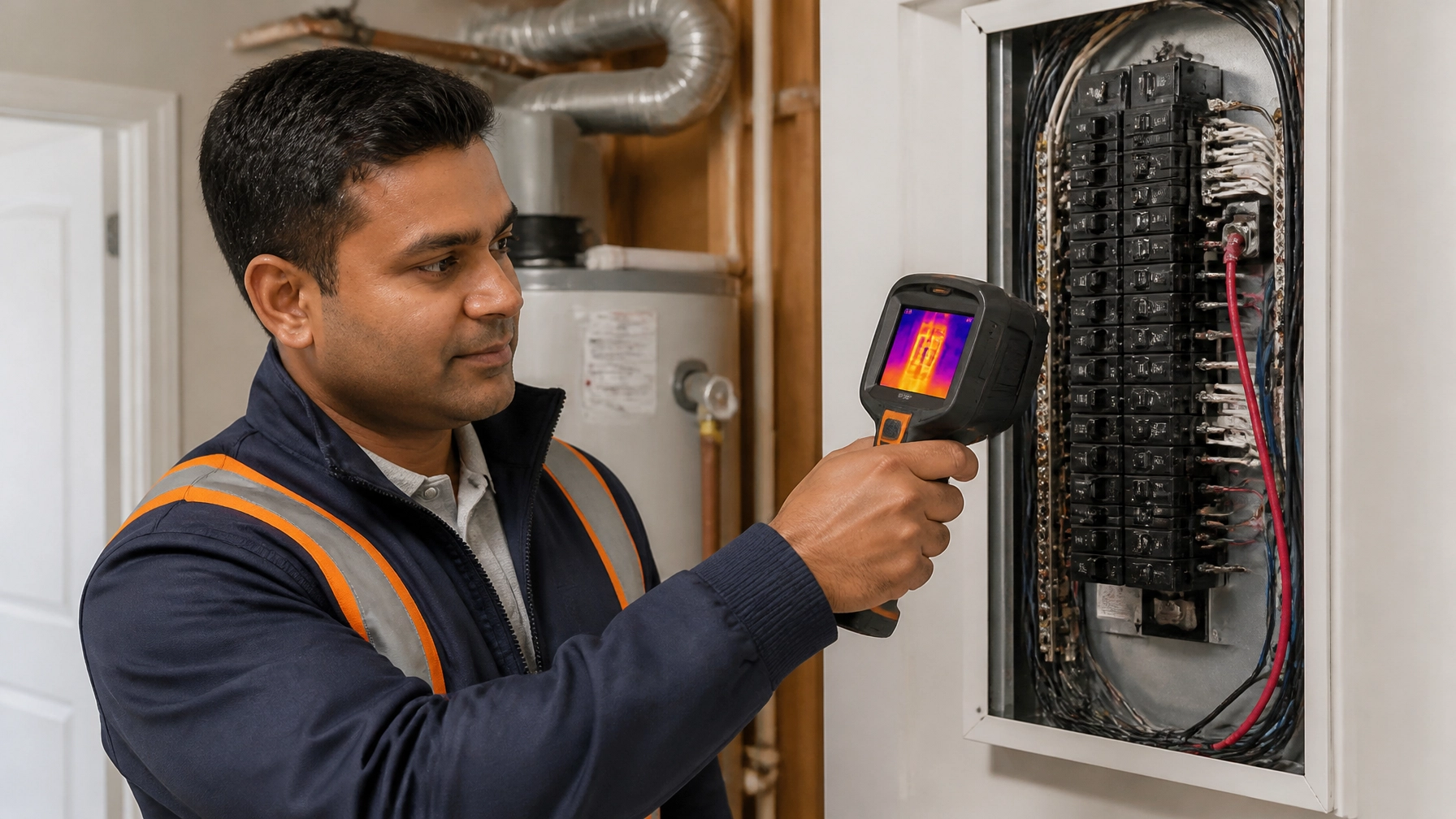
Pro tip: Don’t install a device or breaker based only on appearance. Have an electrician determine what protection is required for the circuit and location. For more on our inspection tools, see thermal imaging and moisture detection in Edmonton.
Does a three-prong outlet mean it is grounded? Not necessarily. An older two-wire circuit may have a three-prong receptacle installed without an equipment ground.
Symptoms: A tester indicates an ungrounded outlet, or an outlet is loose, broken, discoloured, or missing a cover. The cause may be older wiring or an incorrect replacement.
Pro tip: Don’t rely on a plug-in tester as a complete electrical assessment. Ask an electrician to verify the circuit and recommend a suitable correction. Avoid using damaged outlets.
Are outdoor outlets ready for wet snow, freezing temperatures, and daily block-heater use? Exterior receptacles and cords face weather, wear, and increased seasonal use.
Symptoms: Cracked or loose covers, damaged cords, exposed connections, or an exterior outlet that lacks working GFCI protection. Water intrusion or a worn cord can increase shock risk; overloading a circuit can also cause repeated trips or overheating.
Pro tip: Before the first cold snap, visually check cords and covers, use equipment rated for outdoor conditions, and follow the vehicle and heater manufacturers’ instructions. Don’t run a damaged or pinched cord, or overload an outlet with multiple high-draw devices. Have an electrician assess outlets that trip, feel warm, or show damage.
Are all the electrical-panel cover screws present? Missing or unsuitable fasteners can leave the panel cover insecure or create openings around electrical components.
Symptoms: One or more missing screws, a loose panel cover, or an opening where a screw should be. The cause may be a past repair or a cover that was not secured correctly.
Pro tip: Don’t use random screws or reach inside the panel. Ask an electrician to install suitable fasteners and check for any related damage.
How long does an electrical inspection take? In my experience, the electrical portion of a home inspection may take roughly 20–40 minutes, depending on access, the home’s age, and visible concerns. That’s only part of the appointment; the full home inspection takes longer. A standalone electrician’s assessment may take more time if testing or investigation is needed.
How much does an electrical panel upgrade cost in Edmonton? As a rough budgeting guide, a straightforward panel replacement may be around C$1,500–C$4,000, while a service upgrade may be approximately C$3,000–C$6,500 or more. These are not quotes or guaranteed prices; utility coordination, permits, wiring corrections, and access can change the total. Request itemized estimates from licensed electrical contractors. For more context, see this Edmonton panel-upgrade cost estimator.
Could a flagged electrical issue affect your buying decision? It doesn’t automatically mean you should walk away, but you should understand the risk, scope, and cost before proceeding. I document visible concerns and recommend further evaluation when a specialist is needed; an inspection is not a substitute for an electrician’s diagnosis or certification.
For related reading, see Electrical Inspections in Edmonton: 5 FAQs for Older-Home Buyers and Electrical Inspection Edmonton: What Home Inspectors Check.
If you’re buying or maintaining a home, a certified home inspection in Edmonton can help you understand visible electrical concerns before winter loads increase. If you’d like to arrange one before the cold arrives, contact InspecUs: there’s no pressure, just a practical next step.
We are licensed by the Licensed Professional and certified through InterNACHI

InspecUs Home Inspection is certified in the best practices established by Internachi. Our commitment to safety includes maintaining a 6-foot distance and using personal protective equipment (PPE) during all inspections.

© 2024 InspecUs - All Rights Reserved. | Sitemap | Developed by Integrated Marketing Platform Inc.