 7132 178 St NW,
 Call us:


 Call us780-809-1056
- Mail usinfo@inspecus.ca
- Schedule An Inspection
Call us780-809-1056

Meta description: Learn what an electrical inspection in Edmonton checks, common hazards, warning signs, costs, and when to call a licensed electrician before buying.
Direct answer: An electrical inspection in Edmonton reviews the panel, breakers, wiring, outlets, grounding, safety devices, and visible installation concerns. During a pre-purchase home inspection, your inspector identifies hazards such as aluminum wiring, double-tapped breakers, missing GFCI protection, overheating, and improper DIY work.
Could an electrical problem be hiding behind a clean wall, renovated kitchen, or fresh coat of paint?
Your electrical system is one of the most important safety systems in the home. A problem may not be obvious during a showing, yet it could create shock, fire, insurance, or unexpected repair concerns after possession.
As an Edmonton home inspector with more than 10 years of inspection and construction experience, I look beyond whether the lights turn on. I assess how the visible electrical components appear to function, whether safety protections are present, and whether there are signs of poor workmanship, overheating, or outdated wiring.
A pre-purchase home inspection in Edmonton can help you:
“My job is not to create unnecessary alarm. My job is to clearly separate routine maintenance, significant defects, and immediate safety concerns so you can make a confident decision.” : Banti K Shaw
For a complete review of the home’s major systems, explore our certified home inspection services in Edmonton.
What exactly is an inspector looking at when they examine your electrical system?
A general home inspection is not the same as an exhaustive electrical code inspection performed by a licensed electrician. However, a qualified home inspector evaluates readily accessible components and reports visible conditions that may affect safety or performance.
The inspection typically begins at the main electrical panel. I look for:
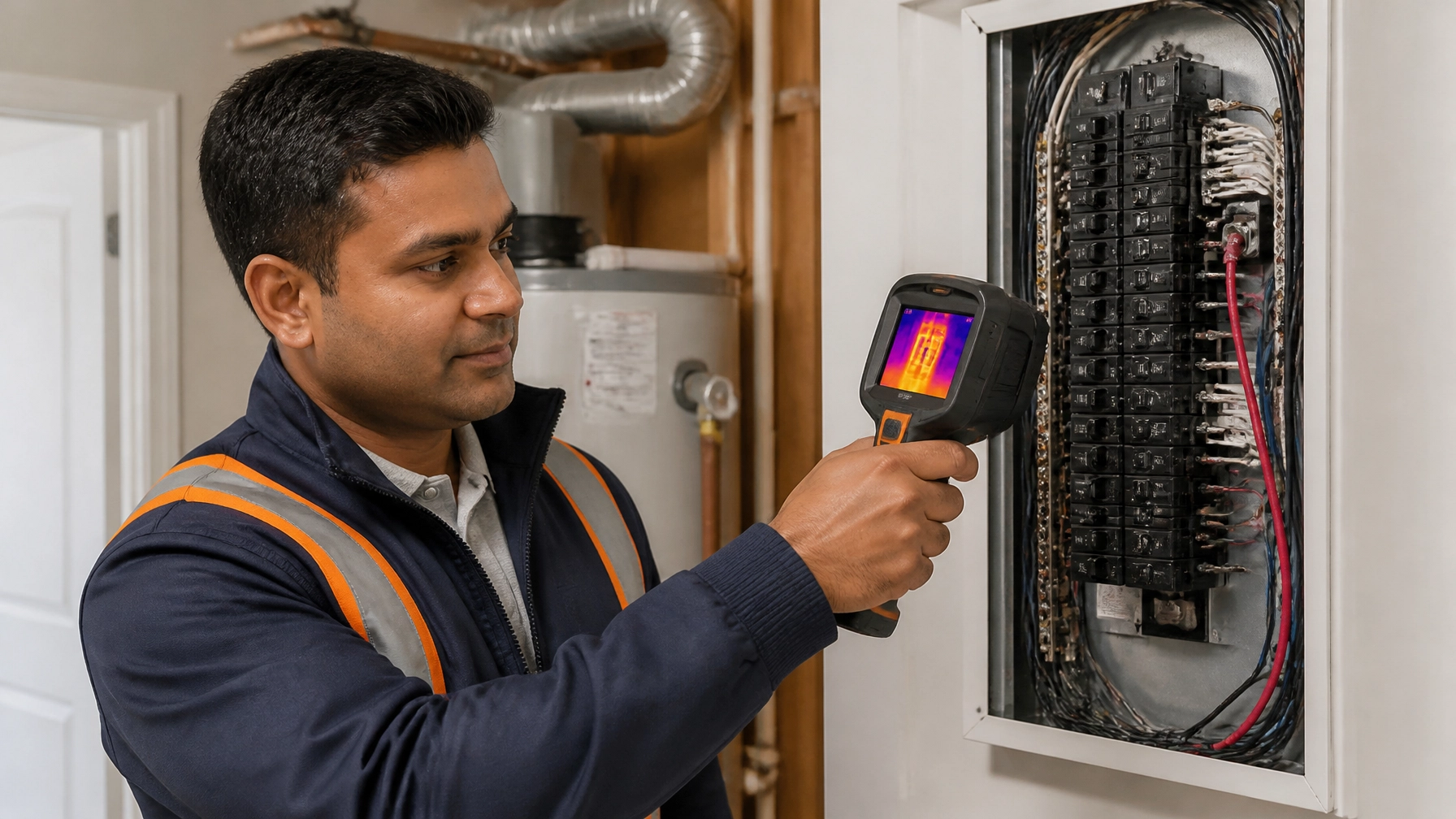
Where appropriate, thermal imaging can help identify unusual heat patterns. Thermal imaging does not replace electrical testing, but it can provide another useful indication of a developing connection or load concern.

What can older wiring tell you about the home’s safety history?
I inspect accessible wiring in areas such as the electrical panel, basement, attic, garage, and utility spaces. I look for:
Some wiring may be concealed inside walls and cannot be evaluated during a standard visual inspection. If accessible evidence suggests a broader concern, I recommend the appropriate next step rather than guessing about hidden conditions.
Are your outlets merely working, or are they wired safely?
A home inspector generally tests a representative number of accessible receptacles and switches. The inspection may identify:
Reverse polarity means the hot and neutral conductors may be connected incorrectly at a receptacle. Although an appliance may still appear to work, the condition can create a safety concern and should be corrected by a qualified professional.
Why are GFCI and AFCI devices so important?
Inspectors check for the presence and apparent operation of safety devices where accessible and applicable, including:
The Electrical Safety Foundation International explains the difference between GFCI and AFCI protection. ESFI also recommends testing these protective devices regularly according to manufacturer instructions.
Pro tip: If a GFCI will not trip, will not reset, or fails to interrupt power during a proper test, stop relying on it and arrange for a licensed electrician to evaluate it.
Could the age of the property be an important clue?
Older homes are not automatically unsafe, but they may contain wiring methods or electrical components that require closer attention. Common findings include the following.
A double-tapped breaker has two conductors under one breaker terminal when the breaker is not designed for that arrangement. The connection may loosen or overheat.
Observable symptom: The panel may show two wires entering one terminal, sometimes along with warmth, discolouration, or a burning odour.
Some homes built from the mid-1960s through the 1970s contain solid aluminum branch-circuit wiring. Aluminum can expand, contract, and oxidize differently from copper. Poorly matched connections may loosen and overheat over time.
The InterNACHI article on inspecting aluminum wiring recommends reporting readily visible solid-conductor aluminum branch wiring and referring suspected pre-1972 wiring to a licensed electrician.
Do not assume that every aluminum conductor requires the same solution. A licensed electrician should determine the wiring type, connection method, and appropriate remediation.
Knob-and-tube wiring is an older electrical system that may lack modern grounding and protection. It can also be altered improperly during renovations.
Observable symptom: Exposed ceramic knobs, tubes, or older cloth-covered conductors may be visible in attics, basements, or unfinished areas.
An overloaded circuit may occur when too many appliances are connected to one circuit or when the electrical system has not kept pace with modern demands.
Observable symptoms include:
Older homes may not have the same safety features as current construction. Missing GFCI protection in wet or damp locations can increase shock risk. Missing AFCI protection may represent a safety improvement opportunity, depending on the age and scope of the installation.
An inspector will document what is present and what appears absent. A licensed electrician can determine what upgrades are required or recommended under current Alberta requirements.
What happens when a renovation is completed without the right electrical knowledge?
Common examples include:
These issues should not be dismissed simply because the renovated room looks attractive.

Have you noticed flickering lights or a buzzing outlet and wondered whether it was serious?
Contact a qualified, licensed electrician promptly if you notice:
If you see smoke, active sparking, flames, or severe burning, leave the area if safe to do so, call emergency services, and do not attempt to investigate the panel yourself.
What should you expect after an inspector finds a defect?
A home inspector can identify, document, and explain visible electrical concerns. In most cases, a home inspector should not repair, rewire, replace breakers, correct splices, or modify the electrical system during the inspection.
Repairs should be completed by a licensed electrician. This separation protects you by keeping the inspection impartial and ensuring that electrical work is performed by someone qualified for the task.
An inspection report may recommend:
Are you trying to budget for an inspection before making an offer?
There is no single price for every electrical inspection in Edmonton. Cost depends on:
A standard home inspection includes an electrical review as part of the overall inspection. A detailed electrician-led assessment is a separate service and may be required for insurance, financing, renovations, or suspected aluminum or knob-and-tube wiring.
The best approach is to request a clear quote that explains the scope before booking.
Want your inspection to be more efficient and useful?
Before the appointment:

Does an electrical finding automatically mean you should walk away from the home?
Not necessarily. Many electrical issues can be corrected, but you need to understand the scope, urgency, and likely cost before making a decision. Ask for clarification, obtain an electrician’s opinion when recommended, and use the information during your purchase negotiations or maintenance planning.
At InspecUs, I provide an unbiased inspection report with clear explanations, high-resolution images, and practical recommendations. You can schedule a pre-purchase home inspection in Edmonton or send InspecUs a message to discuss your property. There is no pressure: just a practical next step toward understanding your home.
A general home inspection typically includes a visual review and testing of accessible electrical components. It is not the same as a comprehensive electrical code inspection or electrician’s certification.
The construction date may provide a clue, especially for homes built from the mid-1960s through the 1970s. However, the wiring should be identified by a qualified inspector or electrician at accessible locations such as the panel. Suspected pre-1972 solid aluminum branch wiring should receive further evaluation.
They can be unsafe when the breaker is not designed for two conductors. The condition may create a loose connection or overheating risk and should be evaluated and corrected by a licensed electrician.
A standard home inspection generally tests a representative sample of accessible receptacles and switches. A licensed electrician can provide a more comprehensive electrical assessment if every circuit or connection requires evaluation.
Call a licensed electrician when the inspection identifies aluminum wiring, knob-and-tube wiring, overheating, exposed conductors, repeated breaker trips, missing covers, improper splices, or another significant concern. You should also call immediately for burning smells, sparks, shocks, or hot outlets.
We are licensed by the Licensed Professional and certified through InterNACHI

InspecUs Home Inspection is certified in the best practices established by Internachi. Our commitment to safety includes maintaining a 6-foot distance and using personal protective equipment (PPE) during all inspections.

© 2024 InspecUs - All Rights Reserved. | Sitemap | Developed by Integrated Marketing Platform Inc.