 7132 178 St NW,

 Call us:


 Call us780-809-1056
- Mail usinfo@inspecus.ca
- Schedule An Inspection
Call us780-809-1056

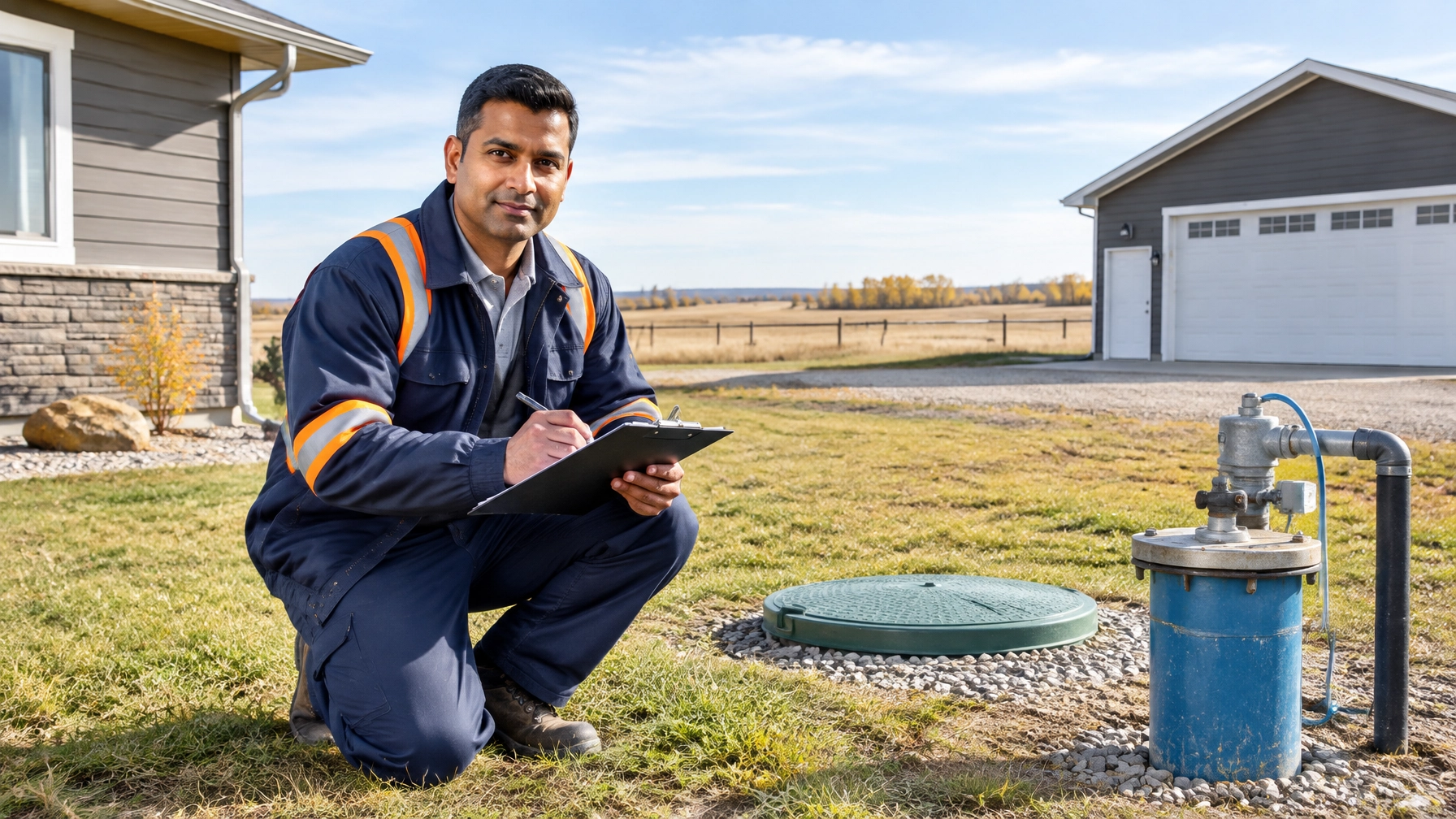
Direct answer: An acreage inspection near Edmonton checks the home’s structure, roof, drainage, plumbing, electrical and heating, plus accessible well equipment, septic components, outbuildings, propane systems, wood-burning appliances, moisture risks and winter readiness. Water quality, septic performance and buried components usually require separate specialist testing.
Meta description: Planning an acreage inspection in Edmonton? Learn what to check in wells, septic systems, outbuildings, propane, wood heat and winter-ready home systems.
Buying an acreage near Edmonton, Sherwood Park, St. Albert, Spruce Grove or Fort Saskatchewan is different from buying a city home. You are not only purchasing a house. You may also be taking responsibility for a private water supply, septic system, large property, detached buildings, propane equipment, wood heat and longer travel distances for repairs.
I’m Banti K Shaw. With more than 10 years of construction and inspection experience, I assess rural properties with both an inspector’s and builder’s perspective. My goal is to give you clear, evidence-based information before you commit to a major investment.
If you are searching for a reliable home inspection in Edmonton or an acreage inspection in the surrounding area, timing matters. As of October 1, 2026, Edmonton buyers are heading toward the first deep freeze. Once the ground freezes and snow covers access points, some septic, drainage and well-related observations may be limited or deferred until spring.
Yes. A proper acreage inspection should consider the dwelling and the property systems that support it. The scope depends on accessibility, safety, the inspection agreement and whether specialized testing is added.
A typical acreage inspection reviews:
For more detail about the residential portion of the inspection, review our guide to what a home inspection includes in Edmonton.
“On an acreage, I look at how the systems work together. A drainage problem can affect the foundation, a septic setback can affect the well, and an outbuilding may create electrical or fire risks. The property needs to be understood as a complete working system.”
Banti K Shaw

Yes. A visual inspection cannot confirm that well water is potable. It can identify visible conditions that may increase risk, but laboratory testing is needed for bacteria, chemicals and trace metals.
During an acreage inspection, I look for:
For a purchase, consider arranging a private laboratory water test for total coliform and E. coli. You may also want chemical and trace-metal testing, especially if the well is shallow, the history is unknown or you intend to rely on it for many years.
Alberta Health Services explains private drinking-water testing, including the recommendation to test for bacteria twice a year and chemicals and trace metals every three years. However, Alberta Health Services states that real-estate-related samples should be sent to a commercial laboratory.
Pro tip: Ask the seller for the well identification number, depth, drilling record, previous test results, pump information and repair invoices. You can also check the Alberta Water Well Information Database.
A septic inspection should begin with records and visible evidence, then move to specialist testing where appropriate. A standard home inspection does not automatically confirm the condition of buried tanks, disposal fields or underground piping.
Look for:
Alberta’s private sewage codes and standards are important because a private sewage treatment system must be properly designed and installed for the property. Permit and system records can help you understand whether the current setup matches the home’s use.
A specialist septic assessment may include opening accessible lids, measuring sludge and scum levels, testing pumps and alarms, reviewing the disposal field, or using a camera on relevant lines. Those services are separate from a visual acreage inspection and should be requested specifically.
Once soil is frozen or snow-covered, it may be impossible to locate or safely access buried components. Frozen ground also limits your ability to assess:
Arrange your inspection, pumping records review and water testing before the first deep freeze whenever possible. If a complete septic assessment cannot be performed, document the limitation and plan a spring follow-up.

Yes. Outbuildings can contain electrical service, heaters, plumbing, fuel storage, workshops or structural problems that are easy to overlook during a house-focused inspection.
For each accessible outbuilding, consider:
For propane systems, I look at visible tanks, regulators, piping, appliance connections, corrosion, impact protection and signs of damage. I do not certify gas tightness or perform specialized fuel-system work. A licensed propane technician should evaluate suspected leaks, tank condition, line sizing or unsafe installations.
For wood-burning stoves and fireplaces, I review visible clearances, hearth protection, accessible flue connections, chimney condition and nearby combustible materials. A WETT inspection or chimney specialist should be used when you need certification, a detailed chimney assessment or insurance documentation.
Before closing on an acreage, confirm that winter-critical systems are ready to operate:
You may also want a furnace inspection before winter and a review of the water heater’s condition and warning signs.
Acreages often require more travel, more buildings, more site review and additional coordination. The following are planning categories, not quotes:
Ask exactly what your written inspection agreement includes, what is excluded and which tests are performed by an accredited laboratory or licensed trade professional.
For most acreage buyers, the answer is yes. A thorough home inspection in Edmonton and surrounding areas can help you understand the dwelling, while targeted well, septic, water, propane and wood-heat assessments address risks that a standard inspection cannot confirm.
At InspecUs, I provide unbiased reporting, high-resolution photographs and practical recommendations, with reports delivered the same day whenever possible and within 24 hours. I do not replace licensed trades, engineers or laboratory testing. I help you identify where those professionals may be needed before your condition deadline.
If you are planning an acreage purchase this fall, send InspecUs a message to discuss the property, timing and rural systems you want included. A clear inspection plan now can give you more useful information before frozen ground limits further testing.
We are licensed by the Licensed Professional and certified through InterNACHI

InspecUs Home Inspection is certified in the best practices established by Internachi. Our commitment to safety includes maintaining a 6-foot distance and using personal protective equipment (PPE) during all inspections.

© 2024 InspecUs - All Rights Reserved. | Sitemap | Developed by Integrated Marketing Platform Inc.