 7132 178 St NW,
 Call us:


 Call us780-809-1056
- Mail usinfo@inspecus.ca
- Schedule An Inspection
Call us780-809-1056

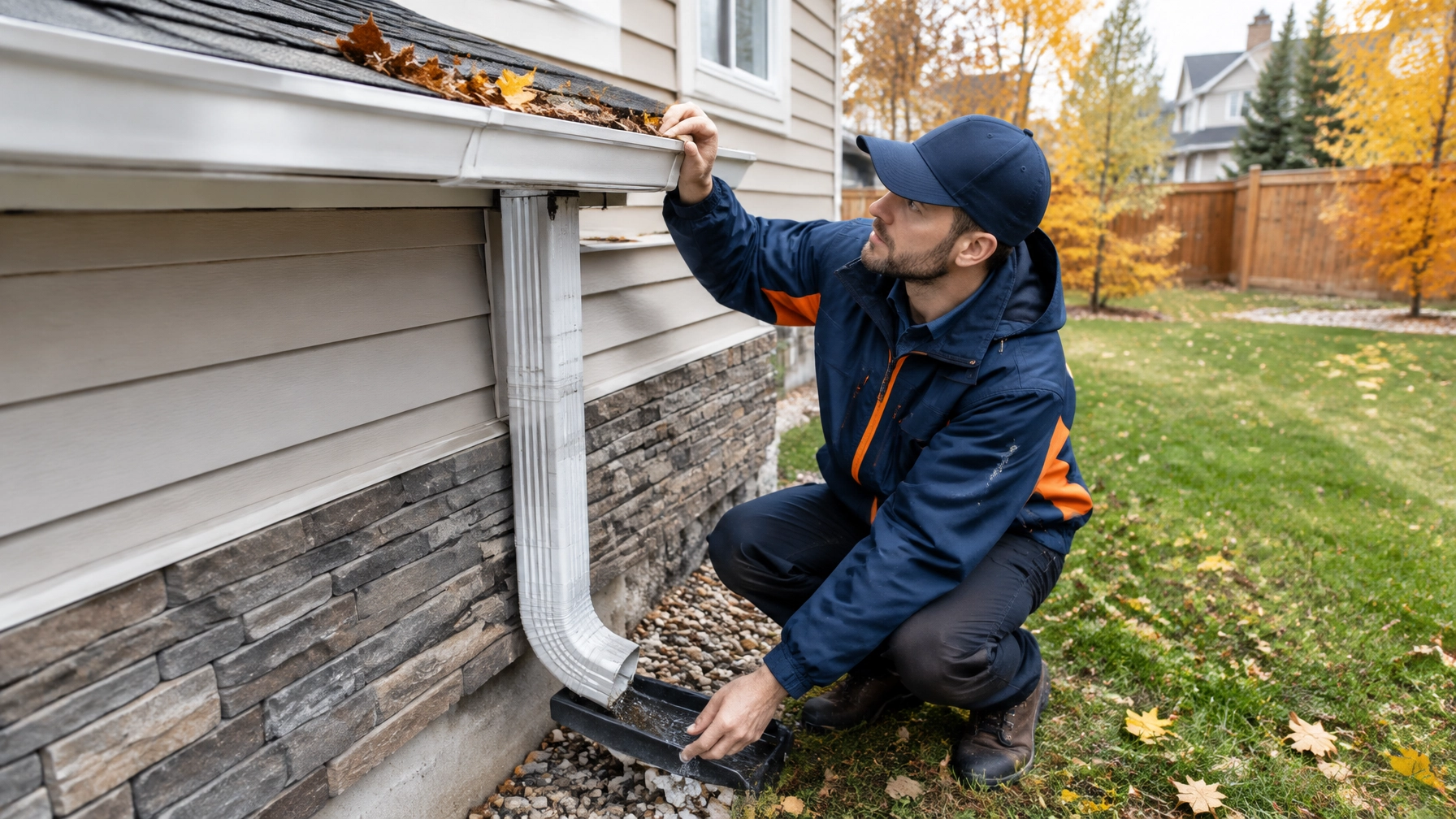
Direct answer: An eavestrough and downspout inspection in Edmonton checks for debris, poor slope, loose attachments, leaking joints, blocked discharge, missing extensions, and water draining toward the foundation. It also reviews lot grading, swales, window wells, sump equipment, backwater valves, and visible signs of moisture damage.
Meta description: Eavestrough and downspout checks for Edmonton homes: fix grading, leaks and discharge points before freeze-up to help prevent costly basement water problems.
Could your home’s drainage system handle one more heavy rain before the ground freezes?
In Edmonton, October is the transition between fall rain and winter conditions. Water can still move through the soil today, but an early freeze can lock the ground in place. Once snow covers the yard, extensions become buried, low spots become difficult to see, and meltwater may have nowhere to go.
A blocked eavestrough can overflow beside the foundation. A short downspout can saturate soil next to the basement wall. Poor lot grading can direct water toward the house instead of toward a swale, street, or lane.
“In October, I most often see leaves blocking eavestroughs, downspouts that end too close to the foundation, and settled soil under steps or decks. These problems can look minor now, but they become much more expensive when water freezes, expands, and enters the structure.”- Banti K Shaw
The City of Edmonton’s Homeowner’s Guide to Lot Grading and Drainage emphasizes that prevention and maintenance are central to reducing flood risk.
Would you know where to look before the next freeze-thaw cycle? Walk the property in order, beginning at the roofline and ending at the foundation and basement.
Is water able to move continuously toward every downspout?
Inspect each eavestrough for:
A properly functioning eavestrough should have a gentle, consistent slope toward the downspout. Standing water after rainfall is evidence that the slope or support may be inadequate.
Do not assume gutter guards eliminate maintenance. They can reduce debris, but they still require inspection and cleaning.
Pro tip: Use a hose from the end of the eavestrough farthest from the downspout, if conditions are safe. Watch for slow drainage, overflow, and leakage at seams.
Could water be escaping before it reaches the ground?
Examine the connection between the eavestrough and downspout, then inspect every elbow and joint. Look for:
InterNACHI’s guide to inspecting gutters and downspouts identifies gutter condition, slope, connections, leaks, and foundation discharge as important inspection considerations.
A downspout can appear connected while leaking heavily at an elbow. That concentrated water may land directly beside the foundation.
Are your downspouts moving water away from the house, or simply moving it a few inches?
For Edmonton homes, extensions or splash pads should direct water away from the foundation, generally about 1.5 to 2 metres (5 to 6 feet) where the property layout permits. The City’s guidance also emphasizes keeping discharge points inside your property and away from adjacent property lines.
Check that each extension:
Short, disconnected, or folded extensions are common October findings. Correcting them before freeze-up is usually simple and inexpensive.
Does the ground fall away from your foundation continuously?
The City of Edmonton’s Lot Grading Issues guidance explains that lot grading directs runoff away from buildings and toward a public right-of-way.
As a homeowner, look for:
The City’s homeowner guide identifies a positive grade of approximately 10–15 cm over 1.5–2 metres, about 5–6 feet, away from the foundation. A swale should also maintain a positive and consistent slope; where applicable, a minimum swale slope of approximately 1.5% helps maintain surface flow.

What happens when a downspout has nowhere safe to discharge?
Every downspout should end with a suitable extension or splash pad. A splash pad can be useful where a narrow side yard does not allow a long rigid extension, but it must still direct water away from the foundation.
Inspect for:
Avoid directing roof water into a depression beside the foundation. If a downspout cannot discharge safely because of a narrow lot, retaining wall, or unusual grading, consult a qualified drainage professional rather than improvising a connection.
Could water be entering through a basement window or overwhelming the foundation drainage system?
Inspect accessible window wells for:
Your home may also have weeping tiles, a sump pump, and a backwater valve. These components serve different purposes:
Test an accessible sump pump according to the manufacturer’s instructions. Confirm that the discharge line is connected, unobstructed, and directed away from the foundation. Do not disconnect or alter underground drainage connections without confirming how your property is serviced.
Have steps or a deck created a hidden drainage trap?
Areas beneath exterior stairs, decks, and enclosed landings are frequently overlooked. Soil can settle in these locations, and construction can block the normal slope away from the wall.
Look for:
The City’s guide specifically identifies backfilling beneath steps and decks as a practical drainage maintenance task. Correcting these areas before the ground freezes may prevent water from collecting beside the basement wall all winter.
Are you responsible if your downspout affects a neighbour?
Yes. Under Edmonton’s Drainage Bylaw 18093, property owners are responsible for maintaining lot grading and managing surface runoff on their property.
In practical terms, homeowners should:
A home inspection can identify drainage concerns, but it does not replace the City’s bylaw investigation or an engineer’s grading design.
Could a small exterior drainage defect already be affecting the interior?
During a home inspection in Edmonton, I connect exterior drainage conditions with visible interior evidence, including:
“The costly part is rarely the missing downspout extension itself. Buyers pay later when repeated moisture has affected drywall, flooring, insulation, mould-sensitive materials, or the foundation. My job is to identify the pattern early and explain what should be investigated next.”- Banti K Shaw
Are thermal cameras and moisture meters a substitute for repairs? No, but they can help identify areas that deserve closer attention.
During a pre-purchase or fall inspection, an InspecUs inspector may:
Our thermal imaging and moisture detection service can provide additional information when visible evidence suggests hidden moisture or temperature variation.
A standard home inspection is not a cleaning or repair service. It generally does not include:
The InterNACHI Standards of Practice describe roof drainage inspection from accessible areas and set important limits, including no requirement to inspect underground downspout diverter drainage pipes or perform water testing.

Are you comparing repair prices with inspection prices? They serve different purposes.
As a general Edmonton planning range in 2026:
These are planning ranges, not quotations. Ask contractors what is included, obtain written estimates, and confirm whether repairs address the cause or only redirect water temporarily.
Yes. Eavestroughs and downspouts are normally reviewed as part of the roof and exterior portions of a visual home inspection, where accessible and safe. The inspector may report debris, poor slope, damage, loose connections, leaks, and inadequate discharge. Cleaning and repairs are separate services.
At least twice a year is a practical schedule for many homes: once in spring and again in fall after most leaves have dropped. Homes beneath mature trees may require additional checks. Inspect them after major storms as well.
Yes. Blocked or damaged eavestroughs can overflow beside the foundation. When combined with poor grading, short extensions, or saturated soil, roof runoff can increase the risk of basement seepage, window-well flooding, and foundation moisture.
Coverage depends on your policy and the cause of the loss. Gradual seepage, deferred maintenance, poor grading, and water entering through a foundation may be excluded. Sudden events or specific overland-water and sewer-backup endorsements may be treated differently. Contact your insurer before assuming a claim will be covered.
Will you still be able to see the drainage system after snow covers the yard?
October is the practical pre-winter window to document drainage problems and complete straightforward corrections. If you are buying a home, selling a property, or concerned about basement moisture, InspecUs can provide an unbiased assessment with high-resolution images and a report delivered within 24 hours.
You can also review our guidance on preventing ice dams in Edmonton and winter home inspections for related seasonal risks.
For a low-pressure consultation, call 780-809-1056 or visit inspecus.ca. An inspection cannot stop winter, but it can help you understand where water is going before the ground freezes.
We are licensed by the Licensed Professional and certified through InterNACHI

InspecUs Home Inspection is certified in the best practices established by Internachi. Our commitment to safety includes maintaining a 6-foot distance and using personal protective equipment (PPE) during all inspections.

© 2024 InspecUs - All Rights Reserved. | Sitemap | Developed by Integrated Marketing Platform Inc.