 7132 178 St NW,
 Call us:


 Call us780-809-1056
- Mail usinfo@inspecus.ca
- Schedule An Inspection
Call us780-809-1056

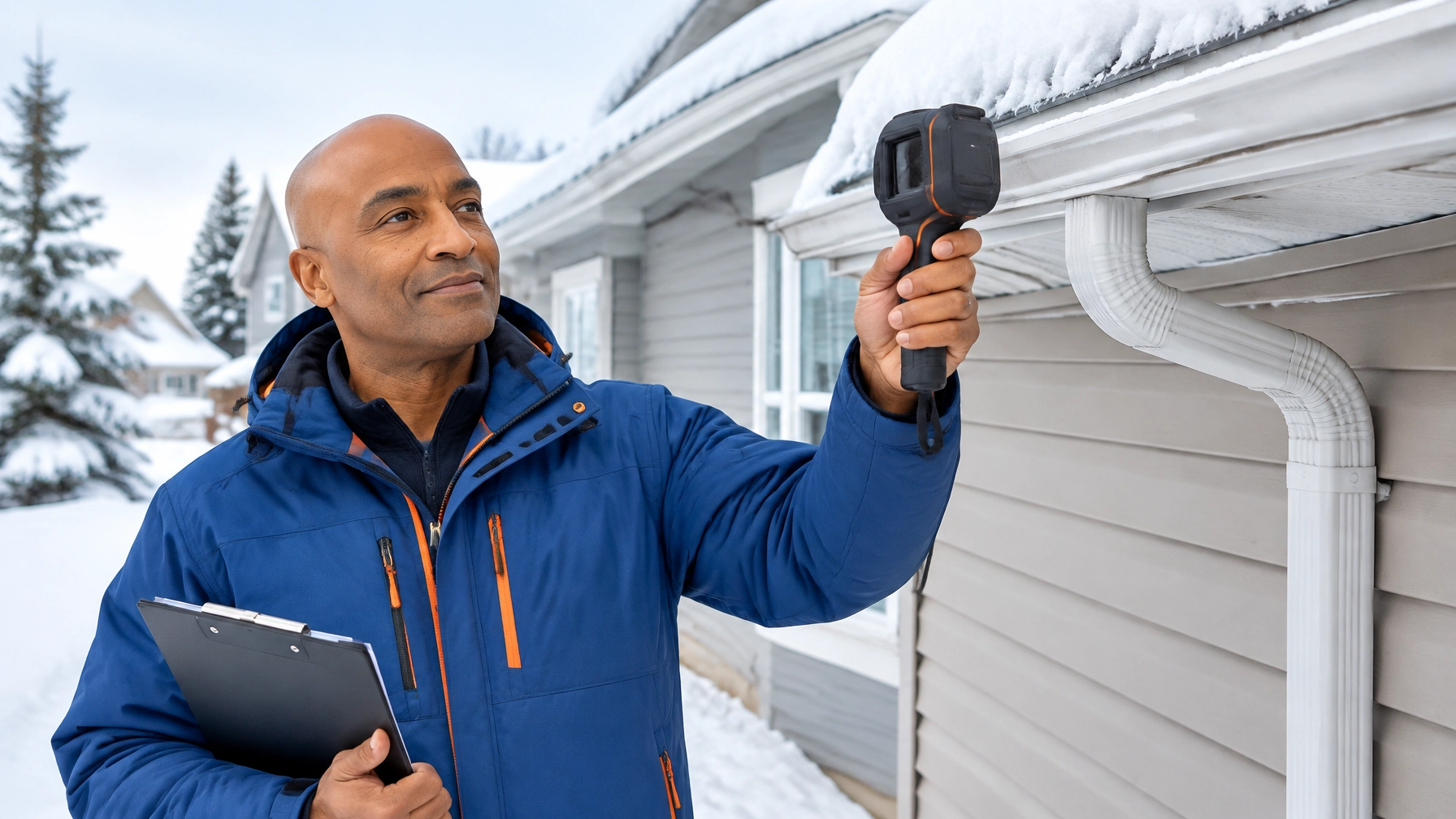
Direct answer: A winter home inspection in Edmonton can still provide a thorough assessment of the home’s structure, systems, attic, foundation, and interior evidence of water intrusion. However, snow and ice may limit roof, grading, exterior surface, and equipment observations. Those limitations should be clearly documented, with follow-up recommendations after thaw.
Meta description: Planning a winter home inspection in Edmonton? Learn what snow and ice hide, how inspectors compensate, and what to ask before you make a home purchase in 2026.
If you are buying an Edmonton home between November and March, you may wonder whether a winter inspection is “less thorough.” After more than 10 years working in inspections and construction, my honest answer is: winter inspections are different, not automatically inferior.
Snow and ice can conceal important exterior conditions, but cold weather also creates useful diagnostic opportunities. Frozen ground, active heating systems, attic frost, thermal patterns, and evidence of previous winter moisture problems can tell us a great deal.
“I do not treat winter as an excuse to overlook a property. I identify what can be inspected safely, use the right tools to investigate concealed conditions, and clearly explain what should be re-checked after the thaw.”- Banti K Shaw
A winter inspection can help you make an informed purchase decision before your offer condition expires. It typically evaluates the home’s accessible structure, foundation, attic, insulation, ventilation, plumbing, electrical, heating, interior, and visible exterior components.
At InspecUs, our pre-purchase home inspection service in Edmonton is designed to give you practical information, not a vague “pass” or “fail.” You should receive clear observations, high-resolution images, and recommendations that help you plan negotiations, repairs, and future maintenance.
The key is understanding the inspection’s limitations before you rely on the report.
Snow and ice may conceal:
Roof covering and shingles
Snow can hide lifted, cracked, curling, missing, or deteriorated shingles. An inspector may be able to assess visible roof edges, flashing, valleys, penetrations, and roof geometry, but not every shingle surface.
Foundation perimeter grading
Snow can cover low areas where water may collect against the foundation. Frozen soil also makes it difficult to assess the final slope of grading accurately.
Exterior walkways and decks
Ice and snow can hide cracked concrete, uneven steps, loose boards, deteriorated railings, and trip hazards.
Driveways
Settlement cracks, heaving, drainage problems, and damaged asphalt may not be visible until the surface clears.
The air-conditioning unit
The unit may be snow-covered, and cold temperatures generally make operational testing inappropriate. Its installation and visible condition can still be documented, but cooling performance may require later testing.
Exterior hose bibs
Insulation, frost, snow, or winterization can conceal damage and make operation unsafe. Interior evidence of leakage and visible piping should still be reviewed.
Exterior siding cracks
Snowbanks can block lower siding, trim, window wells, and wall sections where impact or moisture damage may be present.
Flat and low-slope roofs
Snow, ice, and ponding water can conceal membrane damage, blocked drains, deteriorated flashing, and areas of inadequate drainage. Safe roof access is especially important on these roof types.
A careful winter inspection does not depend on one exterior glance. We compensate by using several evidence sources:

No. Under the InterNACHI Standards of Practice, inspectors are not required to move snow, ice, debris, or other obstructions that prevent observation. They are also not required to walk roof surfaces or enter areas they reasonably consider unsafe.
That does not mean the roof can be ignored. The inspector should explain:
The Standards of Practice also make clear that a home inspection is a visual, non-invasive assessment based on conditions present on the inspection date. It is not a guarantee of future performance or a technically exhaustive investigation.
Pro tip: Ask to see the exact limitation in the report. “Roof inaccessible” is less useful than a specific explanation such as, “Roof slopes were covered by snow and ice; shingles and flashing were not fully visible. Re-check roof covering and drainage after thaw.”
Ice dams form when heat escapes from the home into the attic. That heat warms the roof sheathing and melts snow higher on the roof. The water runs toward the colder eaves, freezes, and creates an ice ridge. Meltwater can then back up beneath shingles and enter the attic or ceiling.
The main contributing conditions are often:
Natural Resources Canada explains that attic ventilation should be paired with air sealing and insulation. For many accessible attics, the guidance references approximately a 1:300 ratio of unobstructed vent area to insulated ceiling area, although the correct design depends on the roof assembly and local requirements. Read the full Natural Resources Canada guidance on roofs, attics, and ice dams.
One useful diagnostic clue is where snow melts first after a heavy frost. If a distinct patch or horizontal line melts before surrounding areas, investigate what is beneath it. Common clues include a knee wall, attic hatch, plumbing vent, skylight, or poorly insulated ceiling transition.

For a meaningful home inspection Edmonton buyers can rely on, ask these questions:
Will you allow a full 2.5 to 3 hours?
A rushed winter inspection may miss attic evidence, interior moisture patterns, and exterior limitations.
Will you use thermal imaging and moisture detection?
Ask what areas will be scanned and whether images will be included in the report. Learn more about thermal imaging and moisture detection in Edmonton.
How will you document snow and ice limitations?
Every inaccessible roof, buried walkway, concealed grading area, or untestable exterior component should be specifically noted.
What roof access is safe and available?
Ask whether the roof will be viewed from the ground, eaves, ladder, attic, or another safe location. Never expect an inspector to risk injury for a better photograph.
What should be re-checked after the thaw?
The answer may include shingles, flat-roof drains, grading, siding, deck surfaces, hose bibs, air-conditioning equipment, and driveway conditions.
When will the report be delivered?
A prompt, image-supported report gives you more time to discuss findings within your purchase conditions.
Not necessarily. Waiting may improve visibility, but it can also mean losing the property or facing a different market. A thorough winter inspection, a clearly written limitation list, and a spring follow-up plan can protect you without automatically delaying your purchase.
Often, yes. A sewer camera can usually be used in winter if the cleanout is accessible and the line is not frozen, blocked, or otherwise unsafe to access. A sewer scope can identify root intrusion, cracks, offsets, corrosion, and blockages that a regular home inspection cannot see. Consider adding a sewer scope inspection in Edmonton to your purchase due diligence.
Usually, no. Inspection pricing generally reflects the property size, age, type, travel, time, and services included, not simply the season. Thermal imaging, sewer scoping, or a later re-check may be separate services.
There is no responsible single price for every Edmonton property. A townhouse, condominium, acreage, older detached home, and large property can require different time and equipment. Request a quote based on the property address, size, age, and inspection scope.
You cannot confirm every roof condition from the attic, but you can identify important warning signs. Look for frost, damp insulation, dark staining, roof-deck discoloration, mould-like growth, blocked soffit vents, uneven insulation, and evidence of air leakage. Thermal imaging and interior ceiling checks can add useful information.
Yes, provided the inspection is thorough, honest, and clear about its boundaries. Snow and ice may hide some surfaces, but they do not prevent an experienced inspector from examining the home’s accessible systems, attic conditions, interior evidence, drainage clues, and winter performance indicators.
“My responsibility is not to make the property sound perfect or problematic. It is to give you the clearest evidence available, explain what remains uncertain, and help you decide what should happen next.”- Banti K Shaw
If you are buying in Edmonton this winter, schedule enough time for a careful inspection and ask for every limitation to be documented. You can contact InspecUs to discuss the property and choose the inspection scope that best fits your purchase.
We are licensed by the Licensed Professional and certified through InterNACHI

InspecUs Home Inspection is certified in the best practices established by Internachi. Our commitment to safety includes maintaining a 6-foot distance and using personal protective equipment (PPE) during all inspections.

© 2024 InspecUs - All Rights Reserved. | Sitemap | Developed by Integrated Marketing Platform Inc.