 7132 178 St NW,

 Call us:



 Call us780-809-1056
- Mail usinfo@inspecus.ca
- Schedule An Inspection
Call us780-809-1056

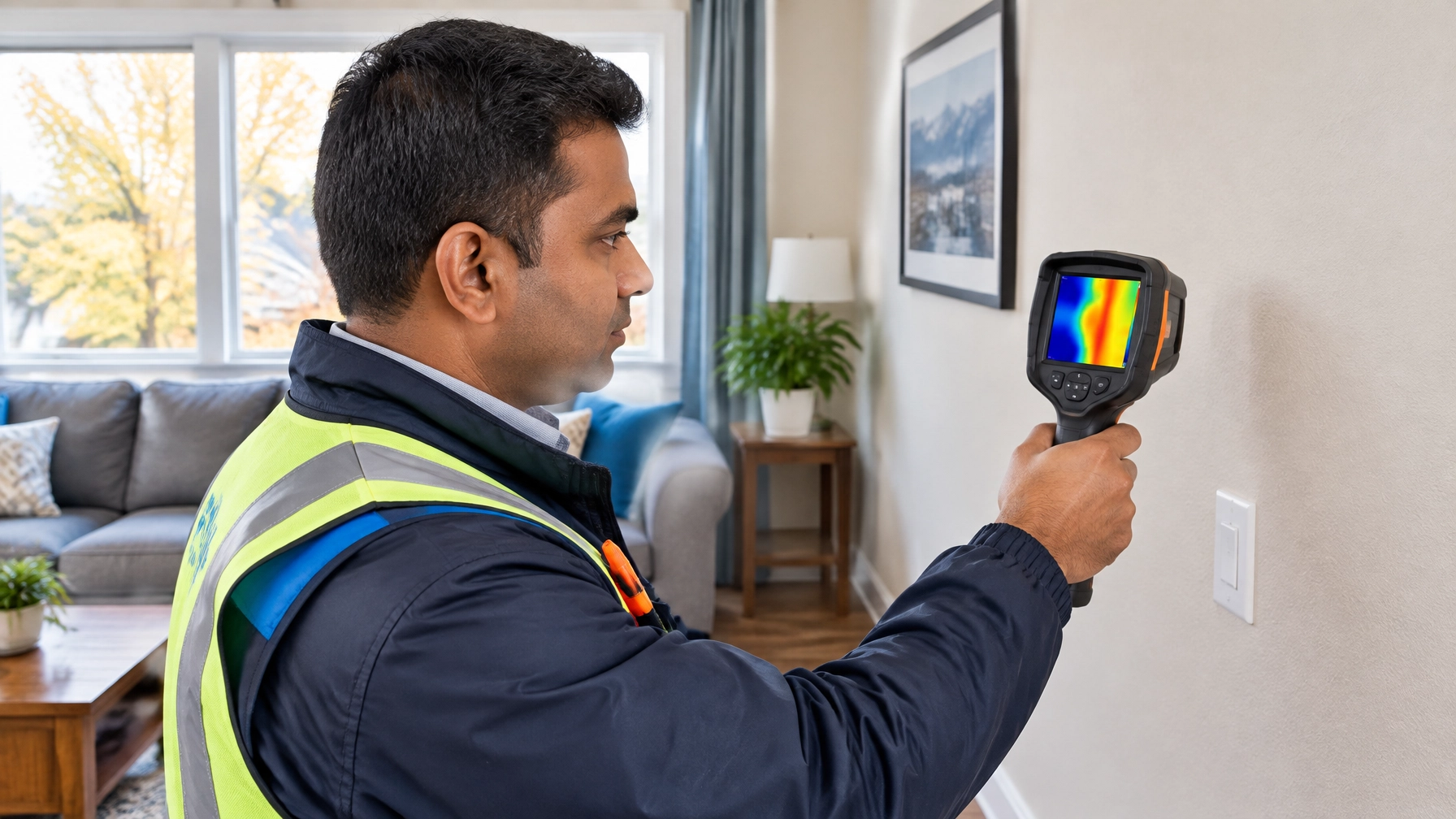
Direct answer: A thermal imaging home inspection in Edmonton uses infrared cameras to identify unusual surface-temperature patterns that may indicate wet insulation or concealed water intrusion. I check suspicious areas with moisture meters and visual inspections. Fall checks can uncover problems before freeze-thaw cycles and snowmelt make repairs more difficult.
Meta description: Thermal imaging home inspection Edmonton: how infrared cameras and moisture meters uncover hidden water damage, wet insulation and active leaks before winter.
Have you noticed a damp smell or a small mark on a wall and wondered whether it is more than a cosmetic issue? In my experience inspecting Edmonton homes, fall is the highest-risk window for discovering moisture problems that stayed out of sight during summer.
As temperatures fluctuate, moisture trapped in building materials can become easier to spot. Rain-soaked ground, blocked drainage and the first snowmelt can also direct water toward parts of a home that seemed dry before. Once winter sets in, access and repairs may become more challenging.
That is why a water damage home inspection before winter is useful for buyers and homeowners alike. It can help identify areas that warrant attention while there is still time to investigate and plan repairs.
“In more than 10 years working in construction and inspections, I’ve learned not to treat one cold patch or stain as a diagnosis. I look for a pattern, check the surrounding materials and verify concerns with the right tools.”
Banti K Shaw, InspecUs
Can an infrared camera show water behind a finished wall? Not directly. A thermal camera measures surface temperatures and displays patterns that may point to a hidden concern. Moisture can change how materials hold or release heat, creating a temperature pattern that stands out from the surrounding area.
But other conditions, such as missing insulation or air movement, can also create temperature differences. That’s why I use the camera as a screening tool, not proof of a leak. When a pattern looks suspicious, I check the area visually and use a moisture meter to compare readings with nearby materials.
InterNACHI explains this approach in its guidance on using infrared cameras to inspect for moisture intrusion: use thermal imaging to locate areas for further investigation and confirm suspected moisture with appropriate methods.

Are you wondering what a moisture detection Edmonton service might flag before winter? These are ten patterns I may investigate. Each one needs context and, where appropriate, confirmation with a moisture meter.
A thermal image can help narrow down where to look, but it cannot identify the exact source on its own. Water may travel within a wall or ceiling, so the visible pattern may not sit directly below or beside the point where moisture entered.
Pro tip: Water follows the path of least resistance. If a cool pattern shows up in a basement ceiling, I always look a floor above it before writing anything down. In my experience, the stain rarely sits directly under the leak.
What should you expect from a thorough thermal imaging home inspection in Edmonton? I use a step-by-step process:
Conditions matter. Recent weather and the temperature difference between indoors and outdoors can affect what the camera reveals. A scan can also miss a problem if there is not enough temperature contrast, or if the moisture is inactive or concealed in a way that does not create a visible pattern. A clear scan is not a guarantee that a home has no hidden moisture.
Pro tip: I ask clients to run a shower, do a load of laundry or turn on the furnace before the inspection when they can. Active use creates the temperature contrast that helps a camera tell me where to look next.

It depends on the inspection package and the property. Thermal imaging may be included in some inspection services or offered as an additional service. Ask your provider what the quoted inspection covers, which areas will be scanned and whether moisture-meter checks are part of the process. You can read more about InspecUs thermal imaging and moisture detection.
No. The camera reads surface temperatures; it does not see through drywall or reveal the contents of a wall cavity. It can show a temperature pattern on the surface that may be consistent with a hidden issue. I investigate that pattern using visual checks and moisture measurements where suitable.
Inclusion varies by provider and inspection scope. Don’t assume it is part of every standard inspection. If you are booking a pre-purchase home inspection in Edmonton, ask whether thermal imaging is included, what areas are covered and how suspected findings are verified.
No. A thermal camera cannot identify mould or confirm that it is present. It may help locate temperature patterns or damp areas that deserve further assessment, but mould requires appropriate visual evaluation and, when needed, specialized testing. Moisture control is an important part of preventing future growth.
How can you make an inspection more useful? A little preparation helps me focus on the areas that concern you:
One more thing worth saying plainly: moisture rarely fixes itself. Left alone, damp framing and insulation are a welcome mat for mould and rot, which is why the inspection is about timing as much as it is about technology.

Fall is a practical time to investigate moisture concerns before winter makes follow-up work more complicated. If you have a question about a property or want to understand your inspection options, call InspecUs at 780-809-1056 or request a free quote. There’s no pressure, just a straightforward next step toward understanding the property.
We are licensed by the Licensed Professional and certified through InterNACHI

InspecUs Home Inspection is certified in the best practices established by Internachi. Our commitment to safety includes maintaining a 6-foot distance and using personal protective equipment (PPE) during all inspections.

© 2024 InspecUs - All Rights Reserved. | Sitemap | Developed by Integrated Marketing Platform Inc.