 7132 178 St NW,
 Call us:


 Call us780-809-1056
- Mail usinfo@inspecus.ca
- Schedule An Inspection
Call us780-809-1056

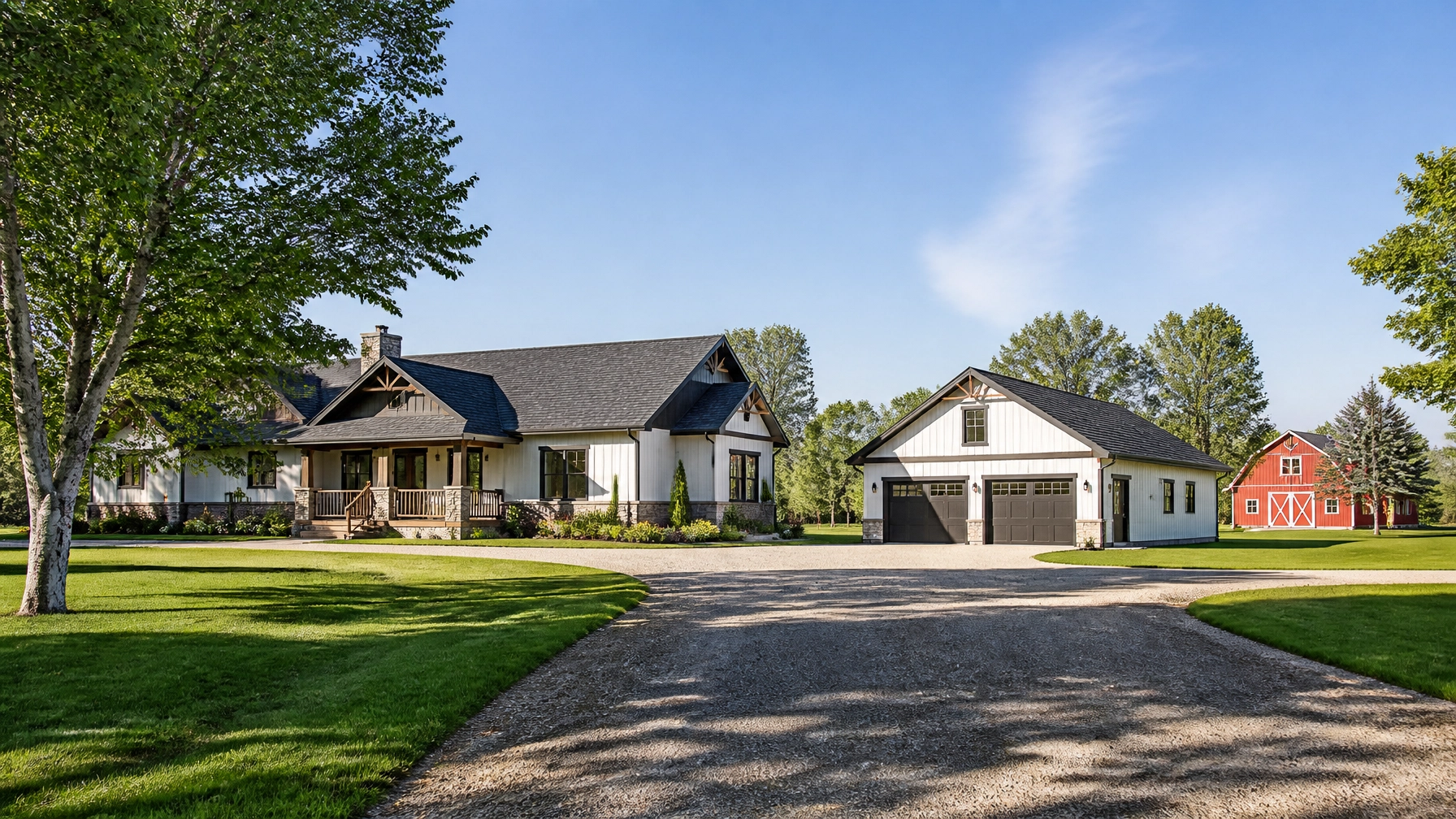
So, you’re ready to trade the hum of city traffic for the quiet of an Alberta sunset? Buying an acreage near Edmonton, whether it’s in Saint Albert, Sherwood Park, or Spruce Grove, is a dream for many. You get the space, the privacy, and that fresh prairie air. But here’s the thing: buying a rural property isn’t just like buying a house in the suburbs with a bigger backyard.
When you move out of the city limits, you become your own utility company. You are responsible for your own water, your own waste management, and often, multiple additional structures like shops or barns. A standard home inspection just won't cut it.
At InspecUs, we’ve spent over a decade helping buyers navigate the complexities of rural real estate. This guide, part of our 17-week Edmonton Property Inspection series, will break down exactly what you need to look for during an acreage inspection in Edmonton so you don’t end up with a "money pit" in the country.
In a typical Edmonton neighborhood, the city manages the pipes and the power lines. On an acreage, those systems are buried on your land and maintained by you. If a septic field fails or a well runs dry, you could be looking at repair bills upwards of $20,000 to $30,000.
A professional acreage inspection goes beyond the four walls of the house. It’s about evaluating the entire ecosystem of the property.

What happens when you turn on the tap? In the city, you don't think about it. On an acreage, that water comes from an aquifer deep underground.
During our rural property inspection in Alberta, we look at three critical factors regarding the well:
A well might provide enough water for a morning shower, but can it handle a load of laundry, a dishwasher, and a bath for the kids at the same time? We check the flow rate (measured in gallons per minute). In Alberta, you typically want to see at least 3–5 GPM for a standard family home.
This is non-negotiable. Most lenders require a potability test before they’ll even approve your mortgage. We check for:
We inspect the well head (to ensure it’s properly sealed from surface contaminants), the pressure tank, and the pressure switch. We also cross-reference the Alberta Water Well Information Database to see the history of the well’s depth and original yield.
If the well is the lifeblood, the septic system is the… well, let's just say it's equally important. A failed septic system isn't just a stinky problem; it’s a major health and environmental hazard.
In Alberta, all private sewage systems must meet the Alberta Private Sewage Systems Standard of Practice. Our team at InspecUs ensures the system is functional and safe.
Pro Tip: Always ask the seller for the last time the tank was pumped. If they can’t remember, that’s a red flag for maintenance.

One of the best parts of acreage living is the space for a workshop, a "man cave," or a barn for horses. However, these buildings are often built as DIY projects or by contractors who might not have followed every code.
During an acreage home inspection checklist walkthrough, we evaluate:
On a standard city lot, drainage is usually straightforward, slope everything toward the street. On an acreage, poor grading can lead to water pooling against your foundation or, worse, flooding your septic field.
In Edmonton’s climate, the freeze-thaw cycle is brutal. If water isn't directed away from the house, it can seep into basement walls, freeze, and cause massive structural cracks. We assess the "lay of the land" to ensure that the massive amount of snowmelt we get every spring has somewhere safe to go.

Rural homes are often more exposed to the elements. Without the "heat island" effect of the city or the windbreak provided by neighboring houses, your home takes the full force of Alberta’s winter winds.
That’s why we include thermal imaging with every inspection. It’s a game-changer for acreage buyers.
Learn more about how we use this tech on our Thermal Imaging and Moisture Detection page.
Acreage homes often have unique structural challenges. Some are older farmhouses that have been added onto three different times over 50 years. Others are modular or RTM (Ready-to-Move) homes that have been set on various types of foundations.
We check for:
When you’re buying an acreage, you’re making a massive investment. You don't want a "generalist" who usually only looks at 800-square-foot condos. You want someone who knows their way around a pressure tank and a septic mound.
Why choose our team?
Our goal is to give you the confidence to either sign that contract with a smile or walk away from a bad deal before it costs you your savings.
Before you remove your conditions, make sure your inspection has covered:
Don't leave your rural dream to chance. Whether you're looking at a sprawling estate in Strathcona County or a cozy starter acreage in Parkland County, our team is ready to help.
Let’s make sure your new home is as solid as it looks.
Click Here to Book Your Inspection Today or call us to discuss your specific property needs.
Serving Edmonton, St. Albert, Sherwood Park, Spruce Grove, Fort Saskatchewan, and surrounding rural communities.
We are licensed by the Licensed Professional and certified through InterNACHI

InspecUs Home Inspection is certified in the best practices established by Internachi. Our commitment to safety includes maintaining a 6-foot distance and using personal protective equipment (PPE) during all inspections.

© 2024 InspecUs - All Rights Reserved. | Sitemap | Developed by Integrated Marketing Platform Inc.