 7132 178 St NW,
 Call us:


 Call us780-809-1056
- Mail usinfo@inspecus.ca
- Schedule An Inspection
Call us780-809-1056

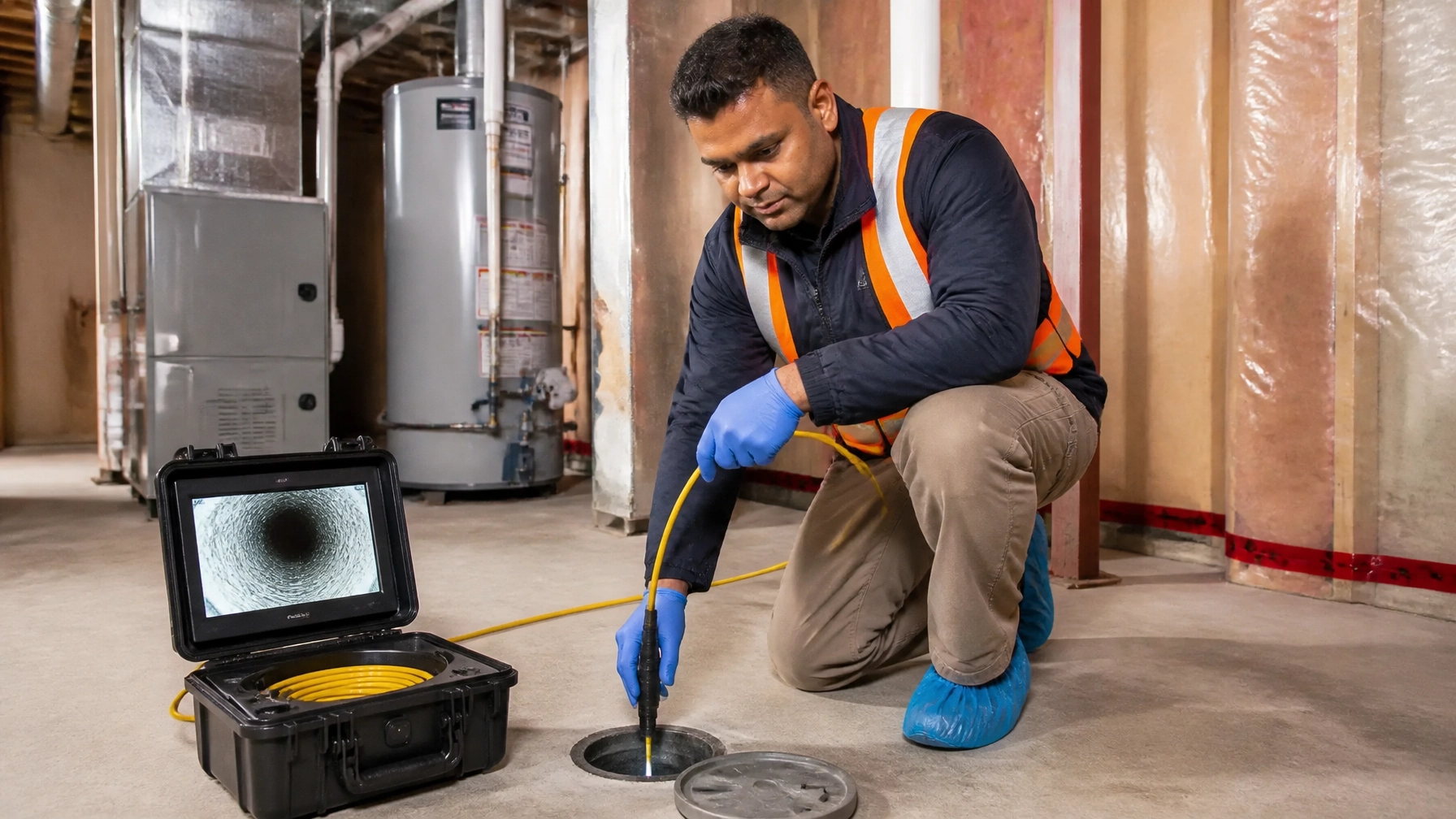
Direct answer: A sewer scope inspection in Edmonton uses a waterproof camera to examine the buried sewer line from your home toward the municipal connection. Expect roughly $150–$250 as a home-inspection add-on or $250–$350 standalone, about 30–60 minutes, and valuable evidence before you buy.
Buying a home is a major investment, so you should understand the condition of the systems you cannot see. The buried sewer line is one of those systems. It may be working normally during a showing while still containing roots, cracks, separated joints, or a developing blockage.
I’m Banti K Shaw, and I bring more than 10 years of inspection and construction experience to every property assessment. In my experience, a sewer scope is one of the most practical ways to reduce the risk of an expensive surprise after possession.
A sewer scope inspection is a video examination of the private sewer lateral running from your home toward the city connection, or toward a septic system in some acreage properties.
During the inspection, an inspector feeds a small waterproof camera through an accessible cleanout or other suitable entry point. The camera records the interior of the pipe as it travels through the line. This allows you to see conditions that a visual plumbing inspection cannot reveal.
A typical sewer scope may identify:
A standard home inspection does not normally include a sewer camera inspection. InterNACHI explains that sewer scoping is an additional or ancillary service, because underground sewer lines are not generally visible during a regular inspection.

What could be hidden beneath the lawn or basement floor? A sewer scope helps answer that question by showing the inside of the pipe rather than relying only on symptoms.
Roots can enter through small cracks or pipe joints. Once inside, they may collect paper, grease, and other debris.
Observable symptoms may include:
Root intrusion does not always cause an immediate failure. However, it can reduce flow and increase the likelihood of a future blockage.
Older clay, cast-iron, or deteriorated plastic pipes may develop cracks or holes. These defects can allow wastewater to escape into the surrounding soil or allow soil and groundwater to enter the line.
A crack may begin as a manageable repair and become a much larger excavation or replacement project if it is ignored.
A pipe joint may shift because of settlement, ground movement, poor installation, or aging materials. An offset joint can restrict flow and create a ledge where waste collects.
The camera may show the joint as a visible step, gap, or misalignment inside the line.
A belly is a low section of pipe where wastewater and solids can collect instead of flowing continuously toward the municipal main.
The result may be recurring clogs even when the rest of the line appears intact. A sewer scope can help identify standing water and indicate where the pipe’s grade may have changed.
Grease, foreign objects, sediment, roots, and collapsed pipe material can partially or fully obstruct the line. A scope can show whether the issue appears minor or whether additional cleaning, locating, or repair is appropriate.
Are you wondering whether a sewer scope will add hundreds or thousands of dollars to your inspection budget?
As a practical Edmonton budgeting range, buyers commonly encounter:
These are typical planning ranges, not a guaranteed quote. The final price depends on the property, access point, pipe length, inspection conditions, and whether the scope is bundled with another service.
The cost is relatively small compared with the potential cost of repairing or replacing a buried sewer line. A damaged line may require professional cleaning, trenchless repair, excavation, or full replacement. Costs can vary substantially based on depth, landscaping, driveway or sidewalk access, and the nature of the defect.
Pro tip: Ask whether the quoted price includes the recorded video, written findings, and a review of the footage. You should know exactly what you will receive before booking.
For a broader assessment during your buying period, you can also arrange an InspecUs pre-purchase home inspection in Edmonton.
Will a sewer scope disrupt your inspection schedule? In most Edmonton homes, the on-site process takes approximately 30–60 minutes.
The process generally follows these steps:
The inspection may take longer if the access point is difficult to reach, the line is heavily obstructed, or the camera cannot travel the entire length.
You may also be asked not to run sinks, showers, washing machines, dishwashers, or toilets while the camera is in the line. This helps the inspector maintain clear viewing conditions.
Is spending a few hundred dollars worthwhile when the sewer appears to be working? For many buyers, yes: especially when the property has several risk factors.
I strongly recommend considering a sewer scope when:
A newer home may have lower risk, but “lower risk” does not mean “no risk.” Installation defects, ground movement, damaged joints, or construction debris can affect newer lines as well.
**“My construction background has taught me not to judge a buried system by what is visible above ground. If a sewer line matters to your purchase decision, the most useful evidence is the video from inside that line.” : Banti K Shaw
Does every buyer need to scope an individual sewer line in a condo or townhome? Not necessarily.
In some condominium and townhouse developments, portions of the sewer system may be common property managed by the condominium corporation. The unit may also lack a private cleanout or have limited access to the relevant line.
Before ordering a scope, ask:
A townhome inspection or condo inspection can help you understand the visible plumbing components, while the condominium documents may clarify responsibility for underground lines.
A finding does not automatically mean you should walk away from the purchase. The next step depends on the type, location, severity, and urgency of the defect.
Use this practical framework:
A home inspector can identify and explain visible concerns, but specialized repairs should be evaluated and quoted by the appropriate trade professional.
At InspecUs, our goal is to give you clear information rather than pressure you toward a particular decision. Our sewer scope service uses advanced camera equipment to assess the accessible sewer line and identify concerns such as blockages, leaks, root intrusion, corrosion, and structural defects.
You can expect:
Our broader inspection approach includes more than 100 items in a standard report, high-resolution images, advanced reporting software, and same-day or within-24-hour reporting.
For most detached-home buyers, a sewer scope is a sensible risk-management step. It is especially valuable for older homes, mature-tree properties, homes with plumbing symptoms, and properties without reliable repair records.
It cannot predict every future problem, and it may be limited by access or obstructions. However, it can reveal defects that a standard home inspection cannot see and give you useful information while you still have the opportunity to make an informed decision.
If you are considering a home, townhome, acreage, or commercial property in Edmonton or the surrounding area, you can learn more about InspecUs sewer scope inspections or send us a message for a quote. There is no pressure: just a practical conversation about whether a sewer scope makes sense for your property.
We are licensed by the Licensed Professional and certified through InterNACHI

InspecUs Home Inspection is certified in the best practices established by Internachi. Our commitment to safety includes maintaining a 6-foot distance and using personal protective equipment (PPE) during all inspections.

© 2024 InspecUs - All Rights Reserved. | Sitemap | Developed by Integrated Marketing Platform Inc.