 7132 178 St NW,
 Call us:


 Call us780-809-1056
- Mail usinfo@inspecus.ca
- Schedule An Inspection
Call us780-809-1056

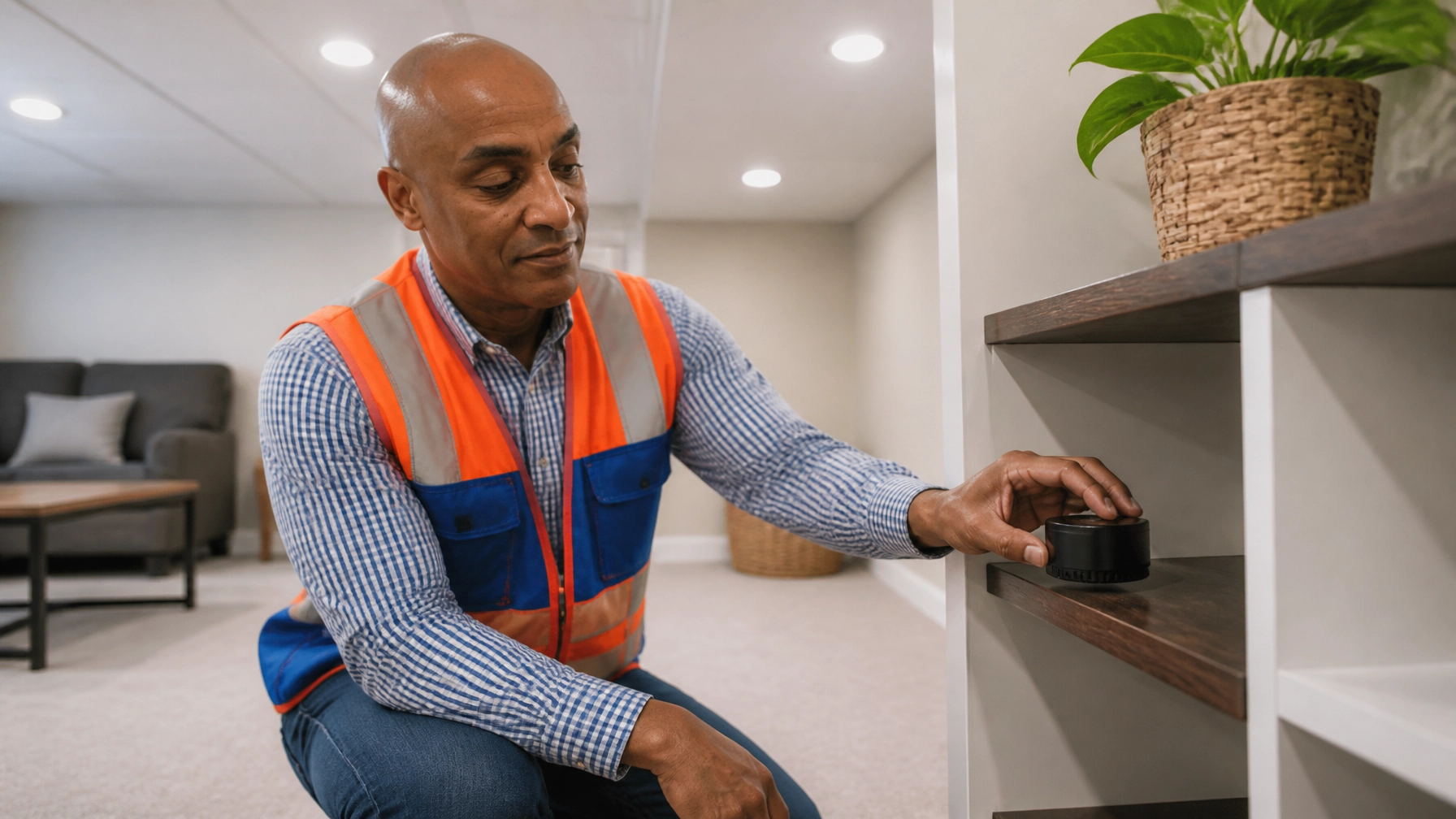
Direct answer: Radon testing in Edmonton is important because the radioactive gas can enter any home through soil and collect indoors without visible signs or odour. Health Canada recommends a long-term test lasting at least 91 days, preferably during the heating season. If levels reach 200 Bq/m³ or higher, mitigation should be considered.
Could an otherwise clean, well-maintained Edmonton home contain a health concern you cannot see, smell, or taste?
Yes. Radon is a naturally occurring radioactive gas created when uranium in soil and rock breaks down. It can enter a home through cracks and openings in the foundation, floor drains, sump pits, service penetrations, and other pathways.
Radon is not caused by poor housekeeping, and newer homes are not automatically protected. In fact, any property in Edmonton and surrounding communities may have elevated radon levels.
Long-term exposure to high radon concentrations is associated with an increased risk of lung cancer. The risk is particularly serious for people who smoke or have smoked, because tobacco smoke and radon can compound one another.
“In my 10-plus years inspecting homes and working around construction, I have learned that the most important problems are often the ones you cannot identify during a normal walk-through. Radon is a perfect example: testing, rather than guesswork, is the responsible approach.”
, Banti K Shaw
Does living in Edmonton automatically mean your home has high radon?
No, but Edmonton’s geology and climate make radon testing a sensible precaution.
Radon concentrations vary significantly from one home to the next, even between neighbouring properties. The gas comes from the ground, and every home has a different combination of:
Edmonton’s long heating season also matters. During colder months, windows and doors are generally closed, heating systems operate continuously, and pressure differences can draw soil gases into the home. This is why testing during the heating season often provides a more representative picture of exposure.
A home inspection can identify potential entry points, but only a radon test can measure the concentration inside the property.
What number should you look for on a radon report?
Health Canada’s radon guideline is 200 becquerels per cubic metre (200 Bq/m³). This guideline applies to the average annual radon concentration in normally occupied areas of a home.
Generally:
The guideline is not a line between “safe” and “unsafe.” Radon risk generally decreases as exposure decreases. However, 200 Bq/m³ is the level Health Canada uses to recommend corrective measures.
Read the current guidance directly from Health Canada’s radon testing information and its Government of Canada radon guideline.

Can a two-day or one-week test tell you whether you need mitigation?
It may provide a preliminary screening result, but a proper long-term test takes at least 91 days, approximately three months.
Health Canada recommends that at least 91 days of testing occur during the heating season when possible. In Edmonton, homeowners commonly plan long-term testing between fall and spring.
A long-term test:
Short-term tests may last from a few days to several weeks. They can be useful when:
However, radon levels can change substantially from day to day. A short-term result should not be treated as a definitive annual average or used by itself to dismiss the need for long-term testing.
Pro tip: If you are buying a home, ask whether the property has a recent long-term radon report. If it does not, discuss testing requirements with your real estate professional before removing inspection or financing conditions.
Do you have to seal your home completely during radon testing?
No. For long-term residential testing, the goal is normally to measure the home under typical living conditions, not to create an artificial environment.
During the test:
A basement storage room that nobody occupies may not be the correct test location. A finished basement family room or the lowest regularly occupied floor is usually more relevant.
If a short-term test is being used for a specific transaction or diagnostic purpose, follow the testing provider’s detailed closed-house instructions carefully. For long-term testing, consistency and normal occupancy are more important than artificially sealing every opening.
Why add radon testing when you are already paying for a general home inspection?
A general inspection evaluates visible and accessible components such as the foundation, structure, roof, electrical systems, plumbing, heating, insulation, and ventilation. It does not measure radioactive gas.
Radon testing gives you information that cannot be obtained through visual inspection. This matters because:
You can combine radon-related observations with a thorough pre-purchase home inspection in Edmonton. Our construction background helps us recognize building conditions that may influence how soil gases enter or move through a property.
What should you expect when you arrange radon testing with InspecUs?
My approach is practical, documented, and focused on helping you understand what the result means.
A typical process includes:
Discussing the property
We identify the home’s foundation type, lowest occupied level, occupancy patterns, and any timing requirements connected with a purchase or sale.
Choosing the test location
The detector is placed in a suitable lowest regularly occupied area, away from drafts, windows, vents, and disturbance.
Reviewing test conditions
You receive clear instructions about normal occupancy, keeping the device in place, and maintaining reasonable closed-house conditions.
Completing the testing period
For a long-term result, the detector remains in place for a minimum of 91 days, preferably covering the heating season.
Reviewing the result
The final report provides the measured radon concentration in Bq/m³. I can explain the result, its limitations, and practical next steps.
Connecting the findings to the property
If appropriate, radon findings can be considered alongside foundation, drainage, moisture, and ventilation observations from a broader inspection.
Where hidden moisture or air movement is also a concern, our thermal imaging and moisture detection service can provide additional information about concealed building conditions. Thermal imaging does not measure radon, but it can help identify related moisture or temperature patterns that deserve attention.

Does a high result mean you have to move out?
Usually, no. A high result means you should take a measured, informed approach to reducing the concentration.
The most common mitigation method for Edmonton homes is active soil depressurization, often called a sub-slab depressurization system. A qualified mitigation professional typically:
The purpose is to collect radon from beneath the home before it enters occupied areas. The exact system depends on the foundation, slab configuration, drainage, sump arrangement, and building layout.
“I do not want homeowners or buyers to panic when they see an elevated number. I want them to understand it, ask the right questions, and take the next practical step. Radon is a problem that can usually be addressed.”
: Banti K Shaw
Are you buying, selling, or simply trying to make your Edmonton home healthier?
Start with a long-term radon test whenever possible, especially if your home has a basement or another occupied level below grade. Testing is the only way to know your property’s actual radon concentration.
If you are planning a purchase, you can ask InspecUs about coordinating radon testing with your broader inspection. If you already have a report, I can help you understand what the number means and what questions to ask next.
There is no pressure to make a decision before you have the information you need. Contact InspecUs to discuss radon testing in Edmonton and choose the next sensible step for your property.
We are licensed by the Licensed Professional and certified through InterNACHI

InspecUs Home Inspection is certified in the best practices established by Internachi. Our commitment to safety includes maintaining a 6-foot distance and using personal protective equipment (PPE) during all inspections.

© 2024 InspecUs - All Rights Reserved. | Sitemap | Developed by Integrated Marketing Platform Inc.