 7132 178 St NW,
 Call us:


 Call us780-809-1056
- Mail usinfo@inspecus.ca
- Schedule An Inspection
Call us780-809-1056

SEO title tag: New Construction Home Inspection Edmonton | 2026 Guide
Meta description: Buying a new Edmonton home? Learn why an independent inspection before possession can uncover defects, protect your warranty, and reduce costly surprises.
Do you need a home inspection on a new construction home in Edmonton?
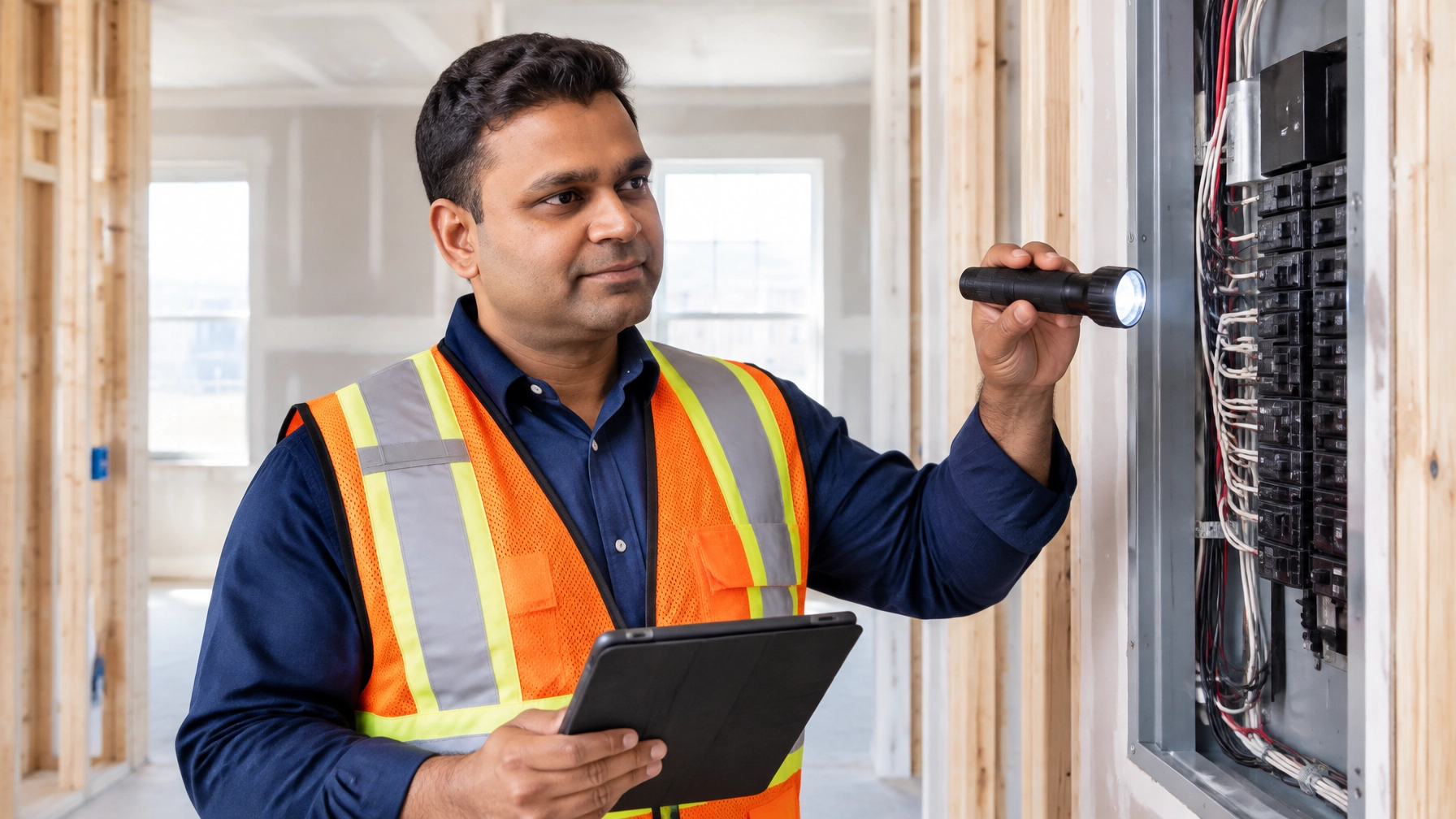
Yes. A new-build inspection can identify safety, workmanship, drainage, insulation, plumbing, HVAC, and building-envelope defects before you take possession. Your builder’s warranty is important, but it does not replace an independent inspection or thorough written documentation.
What could possibly be wrong with a brand-new home? This is one of the most expensive assumptions a new-build buyer can make.
A new home may be unused, but it has still passed through multiple construction stages, trades, material deliveries, weather exposure, and rushed completion deadlines. City inspections confirm minimum code compliance at specific stages. They do not provide you with a complete, independent assessment of workmanship, operation, drainage, or future performance.
As an Edmonton inspector with more than 10 years of inspection and construction experience, I have seen new homes with problems that were not obvious during a quick builder walkthrough.
“Brand new does not mean defect-free. It means you have an opportunity to document problems early, before they become expensive repairs or difficult warranty discussions.”
, Banti K Shaw, InspecUs
The Edmonton market also gives buyers more reason to be thorough in fall 2026. In August, sales fell to approximately 2,143 units, inventory increased 14.9% year-over-year, the Greater Edmonton median price was about $439,000, and homes averaged roughly 41 days on market. With more inventory and less urgency, you may have greater leverage to request corrections before possession.
If you are buying a new home, townhome, condo, or acreage, consider a pre-purchase home inspection in Edmonton before your final commitment.
Which problems should you ask your inspector to check? These are among the most common defects I look for in new construction:
Uneven or missing attic insulation
Gaps and thin areas can create cold spots, condensation risk, and higher heating costs.
Missing or damaged vapour barrier
Tears, incomplete sealing, or poorly sealed penetrations can affect the continuity of the building envelope.
Incorrect exterior grading
Soil or landscaping that slopes toward the foundation can direct water into the basement. The City of Edmonton provides residential lot-grading guidance under Drainage Bylaw 18093.
Improperly sealed penetrations
Siding, roof vents, windows, doors, electrical penetrations, and mechanical chases require proper sealing and flashing.
Plumbing leaks behind or under fixtures
Supply connections, drain fittings, toilets, tubs, and kitchen fixtures may leak only when tested under normal conditions.
Missing or miswired safety devices
GFCI and AFCI protection, smoke alarms, carbon monoxide alarms, and electrical receptacles all need to be correctly installed and functional.
Reversed or undersized furnace venting
Incorrect venting can affect combustion, efficiency, airflow, and safe operation.
Missing roof flashing details
Roof-to-wall transitions, plumbing vents, skylights, chimneys, and other penetrations can become leak points if flashing is incomplete.
Unsealed ductwork
Gaps at furnace plenums, supply ducts, return ducts, or boots can reduce efficiency and create uneven heating.
General workmanship issues
Doors that do not latch, damaged finishes, incomplete caulking, cracked drywall, loose railings, poorly installed trim, and defective windows are common deficiency items.
These problems may not mean the home is unsafe or unsuitable. They do mean you should understand what requires correction, what needs monitoring, and what should be recorded for warranty purposes.
Is the builder’s pre-delivery inspection enough? It is necessary, but it serves a different purpose from an independent inspection.
A pre-delivery inspection, or PDI, is the builder’s walkthrough with you before possession. It usually covers:
A third-party inspection is conducted by an inspector who does not work for the builder or your realtor. That independence matters. The inspector’s responsibility is to report observable conditions clearly and without third-party influence.
Ideally, bring your own inspector to the PDI. If the builder does not permit this, arrange an independent inspection immediately before possession or as soon as access is available.

What happens if the builder verbally promises to fix something? Ask for it in writing.
During the PDI:
A verbal promise is difficult to prove later. A dated deficiency form with photographs creates a much stronger record if an item remains incomplete or reappears.
The Alberta New Home Warranty Program provides important protection, but warranty claims still depend on the defect, the applicable coverage period, and proper written reporting.
Does the builder’s warranty mean you do not need an inspection? No. The warranty provides protection; an inspection helps you identify and document issues before deadlines pass.
The typical Alberta coverage structure is:
Coverage is not unlimited, and normal wear, homeowner damage, or excluded conditions may not qualify. You should report deficiencies in writing to the builder and the warranty provider within the applicable period.
I also recommend an 11-month warranty inspection. Some defects only become apparent after a full heating season, heavy rain, snowmelt, or normal occupancy.
What if possession is only weeks away? You can still arrange a pre-possession inspection, but do not wait until the last day.
New construction inspections often take longer than resale inspections for a different reason. The home may be clean and unused, but there are more systems to verify, more construction details to assess, and more documentation to prepare.
At InspecUs, our inspection process can include:
Your report is delivered within 24 hours, allowing you to discuss corrections while the possession process is still active. Review our certified home inspection service in Edmonton for more information.
Could a new home look comfortable in September but perform poorly in January? Absolutely.
Fall possession in Edmonton can leave only a few weeks before the first serious freeze. Missing insulation, air leakage, poorly sealed windows, and cold building-envelope areas may not be obvious during a visual walkthrough.
Thermal imaging can help identify temperature differences associated with:
Thermal imaging does not replace visual inspection and does not prove a defect by itself. It is a diagnostic tool that helps direct further investigation. Learn more about thermal imaging and moisture detection in Edmonton.

Is a new-build inspection more expensive than a resale inspection? Pricing depends on the property’s size, design, location, stage of construction, and the inspection scope.
A new construction inspection may take longer because the inspector must verify more systems and prepare detailed deficiency documentation. Additional services, such as a pre-drywall inspection, thermal imaging, moisture detection, or an 11-month warranty inspection, can also affect the cost.
The best approach is to request a written quote that clearly explains:
A low inspection price is not helpful if important systems are excluded. Ask what you are receiving before booking.

What can you do today to protect your investment?
“My job is not to tell you whether to buy a home. My job is to give you clear, unbiased information so you can make that decision with confidence.”
: Banti K Shaw
Are you approaching possession on a new Edmonton build this fall? An independent inspection can help you identify defects, strengthen your documentation, understand your warranty responsibilities, and reduce the likelihood of expensive surprises after the keys are handed over.
Contact InspecUs to discuss the right inspection timing for your new home, PDI, pre-drywall stage, or warranty review.
We are licensed by the Licensed Professional and certified through InterNACHI

InspecUs Home Inspection is certified in the best practices established by Internachi. Our commitment to safety includes maintaining a 6-foot distance and using personal protective equipment (PPE) during all inspections.

© 2024 InspecUs - All Rights Reserved. | Sitemap | Developed by Integrated Marketing Platform Inc.