 7132 178 St NW,
 Call us:


 Call us780-809-1056
- Mail usinfo@inspecus.ca
- Schedule An Inspection
Call us780-809-1056

Meta description: Learn the signs of mould in Edmonton homes, when testing helps, what a professional inspection includes, and practical 2026 prevention tips from InspecUs.
Direct answer: Need a mold inspection in Edmonton? Start with a visual review and moisture assessment, not routine air testing. A qualified inspector can trace leaks, condensation, and hidden dampness, document visible growth, and recommend targeted sampling or remediation when the evidence and situation justify it.
By Banti K Shaw, InspecUs
With more than 10 years of inspection experience and a background in construction, I approach mold concerns by looking for the building problem behind the visible symptom. My goal is to give you clear facts, practical priorities, and an unbiased path forward.
Could a small stain or musty smell indicate a larger building problem?
Mold, also spelled mould in Canadian health guidance, is a fungus that grows where moisture remains present. It can develop on drywall, wood framing, insulation, flooring, fabrics, window materials, and other surfaces.
In Edmonton, common moisture conditions include:
Health Canada states that indoor mold and dampness may be associated with eye, nose, and throat irritation, coughing, wheezing, shortness of breath, and worsening asthma symptoms. Health concerns should always be discussed with a qualified healthcare professional.
The most important point is simple: mold needs moisture. Cleaning the visible growth without correcting the moisture source usually means the problem will return.
“In my experience, the colour of mold is less important than the reason it is growing. I want to know where the moisture is coming from, how long it may have been present, and whether building materials have been affected.” , Banti K Shaw
Are you noticing an odour, stain, or surface change that will not go away?
A professional mold inspection may be appropriate when you notice one or more of these warning signs:
A musty smell in a basement, bathroom, crawl space, closet, or around a heating system can indicate hidden dampness or mold. Odour alone does not identify the source, but it is an important reason to investigate further.
Mold may appear black, green, grey, white, or brown. It can look fuzzy, powdery, slimy, or like irregular spotting. However, not every dark stain is mold. Dirt, soot, mineral deposits, and water staining can look similar.
Watch for:
Frequent condensation on windows, pipes, or cold corners may point to elevated humidity, inadequate ventilation, or insulation deficiencies. In Edmonton’s cold climate, repeated winter condensation deserves attention before it creates a larger issue.
If growth returns after you wipe or scrub the surface, the underlying moisture source may still be active. The cause could be a plumbing leak, exterior water entry, poor airflow, or moisture trapped inside a wall or floor assembly.

Pro tip: Do not paint over suspected mold. Paint may hide the appearance temporarily, but it does not correct moisture or remove contamination within porous materials.
What should you expect when an inspector arrives at your property?
A responsible inspection is more than collecting a single air sample. At InspecUs, the process focuses on identifying observable evidence and the conditions that allow mold to grow.
I begin by asking about:
This background helps determine where to focus the inspection.
The inspection covers accessible areas where moisture or mold may be present, including:
Health Canada recommends walking through all rooms, attics, basements, crawl spaces, and storage areas when mold or moisture is suspected.
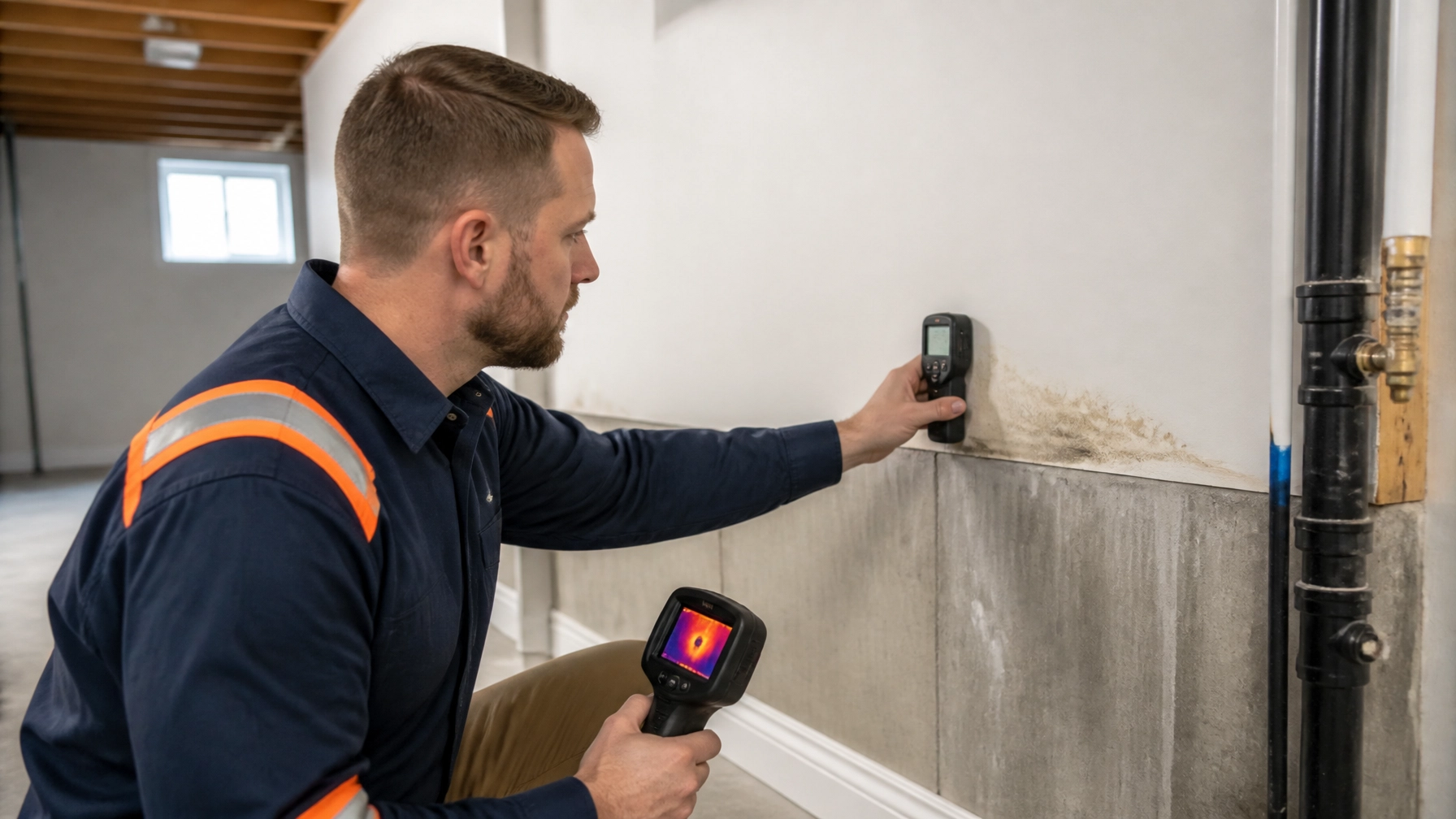
Moisture meters can help identify elevated moisture in building materials. Thermal imaging can show temperature differences that may indicate hidden moisture, missing insulation, air leakage, or other conditions requiring further investigation.
Our thermal imaging and moisture detection service in Edmonton uses specialized tools to go beyond what is visible during a basic walkthrough.

Thermal imaging does not “see mold” directly. Instead, it can help identify temperature patterns associated with dampness or building deficiencies. Any unusual reading should be verified with moisture measurements and visual evidence.
A useful inspection report should explain:
At InspecUs, our reports include high-resolution images and are typically delivered the same day or within 24 hours, so you can make decisions without unnecessary delays.
Do you need an air test to prove that mold is present?
Usually, no. Health Canada does not recommend routine air testing for mold because an air test generally cannot predict health effects or identify the moisture source. If visible mold is present, the priority is to address the dampness and remove affected materials appropriately.
Targeted sampling may still be useful in specific situations, such as:
Sampling should be recommended based on the property evidence: not automatically added to every inspection. If laboratory analysis is required, ask who will perform it, what the sample can and cannot establish, and how the results will affect the recommended action.
For additional background, review Health Canada’s guide to addressing moisture and mould indoors and the Canadian Centre for Occupational Health and Safety guidance on indoor mold.
When is a mold concern too large or complicated for a do-it-yourself cleanup?
Health Canada generally categorizes mold areas by the total affected surface:
A qualified professional should assess large areas. Professional assistance is also appropriate when:
An inspection does not replace mold remediation. Instead, it helps you understand the conditions present and decide what specialist or repair work may be needed.
What practical steps reduce mold risk throughout the year?
The best prevention strategy is moisture control. Use this checklist:
Pro tip: If you smell mustiness but cannot see mold, do not dismiss it because the walls look clean. Moisture meters and thermal imaging may help identify areas that deserve closer evaluation without immediately opening finished surfaces.
Are you buying, selling, renovating, or dealing with recurring moisture?
Consider scheduling an inspection when:
For buyers, a pre-purchase home inspection in Edmonton can include careful attention to moisture intrusion, ventilation, drainage, and visible biological growth. Condo and townhome owners may also benefit from our condo inspection service or townhome inspection service.
For commercial buildings, see our commercial property inspection service to assess moisture-related concerns across larger or more complex spaces.

Would a clear, evidence-based assessment help you decide what to do next?
Start by documenting what you see: take photos, note odours, record when condensation appears, and identify any recent leaks or flooding. Avoid disturbing extensive growth until you understand its scope.
Then arrange an inspection focused on the moisture source, affected materials, and practical recommendations. At InspecUs, I provide unbiased reporting, construction-informed insight, high-resolution documentation, and continued support after the inspection.
Contact InspecUs to discuss your Edmonton mold inspection or request a quote for the right inspection service for your property.
“My job is not to create fear. It is to replace uncertainty with useful information so you can protect your health, your building, and your investment.” ( Banti K Shaw)
We are licensed by the Licensed Professional and certified through InterNACHI

InspecUs Home Inspection is certified in the best practices established by Internachi. Our commitment to safety includes maintaining a 6-foot distance and using personal protective equipment (PPE) during all inspections.

© 2024 InspecUs - All Rights Reserved. | Sitemap | Developed by Integrated Marketing Platform Inc.