 7132 178 St NW,

 Call us:



 Call us780-809-1056
- Mail usinfo@inspecus.ca
- Schedule An Inspection
Call us780-809-1056

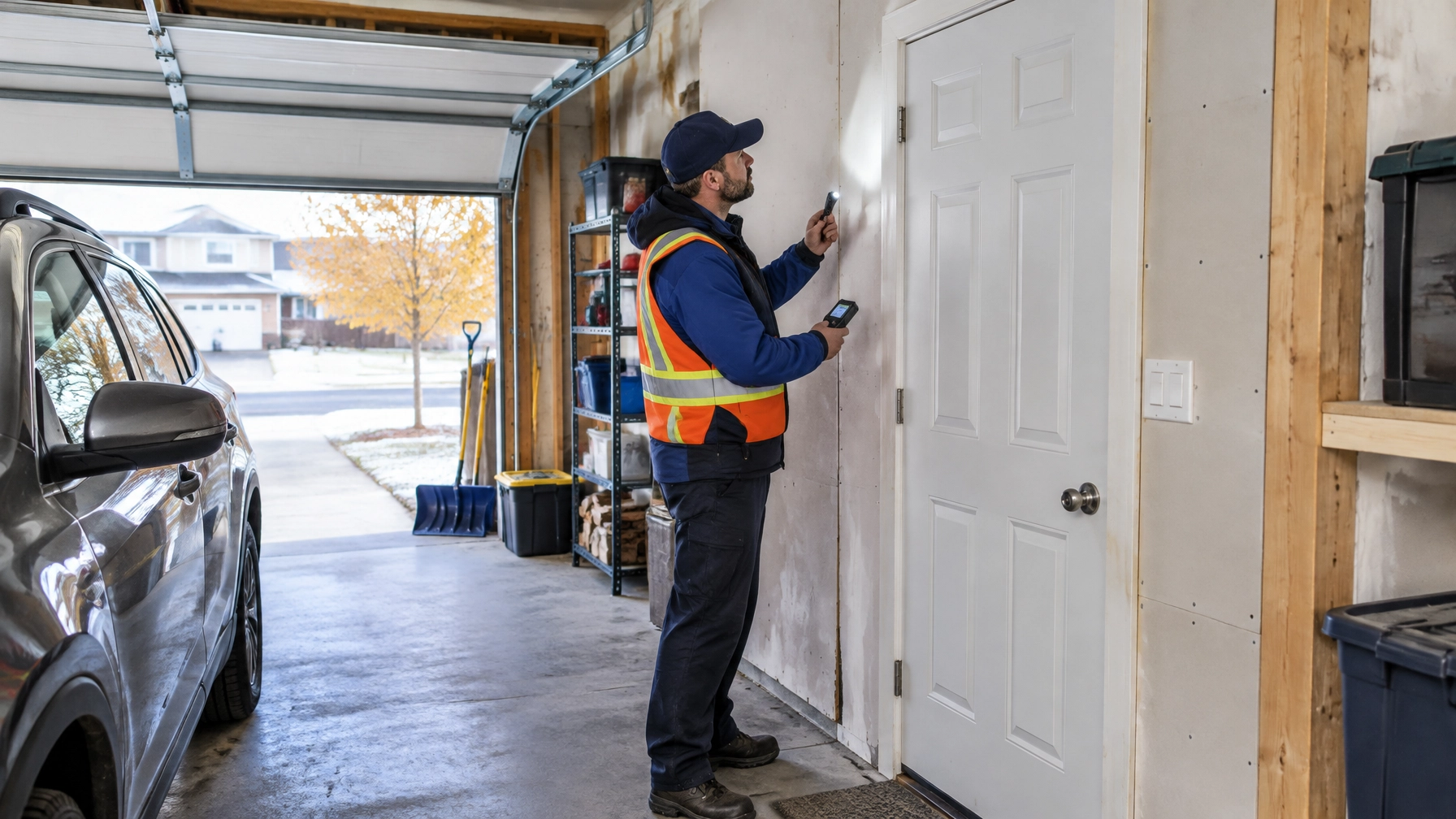
Direct answer: Before Edmonton winter, check your attached garage for damaged fire-separation walls or ceilings, an unsuitable or poorly closing door to the house, unsafe overhead-door hardware, floor drainage problems, possible carbon-monoxide pathways, improperly stored combustibles, and worn weather seals. Repair concerns before cold weather makes access and moisture problems harder to manage.
Meta description: Check 7 attached-garage red flags before Edmonton winter: fire separation, door safety, CO risks, clutter, drainage and weather seals with expert advice.
An attached garage is more than a place to park. It shares a boundary with your living space, stores vehicles and household products, and takes on snow, slush and freeze-thaw cycles. That combination makes a quick pre-winter check worthwhile.
I’m Banti K Shaw, owner of InspecUs. With more than 10 years of construction and inspection experience, and InterNACHI certification, I look at how the parts of a home work together, not just whether they appear finished. Here are seven attached-garage red flags I recommend checking before winter.
Start with the shared wall and ceiling between the garage and your home. Look for missing, cracked or water-damaged drywall, open joints, holes around wiring or pipes, and gaps around the door frame. Pay attention to any ceiling or attic access that connects the garage with the home’s attic.
These areas matter because openings or damaged finishes may weaken the separation between the garage and living space. Don’t assume that a small hole is harmless just because it is out of sight.

“When I inspect an attached garage, I look for continuity. A wall or ceiling is only as reliable as its openings, joints and connections. If you find a gap or damaged area, document it and have the right professional assess the repair.”- Banti K Shaw
InterNACHI’s attached-garage fire-containment guidance explains why maintaining this separation is important. The exact construction requirements can depend on the home and applicable code; a visual check is not a code-compliance determination.
What happens if you let go of the door between the garage and house? Check that it closes fully and latches, rather than sticking open, rubbing the frame or needing a shove to catch. Look for damaged hinges, a loose latch, worn seals, or a door that has been propped open.
The door should be suitable for its location and in good condition. A lightweight interior door, a pet door, a damaged frame or a large gap around the edges can be reasons to ask a qualified contractor whether the assembly is appropriate. Don’t rely on a door closer alone to resolve a damaged or ill-fitting door.
Pro tip: Try the door from both sides during your walk-through. Note whether it closes consistently and whether stored items, rugs or a floor lip are getting in its way.
Could the overhead garage door close reliably when the temperature drops? Visually check for damaged panels, loose tracks, worn rollers, frayed cables, or springs that look broken or out of place. Test the opener’s photo-eye sensors according to the manufacturer’s instructions, and make sure nothing blocks them.

Garage-door springs and cables are under high tension. Do not attempt to adjust or repair them yourself. If the door moves unevenly, makes unusual noises, or fails a safety check, stop using it and arrange service with a qualified garage-door technician. InterNACHI’s garage door and opener guidance covers common safety concerns.
Where does melted snow go after it drips off your vehicle? Check for standing water, persistent wet patches, cracks, and signs that water is moving toward the door to the house. A garage floor should not funnel meltwater into living areas.
A little moisture after parking in winter can be normal, but repeated pooling can contribute to deterioration and make a slippery surface. Clear debris from floor drains, if present, and keep an eye on the transition between the garage floor and the home.
If you see water entering under the house door, worsening cracks or recurring pooling, don’t mask the symptom with a mat or sealant before understanding the cause.
Do you ever leave a vehicle running in the garage while you clear snow or unload? Don’t idle or warm up a vehicle in an attached garage, even with the overhead door open. Carbon monoxide is a serious hazard, and fumes can move through openings between the garage and home.
Check that carbon-monoxide alarms are installed and working according to their manufacturer’s guidance. Look for visibly damaged, disconnected or obstructed vents serving fuel-burning equipment. Snow and ice can block exterior terminations in winter, so include them in your seasonal checks.
An alarm, unusual odour, soot, or concern about venting deserves prompt attention. Leave the home and call emergency services if a carbon-monoxide alarm sounds or you suspect an immediate danger. For additional pre-winter checks around heating and alarms, see my Edmonton fall home inspection checklist.
What is stored beside your furnace, water heater, electrical equipment or other potential ignition sources? Look for gasoline, solvents, paint products, oily rags, propane cylinders, and leaking fuel containers. Check for overloaded outlets, damaged cords, and portable heaters placed close to stored belongings.
Follow product labels and manufacturer instructions for storage. Keep exits and access to equipment clear, and remove unnecessary clutter. If you are unsure whether an appliance or fuel container is safe to keep in the garage, ask a qualified professional rather than relying on guesswork.
Can you see daylight around the closed overhead door? Inspect its bottom, side and top weatherstripping for gaps, brittleness or sections that have pulled loose. Check the door panels and surrounding trim for visible damage, and look for water staining or deterioration at the garage ceiling and roof area.

Poorly fitting seals may let wind-driven snow, cold air and moisture into the garage. A sagging door or damaged roof material may point to a larger issue that needs assessment. Keep the overhead door clear of snow and debris so it can close properly, and avoid forcing a door that is frozen in place.
A visual check from the floor is sensible; climbing onto a roof or dismantling door hardware is not. Ask a qualified tradesperson to assess defects that are outside your comfort or skill level.
Which concerns should you address first? Start with immediate safety issues: a suspected carbon-monoxide problem, damaged electrical equipment, a door that cannot close securely, or unsafe garage-door hardware. For those, stop using the affected equipment or space as appropriate and contact the relevant qualified professional.
For other visible issues:
“A good inspection helps you understand what you’re seeing and what deserves follow-up. I focus on clear observations and practical next steps, so you can make informed decisions about your home.”- Banti K Shaw
An inspection can help you identify visible concerns, but it does not replace specialized service or determine code compliance. If you’re buying a home, you can learn more about our certified home inspection service in Edmonton. For seasonal maintenance beyond the garage, the fall home inspection checklist is another useful starting point.
A careful walk-through can reveal issues worth addressing before the first sustained cold spell. If you’d like help assessing an attached garage or the rest of your property, I’m happy to discuss your concerns without pressure. Contact InspecUs through our message page or call 780-809-1056.
We are licensed by the Licensed Professional and certified through InterNACHI

InspecUs Home Inspection is certified in the best practices established by Internachi. Our commitment to safety includes maintaining a 6-foot distance and using personal protective equipment (PPE) during all inspections.

© 2024 InspecUs - All Rights Reserved. | Sitemap | Developed by Integrated Marketing Platform Inc.