 7132 178 St NW,
 Call us:


 Call us780-809-1056
- Mail usinfo@inspecus.ca
- Schedule An Inspection
Call us780-809-1056

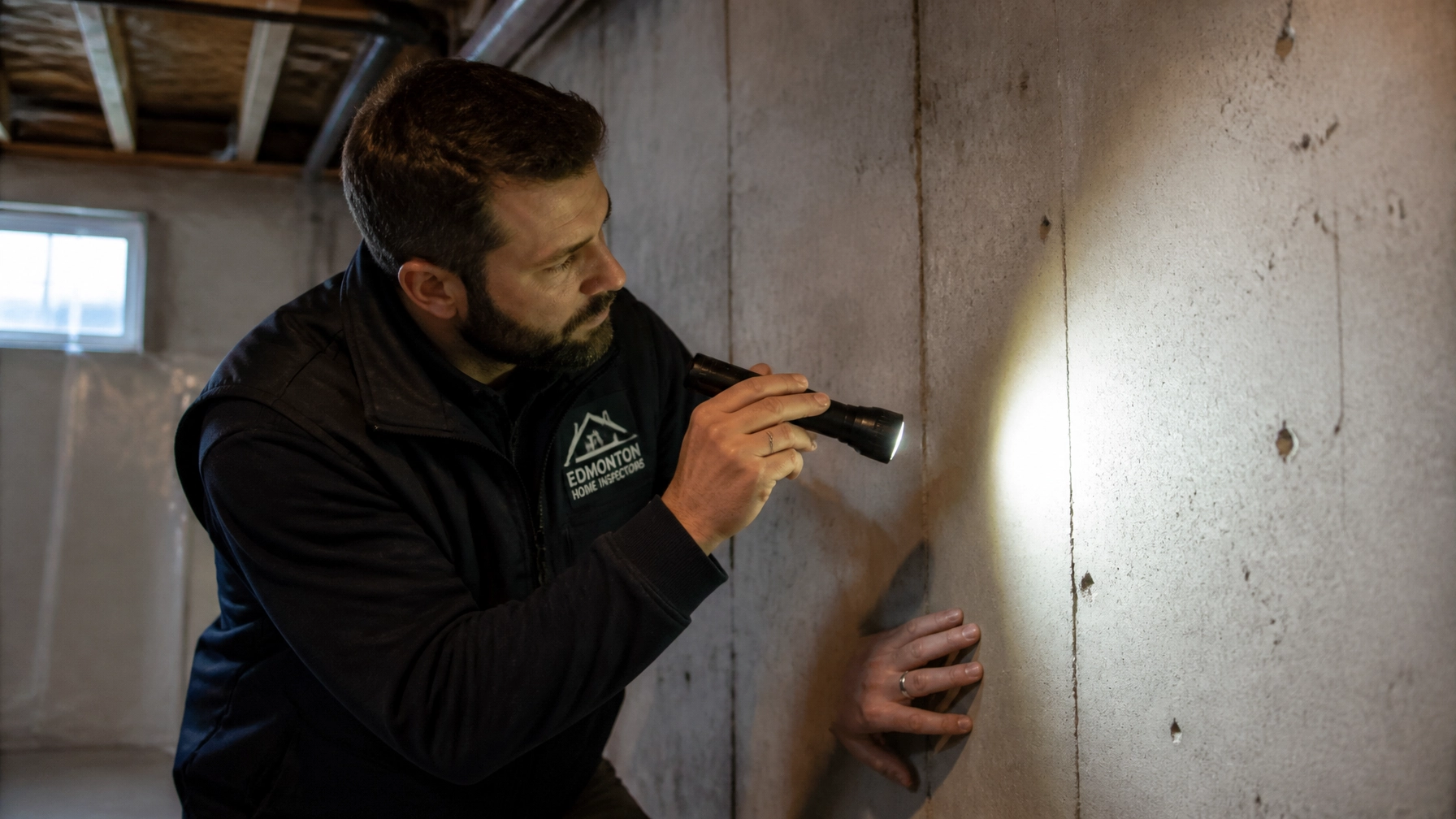
Buying or selling a home in Edmonton? If so, you’ve probably spent a fair amount of time staring at basement walls. In our local real estate market, the foundation is often the single most scrutinized part of a property, and for good reason.
Edmonton’s unique combination of "bentonite" clay soil and extreme seasonal temperature swings creates a challenging environment for concrete. Whether you’re a first-time homebuyer or a seasoned investor, understanding what’s happening beneath your feet is essential for protecting your investment.
As experienced home inspectors in Edmonton, we’ve seen it all, from harmless shrinkage cracks to serious structural shifts. Here’s the thing: not every crack is a catastrophe, but every crack tells a story.
Let’s break down the most common questions we hear during an edmonton house inspection regarding foundations and structural health.
The primary "villain" in many Edmonton foundation stories is the soil. Much of the Edmonton area sits on heavy, expansive clay.
What this means for you is that the ground acts like a giant sponge. When it rains or the snow melts, the clay absorbs water and expands, exerting massive "lateral pressure" against your basement walls. When the weather turns dry (as it often does in our Alberta summers), the clay shrinks, leaving gaps that allow the foundation to shift or settle.
This constant push-and-pull is why we emphasize the importance of professional home inspection services in Edmonton. Our team looks for signs that this soil pressure is starting to overwhelm the concrete, such as inward bowing or "stair-step" cracking in the mortar.
Edmonton is famous for its deep freezes and sudden Chinooks. This "freeze-thaw" cycle is a major contributor to foundation fatigue.
When water gets into small crevices in your concrete or the soil immediately surrounding it, it expands by about 9% as it turns to ice. This expansion can "jack" the soil or the concrete itself, widening existing cracks and creating new ones.
According to InterNACHI standards, a thorough home inspection in edmonton ab must evaluate how moisture is managed around the perimeter. If your gutters are overflowing or your downspouts aren't extending at least 6 feet away, you're essentially inviting that water to freeze right next to your foundation, which is a recipe for structural trouble.

This is the number one question we get as house inspectors edmonton. The short answer: No.
Here’s how we categorize what we find:
During an edmonton home inspector visit, we don't just point at a crack; we look at the house as a whole. Are the doors sticking? Is the drywall cracking above the windows? These "clues" help us determine if a crack is just a cosmetic blemish or a sign of active movement.
Sometimes, the biggest threats are the ones you can’t see with the naked eye. This is where our expertise in technology sets us apart.
We include thermal imaging and moisture detection in our inspections to see behind finished basement walls. A thermal camera can detect temperature anomalies that suggest moisture intrusion or missing insulation.
For example, if we see a "cold spot" on a finished basement wall during a winter home inspection edmonton alberta, it might indicate that water is seeping through a foundation crack behind the drywall. Catching these issues early can save you thousands in mold remediation and structural repairs down the road.

Every house settles: it’s a fact of life in Alberta. However, there is a difference between "uniform settlement" (where the whole house sinks an inch over 20 years) and "differential settlement" (where one side drops and the other doesn't).
As your home inspector in edmonton, we look for the following "High-Priority" warning signs:
With our 10+ years of experience in the construction industry, our team at InspecUs knows exactly what the Alberta Building Code expects from a structural standpoint. We provide unbiased, detailed reports: usually delivered the same day: complete with 200+ high-resolution images so you can see exactly what we see.

You don't have to wait for a house inspection edmonton to start taking care of your home. Here are three things you can do today:
Our mission is to provide you with the clarity you need to make a confident decision. Whether you're worried about a crack in a potential new home or you want a check-up on your current property, we bring cutting-edge tools and a decade of local expertise to every job.
We serve Edmonton and all surrounding areas, including St. Albert, Sherwood Park, and Spruce Grove. Our reports are comprehensive, easy to read, and guaranteed within 24 hours.

Foundation issues in Edmonton are common due to our soil and climate, but they aren't always a reason to walk away from a deal. The key is knowing the difference between a "settling pain" and a structural failure. A professional edmonton house inspection is your best defense against unexpected costs.
Ready to get a clear picture of your property’s health?
Book your professional home inspection with InspecUs today and get the peace of mind you deserve.
We are licensed by the Licensed Professional and certified through InterNACHI

InspecUs Home Inspection is certified in the best practices established by Internachi. Our commitment to safety includes maintaining a 6-foot distance and using personal protective equipment (PPE) during all inspections.

© 2024 InspecUs - All Rights Reserved. | Sitemap | Developed by Integrated Marketing Platform Inc.