 7132 178 St NW,

 Call us:


 Call us780-809-1056
- Mail usinfo@inspecus.ca
- Schedule An Inspection
Call us780-809-1056

Direct answer: Yes. A home inspection in Edmonton can visually confirm that an HRV/ERV is present, powered, connected to visible ducts, and free of obvious defects such as blocked exterior hoods. It does not measure airflow or certify balance. Ask the seller for maintenance and service records.
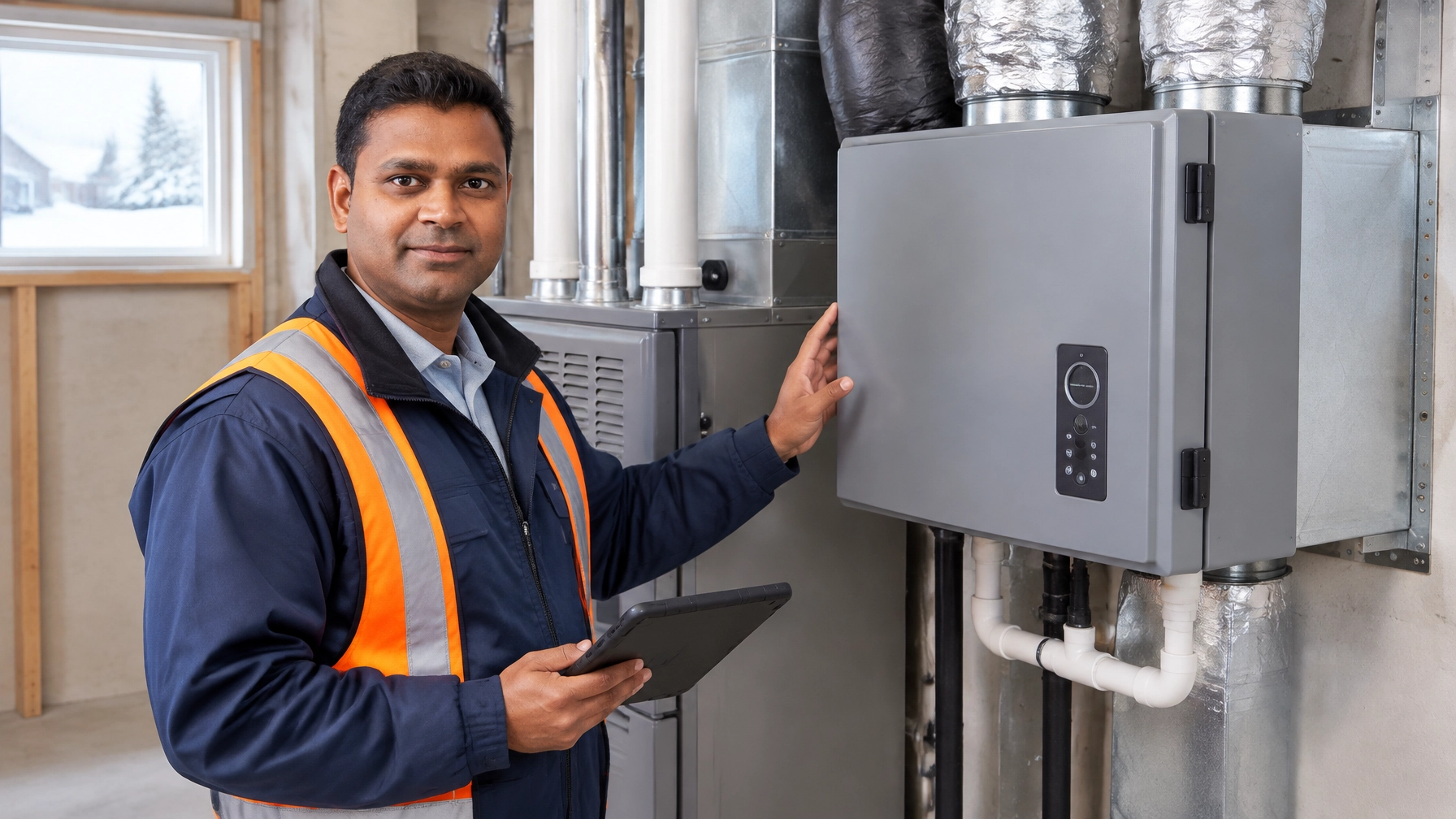
When you tour a home, you probably check the furnace and water heater. But what about the grey box in the utility room with several ducts running into it? Many buyers walk right past it. That box may be a heat recovery ventilator (HRV) or energy recovery ventilator (ERV), and it plays an important role in bringing fresh air into the home.
I’m Banti K Shaw. In more than 10 years of inspection work, backed by my construction experience, I’ve learned that less-visible systems deserve a closer look, especially when you’re buying a home for an Edmonton winter. An HRV that is present but unplugged, poorly maintained, or disconnected may not be doing the job you expect.
“I want you to know what I could observe, what I could not verify, and what question to ask next. A visual inspection is useful, but it is not a substitute for measured airflow testing.”
An HRV or ERV exchanges indoor and outdoor air while recovering some heat from the outgoing air. It removes stale indoor air and brings in fresh air through a ventilation system, helping provide balanced ventilation without simply sending all the home’s heat outdoors.
An HRV transfers heat between the exhaust and incoming air. An ERV can transfer some moisture as well as heat. The equipment does not replace your heating system, and its operation depends on the condition of the unit, ducts, controls, filters, and exterior openings.
Why are these systems common in newer Edmonton homes? Cold winters make heat recovery valuable, while tighter building envelopes make planned mechanical ventilation an important part of how a home brings in outdoor air. When you buy a home with an HRV/ERV, you’re buying the system and its maintenance responsibilities, too.
A home inspection can tell you whether visible parts of the ventilation system appear connected and whether the unit responds to normal controls. It cannot tell you whether the system delivers the correct amount of air to every room.
During a typical visual review, an inspector may check:
A standard visual inspection does not measure airflow, balance the system, certify performance, or confirm that it meets design specifications. Access can also be limited by stored belongings, snow, unsafe conditions, or closed equipment panels.
The InterNACHI Standards of Practice describe a home inspection as a non-invasive visual examination of accessible areas. They also state that an inspection is not technically exhaustive and does not determine ventilation adequacy. That is why a concern about airflow, comfort, or system balance may need follow-up by a qualified mechanical contractor.
For a broader look at what is included in a certified home inspection in Edmonton, see our service page. You can also review our full range of home inspection services in Edmonton.

Edmonton’s winter weather can make blocked or poorly maintained ventilation components easier to notice. An inspection is still a snapshot of visible conditions on the inspection date, not a guarantee of future performance.
Look for signs such as:

A clean filter and clear exterior hood are simple things to check, but make sure you follow the unit’s own instructions. The Canada Mortgage and Housing Corporation (CMHC) recommends routine care, including filter cleaning or replacement, clearing outdoor hoods, checking the condensate drain, and cleaning the core according to the owner’s manual.
Pro tip: Ask the seller for the HRV/ERV manual, recent service invoices, and the date the filters and core were last cleaned. If records are missing, treat that as a reason to plan maintenance, not automatic proof that the system is defective.
Between inspection and closing, you can:
Read CMHC’s full guide: How to maintain a heat recovery ventilator.
Once you have the inspection report and can safely revisit the home, take a moment to look at the unit and the visible parts around it. Do not open equipment panels or attempt repairs. Note what you see and ask the seller or your HVAC contractor for clarification.

Book as soon as your offer is accepted so you have time to review the report and arrange follow-up if needed. When choosing an inspector, ask directly: “Will you visually review the HRV/ERV and identify when airflow testing should be done by a specialist?”
Alberta does not require a specific provincial licence for home inspectors, so it is sensible to verify an inspector’s training and certification. InspecUs is InterNACHI-certified. You can also confirm that your inspector distinguishes a visible concern from a performance test they did not perform.
If the report notes a disconnected duct, drainage concern, or equipment that does not operate, ask what next step makes sense. Measured airflow testing or system balancing may require a qualified mechanical contractor. A home inspection gives you practical information about the property; it is not an HVAC commissioning service.
If you’re arranging a home inspection in Edmonton and want to ask about visible HRV/ERV components, send InspecUs a message. We’re happy to help you understand what a visual inspection can cover and when specialist testing may be appropriate.
Meta description: See what a home inspection Edmonton buyers can expect from an HRV/ERV check, winter warning signs, maintenance tips, and questions to ask before closing.
We are licensed by the Licensed Professional and certified through InterNACHI

InspecUs Home Inspection is certified in the best practices established by Internachi. Our commitment to safety includes maintaining a 6-foot distance and using personal protective equipment (PPE) during all inspections.

© 2024 InspecUs - All Rights Reserved. | Sitemap | Developed by Integrated Marketing Platform Inc.