 7132 178 St NW,
 Call us:


 Call us780-809-1056
- Mail usinfo@inspecus.ca
- Schedule An Inspection
Call us780-809-1056

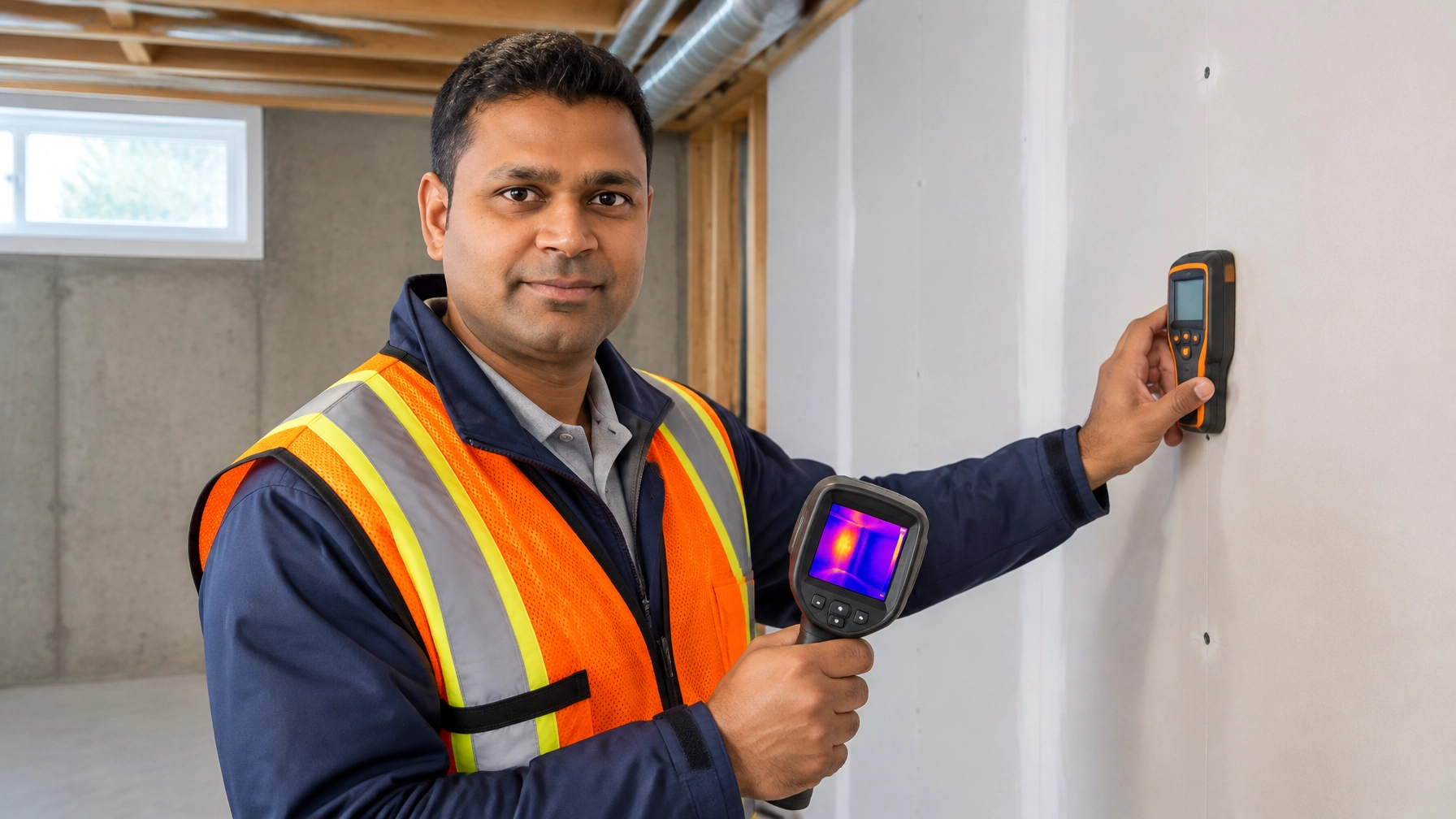
Direct answer: Professional moisture detection in Edmonton combines visual inspection, pin and pinless moisture meters, and thermal imaging to locate hidden water damage. Inspectors confirm suspicious readings, identify likely sources such as seepage or plumbing leaks, and document the findings before you commit to buying.
A property showing can make a home feel dry, clean, and move-in ready. However, fresh paint, furniture, flooring, and finished basement walls can conceal evidence of previous or active water intrusion.
I’m Banti K Shaw, founder of InspecUs. During my more than 10 years in construction and property inspection, I have seen how a small leak can travel through building materials before leaving an obvious stain.
Hidden water damage can affect:
In Edmonton, spring snowmelt, freeze-thaw cycles, heavy rainfall, ice dams, and aging flashing can all create moisture problems. A home inspection should therefore go beyond what you can see during a 20-minute showing.
For a broader evaluation of structure, systems, and safety, consider scheduling a pre-purchase home inspection in Edmonton.
What happens when there is no visible puddle, stain, or obvious leak? I use a step-by-step process that combines building knowledge with specialized tools.
Before using instruments, I look for signs that indicate where moisture may have entered or collected:
Visual evidence does not always prove that a leak is active. It tells me where to investigate further.
Banti’s Pro Tip: “Never judge a moisture problem by the size of the stain alone. Water can travel sideways through insulation, framing, flooring, and ceiling assemblies. The visible mark may be far from the original source.”
A pinless meter is a non-invasive tool that scans behind or across surfaces such as drywall, wood, and other building materials. It helps identify changes in moisture content without leaving probe holes.
I use it to compare:
A reading is meaningful when it differs from the surrounding baseline and fits the visual or construction evidence. A meter can also react to metal, wiring, dense materials, or changes in material composition, so professional interpretation matters.
A pin meter uses two small probes to measure moisture at a particular location. It is useful when I need to confirm whether a suspicious area is actually damp, especially in wood trim, drywall, subflooring, or exposed framing.
Pin meters help answer more precise questions:
Pin meters may leave very small probe marks, which is why I discuss the testing location before using them on finished surfaces.
InterNACHI explains the difference between pin and pinless instruments in its guidance on moisture meters for inspectors.

A thermal camera does not directly “see water.” Instead, it displays surface temperature differences that may be associated with moisture, missing insulation, air leakage, plumbing, or other conditions.
Moisture can change the temperature pattern of a wall or ceiling through evaporative cooling or differences in how the material holds heat. I use the camera to scan broad areas quickly, then verify suspicious patterns with a moisture meter.
Thermal imaging may help identify:
As InterNACHI’s infrared moisture-intrusion guidance emphasizes, thermal imaging should be used with a moisture meter rather than treated as proof by itself.

Where do I concentrate moisture detection during a home inspection in Edmonton? I prioritize areas where local weather, building design, and plumbing create a higher risk.
Spring melt and heavy rain can expose weaknesses in grading, downspouts, window wells, foundation cracks, or waterproofing. I inspect the perimeter of basement walls, corners, floor joints, mechanical rooms, and finished wall surfaces.
A damp basement may result from:
During Edmonton winters, ice dams can form when heat escapes through an attic and melts snow unevenly. Water may then move beneath shingles or around flashing.
I look for:
Roof access and testing can be limited by snow, ice, or safety conditions. A limitation does not mean the area is ignored; it means the report should clearly explain what was and was not accessible.
Leaks around window frames, patio doors, and balconies can remain hidden behind trim or interior finishes. Pay close attention to swelling, failed caulking, staining below the opening, and unusual temperature or moisture readings.
Balcony membranes and drainage details are especially important in multi-level homes and condominiums because water can affect the room below without being visible from inside the unit.

A slow leak under a kitchen sink, dishwasher, washing machine, refrigerator supply line, or bathroom vanity may create hidden damage before the homeowner notices it.
I inspect accessible areas for:
If plumbing concerns extend into drains or underground lines, a separate sewer scope inspection may be appropriate.
What does an elevated reading mean for your purchase decision? It does not automatically mean you should walk away. The next step is to understand the source, extent, urgency, and likely repair requirements.
Ask for the inspection report to clarify:
You may choose to:
Banti’s Pro Tip: “An inspection is not about making the decision for you. My responsibility is to give you clear evidence, explain the risk, and help you understand what questions to ask before your conditions expire.”
If moisture has already contributed to suspected mould, read our guide to mould inspection in Edmonton.
How much should you budget for these tools during a home inspection? The answer depends on whether the service is included, added as a targeted upgrade, or performed as a separate diagnostic visit.
As a general 2026 planning range, buyers may encounter approximately:
These are typical budgeting ranges, not a fixed InspecUs price. The final quote depends on property size, accessibility, inspection scope, travel distance, and whether specialized reporting or follow-up is required.
When requesting a quote, ask whether the service includes:
A home inspector can often identify signs and patterns associated with a hidden leak, including elevated moisture, thermal irregularities, staining, odours, and damaged materials. However, locating the exact plumbing source may require a plumber or specialized leak-detection contractor.
No. A thermal camera reads surface temperature patterns; it does not see through drywall or other walls. It can identify unusual patterns that justify further investigation, but moisture-meter readings and visual evidence are needed for confirmation.
Yes. Interior moisture testing can be performed in winter, including basement walls, ceilings, plumbing areas, and finished surfaces. However, frozen exterior materials, snow-covered roofs, and limited access can affect what can be inspected safely and how thermal patterns appear.
A moisture detection add-on commonly falls within approximately $75–$200, while combined moisture detection and thermal imaging may range from $150–$350. Request a property-specific quote because scope and accessibility affect the price.
No inspection method can guarantee that every concealed condition will be found. Finished surfaces, inaccessible cavities, recently dried leaks, and weather conditions can limit detection. A careful inspector combines tools, construction knowledge, accessible areas, and documented limitations.
If you are buying in Edmonton, moisture detection gives you information that a standard showing cannot provide. It can reveal concerns around basements, spring melt, ice dams, roof flashing, windows, balconies, sinks, appliances, and hidden plumbing routes before they become expensive surprises.
With more than 10 years of construction and inspection experience, I provide unbiased reporting, high-resolution images, and practical explanations so you can make an informed decision. Contact InspecUs to discuss your home inspection and moisture detection needs in Edmonton and surrounding communities.
Meta description: Learn how moisture detection in Edmonton uses pin and pinless moisture meters and thermal imaging to uncover hidden water damage before you buy in 2026.
We are licensed by the Licensed Professional and certified through InterNACHI

InspecUs Home Inspection is certified in the best practices established by Internachi. Our commitment to safety includes maintaining a 6-foot distance and using personal protective equipment (PPE) during all inspections.

© 2024 InspecUs - All Rights Reserved. | Sitemap | Developed by Integrated Marketing Platform Inc.