 7132 178 St NW,
 Call us:


 Call us780-809-1056
- Mail usinfo@inspecus.ca
- Schedule An Inspection
Call us780-809-1056

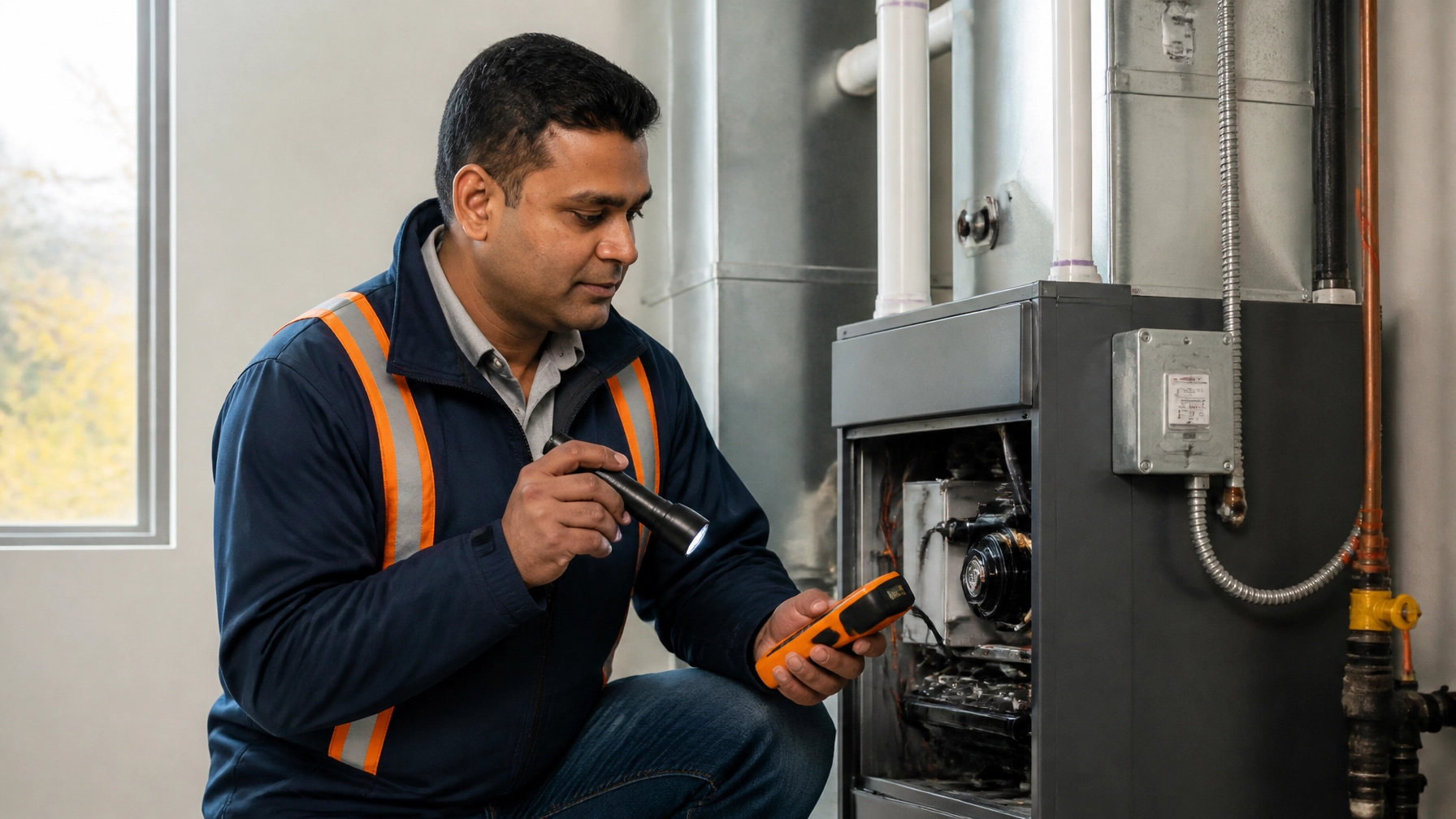
Quick answer: In Edmonton, plan seriously for furnace replacement when a high-efficiency gas furnace reaches approximately 15–20 years, needs repeated major repairs, or has a confirmed cracked heat exchanger. A home inspector can identify age, visible defects, venting concerns, and operating symptoms, but only a qualified HVAC technician can definitively diagnose a concealed heat-exchanger failure.
As September 2026 approaches, Edmonton homeowners and buyers are preparing for another long heating season. With more than 10 years of inspection and construction experience, I regularly see furnace questions become urgent only after the first cold snap.
My advice is simple: understand your furnace’s age and condition before winter, not during an emergency.
Are you looking at a furnace that still works but is approaching its 15th birthday?
A gas furnace does not automatically become unsafe on a specific date. However, high-efficiency residential furnaces commonly have an expected service life of approximately 15–20 years, depending on installation quality, maintenance, airflow, operating hours, and the Edmonton climate.
A furnace may deserve replacement planning when it is:
Edmonton’s winter temperatures also matter. A furnace may operate for long periods during severe cold, increasing stress on heat exchangers, motors, ignition components, and electrical controls. A unit that appears acceptable during a mild inspection day may still have limited reliability when it must run continuously.
“I do not judge a furnace by age alone. I look at age alongside safety, maintenance history, visible condition, operating performance, and the cost of keeping an older system running.” , Banti K. Shaw
Pro tip: Locate the furnace data plate before booking service. Photograph the manufacturer, model number, and serial number. The serial number may help a qualified HVAC professional determine the approximate manufacturing date and parts availability.
Are you worried that a furnace crack could release carbon monoxide into your home?
The heat exchanger separates combustion gases from the air circulated through your ductwork. If it develops a hole, crack, or severe corrosion failure, combustion products may escape into areas where they should not be.
Possible warning signs include:
These signs do not automatically prove a cracked heat exchanger. Yellow flames, for example, may also indicate dirty burners, inadequate combustion air, gas-pressure problems, or venting issues.
A home inspector may observe symptoms and recommend further evaluation. A qualified HVAC technician may use combustion analysis, draft testing, carbon-monoxide measurements, a borescope, or other manufacturer-appropriate methods.
If a technician confirms a cracked heat exchanger:
A cracked heat exchanger is a safety issue, not simply an efficiency issue.

What should you expect during a furnace inspection in Edmonton?
A standard home inspection is generally visual and non-invasive. At InspecUs, I inspect accessible components and operate the heating system using normal controls when conditions permit.
Typical furnace observations include:
I look for the furnace data plate, estimate its age, and note whether the unit is accessible for inspection and servicing. An older furnace is not automatically defective, but age affects future repair risk and replacement planning.
I observe whether the thermostat calls for heat, the furnace ignites, the blower operates, and the system shuts down normally. Unusual cycling, loud vibration, delayed ignition, or failure to operate may require HVAC follow-up.
Where safely visible, I observe the flame pattern and look for obvious abnormalities. A flame that changes significantly when the blower starts may be a warning sign, but it is not a definitive heat-exchanger diagnosis.
I inspect accessible exterior portions of venting for signs such as:
I look at accessible cabinet panels, the blower area, filter condition, nearby wiring, accessible duct connections, and signs of moisture or air leakage.
High-efficiency furnaces produce condensate. I check accessible condensate piping, traps, pumps, and drainage arrangements for visible leaks, blockage concerns, or damage.
Where visible, I note the presence and apparent condition of carbon monoxide alarms near sleeping areas. A home inspection is not a substitute for testing every alarm or certifying compliance with every applicable code requirement.
For a broader assessment of furnace inspection scope, see InterNACHI’s gas furnace inspection checklist.
Is a “normal” inspection report proof that your heat exchanger is perfect?
No. A home inspector generally does not dismantle a furnace, remove the heat exchanger, or perform a technically exhaustive combustion analysis. Much of the heat exchanger is concealed inside the appliance.
That means a report may correctly state:
This limitation is important for buyers. “Operated normally” does not mean “all internal components are confirmed defect-free.”
Our certified home inspection service in Edmonton evaluates the furnace in the context of the entire property, including electrical, plumbing, structure, ventilation, and safety concerns.
Are you deciding whether a repair is sensible or only delays a larger expense?
Two common planning tools are the $5,000 rule and the one-third rule. They are not laws or guarantees, but they help organize the decision.
Multiply the furnace’s age by the estimated repair cost.
For example:
When the result exceeds approximately $5,000, replacement may be more financially practical.
If a repair costs more than roughly one-third of a comparable replacement system, and the furnace is already older or inefficient, replacement deserves serious consideration.
Also consider:
A young furnace with a covered heat-exchanger part may justify repair. An older furnace with a confirmed crack, repeated failures, and obsolete parts often makes full replacement the more sensible path.
Are federal efficiency rules forcing you to replace your existing furnace in 2026?
Generally, no. Existing furnaces are not automatically required to be removed simply because newer efficiency standards apply to equipment sold or installed today.
However, the rules matter when you replace the unit. Canada’s current federal requirements generally push most new residential gas furnaces toward 95% AFUE, with specific exceptions. You can review the federal requirements through the Canada Gazette regulations for gas furnaces.
For Edmonton homeowners, practical implications include:
Do not replace an older furnace solely because of online claims that every existing unit must be removed in 2026. Base the decision on safety, reliability, efficiency, repair economics, and professional advice.

Do you have a fuel-burning furnace but no carbon monoxide alarm near the bedrooms?
Alberta guidance recognizes CO alarms as an important safety measure in homes with fuel-burning appliances or attached garages. Building-code requirements generally apply to new residential construction and certain permitted additions or alterations, while older homes may not be required to retrofit under the same provisions.
The Alberta government’s carbon monoxide alarm guidance describes common placement near bedrooms and other requirements. Because the referenced material may be updated, confirm current requirements with your municipality or the applicable safety authority.
Regardless of a home’s age, I recommend:
If an alarm sounds, leave the home and contact emergency services or the appropriate utility provider. Do not assume the alarm is false.
Could an old furnace help you negotiate: or cause you to walk away?
A furnace near the end of its expected service life is not automatically a reason to cancel a purchase. It is a budgeting and risk-management issue.
During a pre-purchase inspection, separate findings into three categories:
For a suspected cracked heat exchanger, request a written evaluation from a qualified HVAC professional before negotiating. For an old but operating furnace, you may negotiate based on a documented replacement estimate, but avoid treating a replacement quote as an automatic dollar-for-dollar reduction in the purchase price.
A buyer may reasonably request:
Our pre-purchase home inspection service in Edmonton gives you clear information before you make a major investment.
“My job is not to tell you what decision to make. My job is to give you accurate observations, explain the risk, and help you understand the next professional step.” : Banti K. Shaw
Would you rather discover a furnace problem in September or during an Edmonton cold snap?
Before winter:
If you are buying a home, arrange your inspection early enough to allow specialist follow-up within your inspection condition period. Contact InspecUs for a thorough, unbiased assessment of your Edmonton property before the heating season begins.
A well-maintained high-efficiency gas furnace commonly lasts approximately 15–20 years. Actual life depends on installation, maintenance, airflow, operating hours, and component condition.
Usually not. A home inspector can identify visible conditions and operating symptoms, but the heat exchanger is often concealed. Confirmation requires evaluation by a qualified HVAC professional.
Not necessarily immediately, but you should plan financially for replacement. At 20 years, reliability, parts availability, efficiency, and safety risk deserve careful review.
Not always. A qualified HVAC technician must assess the unit, warranty, parts availability, repair cost, and overall condition. On an older furnace, complete replacement is often the more practical option.
CO alarms are required in many newer residential situations involving fuel-burning appliances or attached garages, while older homes may not be subject to the same retroactive requirements. They are strongly recommended in all homes with combustion appliances.
We are licensed by the Licensed Professional and certified through InterNACHI

InspecUs Home Inspection is certified in the best practices established by Internachi. Our commitment to safety includes maintaining a 6-foot distance and using personal protective equipment (PPE) during all inspections.

© 2024 InspecUs - All Rights Reserved. | Sitemap | Developed by Integrated Marketing Platform Inc.