 7132 178 St NW,
 Call us:


 Call us780-809-1056
- Mail usinfo@inspecus.ca
- Schedule An Inspection
Call us780-809-1056

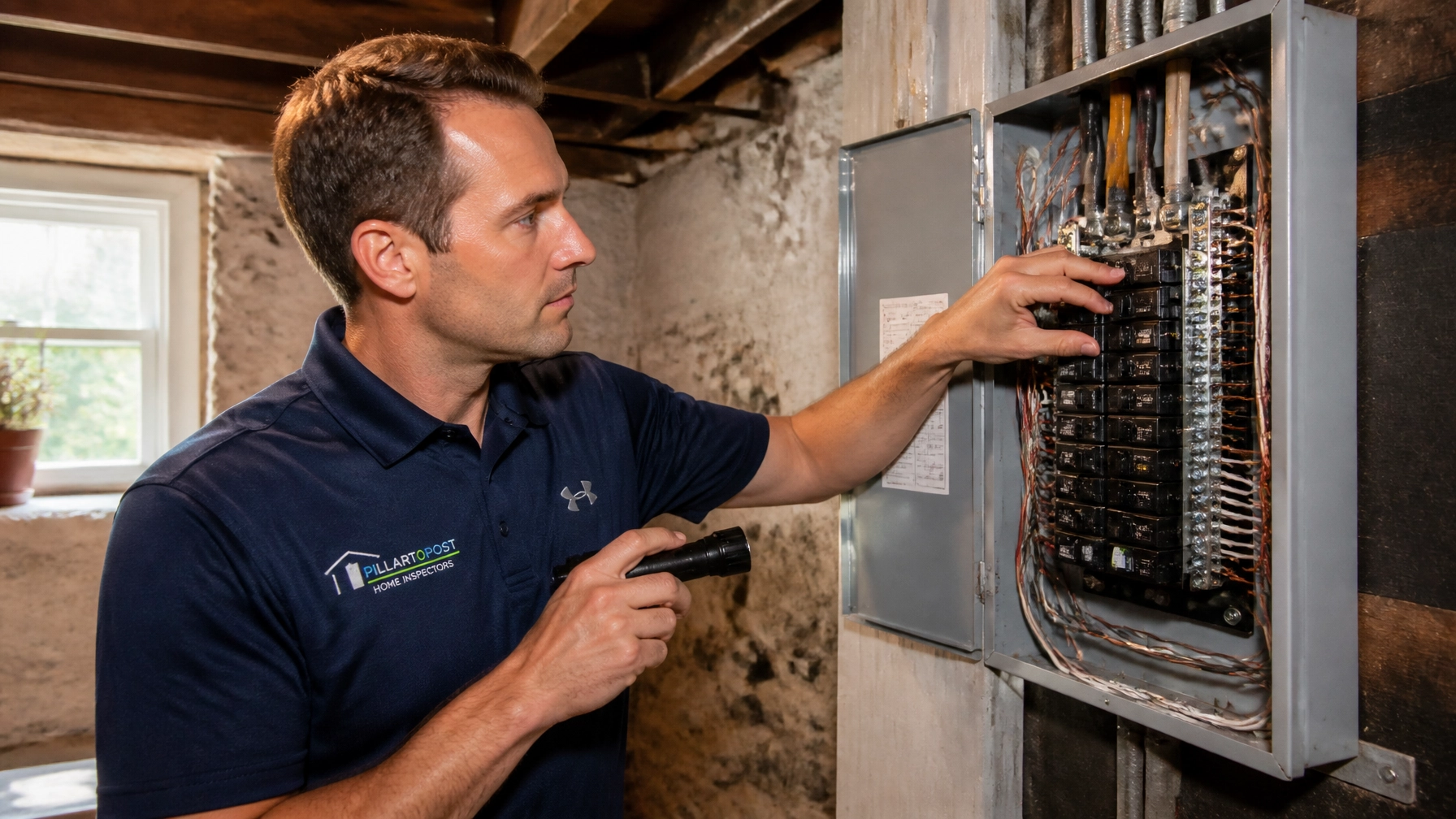
Edmonton is famous for its history, and for many homebuyers, nothing beats the character of a home in neighborhoods like Glenora, Highlands, or Forest Heights. These areas are filled with stunning mature trees and houses that have stood the test of time. But while that vintage crown molding is beautiful, what’s happening behind the lath and plaster walls might be a different story.
When you're booking a home inspection in Edmonton, AB, the electrical system is often the biggest "unknown" in an older property. Electrical standards have changed drastically since the mid-20th century, and what was considered safe in 1950 (or even 1970) could be a major fire hazard today.
At InspecUs, we’ve conducted thousands of property assessments, and our home inspectors in Edmonton have seen it all. If you’re looking at a home built before 1980, here are the five most critical questions you need to ask.
If you are looking at a home built before the 1940s in older Edmonton neighborhoods, you will likely encounter knob-and-tube (K&T) wiring. This was the standard method of electrical wiring in North America for decades. It consists of single-insulated copper conductors run through porcelain "knobs" (to support the wire) and "tubes" (to protect the wire passing through wood).
Here’s the thing: while K&T wiring was safe for its time, it isn't designed for today's electrical loads. We use way more power now than people did eighty years ago. Air conditioners, high-end gaming PCs, and modern kitchen appliances can easily overload these circuits.
What this means for you:
Most insurance companies in Alberta will not insure a home with active knob-and-tube wiring. They view it as an ungrounded fire risk. If our edmonton house inspection identifies K&T, you’ll likely need to factor in the cost of a full rewire: which can be a significant negotiation point.

Alt Text: Close-up of vintage knob and tube wiring with ceramic insulators in an Edmonton home attic.
Many homes built in Edmonton between the mid-1960s and the late 1970s used aluminum wiring because copper prices were skyrocketing. While aluminum is an excellent conductor, it has a few quirks that copper doesn't. Specifically, it expands and contracts more than copper when it heats up and cools down.
This movement can cause connections at switches and outlets to loosen over time. Loose connections lead to arcing, which leads to heat, which: you guessed it: can lead to fires.
If a home inspector in Edmonton finds aluminum wiring, don't panic. Unlike knob-and-tube, aluminum wiring can often be made safe through a process called "pigtailing." This involves connecting a short piece of copper wire to the end of the aluminum wire using specialized, CSA-approved connectors.
What this means for you:
Insurers usually require a licensed electrical inspection and a letter confirming the system is safe. When we perform a residential home inspection, we check for the tell-tale "AL" markings on the wire jackets and advise you on the next steps.

Alt Text: A professional demonstration of safe aluminum wiring remediation using copper pigtailing and specialized connectors.
If you open the electrical panel and see the brand name Federal Pioneer (specifically the "Stab-Lok" models), your edmonton home inspector will likely give you a warning.
These panels were extremely common in Western Canada for decades. However, industry data and various safety reports have shown that Federal Pioneer breakers have a higher-than-average failure rate. Specifically, they may fail to "trip" (shut off) during an overload or short circuit. If the breaker doesn't trip, the wire gets hotter and hotter until it ignites surrounding insulation or wood.
What this means for you:
While there hasn't been a mandatory recall in Canada like there was for the American "Federal Pacific" counterparts, many electricians and house inspectors in Edmonton recommend replacing these panels entirely to ensure modern safety standards are met. You can learn more about provincial safety standards at the Safety Codes Council of Alberta.
One of the reasons InspecUs is a leading home inspector in Edmonton is our use of advanced technology. A standard visual inspection can't see through walls, but our thermal imaging and moisture detection tools can.
Electrical issues generate heat before they generate smoke. By using an infrared camera, we can scan your electrical panel, outlets, and switches for "hot spots." A hot spot indicates an overloaded circuit or a loose connection that is currently overheating.
What this means for you:
This is an invaluable part of a pre-purchase home inspection. It gives you a "X-ray" view of the home's electrical health, potentially catching a fire hazard before it ever has a chance to start.

Alt Text: Infrared thermal imaging display showing an electrical panel with a visible hot spot on a faulty circuit breaker.
We get this question a lot. Edmontonians are a handy bunch, and the "DIY" spirit is strong here. However, electrical work is the one area where you should almost never "do it yourself" unless you are a licensed professional.
In Alberta, all major electrical work requires a permit from the City of Edmonton. If you perform unpermitted work, it can:
What this means for you:
When we deliver our detailed inspection reports (usually the same day), we clearly outline any deficiencies. We always recommend hiring a licensed electrician who can pull the necessary permits and provide you with a certificate of compliance.
Buying an older home in Edmonton is an exciting milestone, but it shouldn't be a gamble. Understanding the state of the electrical system: from the type of wiring to the age of the panel: is essential for your family's safety and your financial peace of mind.
Don't settle for a "surface-level" look. Choose house inspectors in Edmonton who bring a construction background and high-tech tools to every job. At InspecUs, we've spent over a decade helping Edmontonians make confident decisions with thorough, unbiased evaluations.
Ready to book your inspection?
Whether you're looking at a classic character home or a mid-century bungalow, our team is here to help. Contact InspecUs today to schedule your comprehensive home inspections in Edmonton and get the peace of mind you deserve.

Alt Text: A professional InspecUs home inspection report ready for a client, representing transparency and thorough property assessment.
We are licensed by the Licensed Professional and certified through InterNACHI

InspecUs Home Inspection is certified in the best practices established by Internachi. Our commitment to safety includes maintaining a 6-foot distance and using personal protective equipment (PPE) during all inspections.

© 2024 InspecUs - All Rights Reserved. | Sitemap | Developed by Integrated Marketing Platform Inc.