 7132 178 St NW,
 Call us:


 Call us780-809-1056
- Mail usinfo@inspecus.ca
- Schedule An Inspection
Call us780-809-1056

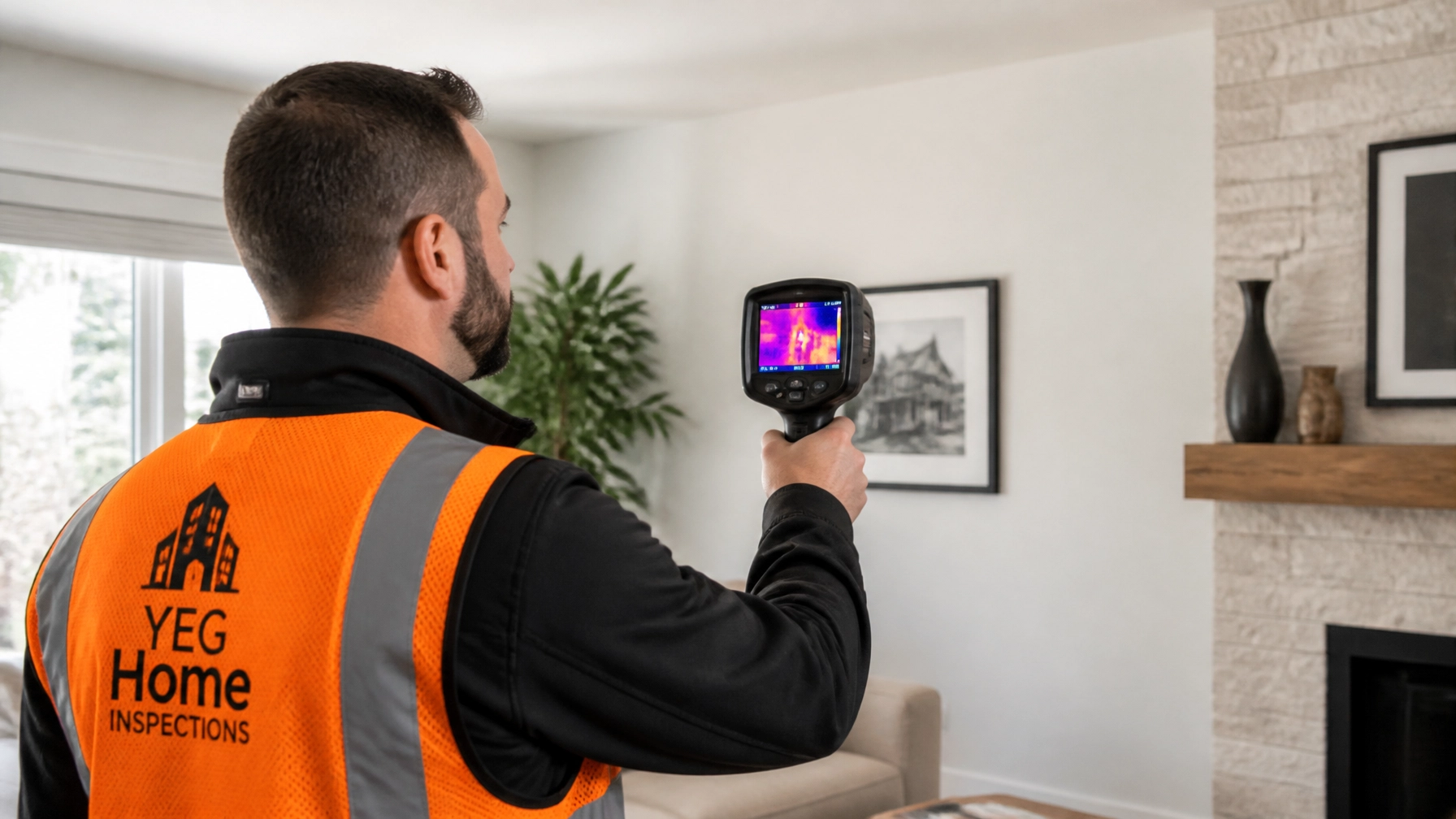
Direct Answer: A thermal imaging inspection in Edmonton uses infrared thermography to detect invisible anomalies like hidden moisture leaks, missing insulation, electrical hot spots, and air drafts behind walls. Given Edmonton’s harsh winter freeze-thaw cycles, infrared scanning is essential for identifying costly hidden defects before buying or renovating a home.
Are you buying a home in established Edmonton neighborhoods like Strathcona or Glenora, or looking at a modern build in Windermere or Terwillegar? When you walk through a property, everything on the surface can look flawless fresh paint, pristine baseboards, and staging that makes you feel right at home. But what lies beneath the surface?
Over my 10+ years in the construction and home inspection industry across Edmonton, I’ve seen countless properties where major issues: ranging from slow plumbing leaks to dangerously overloaded electrical circuits: were completely invisible to the naked eye. That is where advanced infrared thermography changes the game.
In this comprehensive guide, I’ll break down how thermal imaging works, why it is particularly crucial for Edmonton’s extreme climate, and how it protects your hard-earned investment.
Have you ever wondered how a camera can "see" inside your walls without tearing down drywall?
Infrared cameras do not possess X-ray vision; rather, they measure surface temperature variations by detecting infrared radiation. Every object emits thermal energy based on its temperature. When there is an anomaly behind a wall: such as evaporating moisture cooling the drywall, an air gap letting in winter drafts, or an electrical wire resisting current and generating heat: the surface temperature changes ever so slightly.
The thermal camera translates these temperature differentials into a vibrant color-coded heat map. Cooler areas appear blue or purple, while warmer areas show up as yellow, orange, or white. As an InterNACHI-certified inspector, I interpret these thermal signatures to pinpoint hidden defects long before they manifest as visible mold, structural rot, or system failures.
"A standard visual inspection is crucial, but it only tells half the story. Pairing a thorough visual examination with infrared thermography is like having X-ray vision for your building's health."
: Banti K Shaw, Founder of InspecUs
Edmonton's climate is notoriously demanding on residential and commercial buildings. We experience brutal winter temperatures dropping below -30°C, followed by rapid spring thaws and heavy summer storms.

This extreme thermal stress creates unique vulnerabilities:
If you want to understand how these inspections fit into your overall budgeting, check out our guide on Home Inspection Cost in Edmonton: What Buyers Pay in 2026 & How to Save for detailed cost breakdowns and financial planning tips.
When we perform a thermal scan during a What Does a Pre-Purchase Home Inspection in Edmonton Cover? Your Complete 2026 Guide, we are looking for five primary hidden threats:
If you want to learn more about this service specifically, visit our thermal imaging service page for a closer look at how we use infrared technology and moisture detection during Edmonton inspections.
Water is a home's worst enemy. Leaking plumbing pipes behind bathroom tile, slow roof leaks tracking down framing studs, or compromised window seals allow water to accumulate silently. Moisture evaporates at a different rate than dry material, creating distinct thermal cold spots. Catching these early stops mold growth and structural decay in its tracks.
Inadequate insulation drives up heating bills during Edmonton winters. Thermal scans reveal voids in batt insulation inside exterior walls, vaulted ceilings, and rim joists. For deeper insights into building performance standards, you can review guidelines from the International Association of Certified Home Inspectors (InterNACHI).

Electrical wiring under stress or loose breakers generate excessive heat. While a standard visual check might miss a failing breaker inside a closed panel, a thermal camera instantly spots abnormal temperature spikes, preventing potential electrical fires.
Unsealed penetrations around electrical boxes, plumbing stacks, and baseboards allow conditioned indoor air to escape and outside drafts to pour in. Thermal imaging maps out these leakage pathways so you can seal them effectively.
Rodents and pests often nest inside wall cavities or attic insulation. Their nesting activities disrupt insulation layers and create localized thermal signatures that an experienced inspector can detect.
| Feature / Scope | Basic Visual Inspection | Full Thermal Imaging Inspection |
|---|---|---|
| Method | Naked-eye observation of accessible surfaces | Visual check + infrared thermography scanning |
| Hidden Moisture | Only spotted if stains, bubbling, or mold are already visible | Detected immediately via temperature differentials before surface damage appears |
| Insulation Check | Assessed visually in open attic spaces only | Comprehensive mapping of insulation gaps across all exterior walls and ceilings |
| Electrical Safety | Visual check of switches, outlets, and panel exterior | Identifies concealed electrical hot spots and overloaded circuits |
| Peace of Mind | Moderate (surface-level assurance) | Maximum (comprehensive 360-degree property assessment) |

Pro Tip: Always ask your home inspector if thermal imaging is included as a standard part of their comprehensive package or billed as an expensive extra add-on. At InspecUs, we believe cutting-edge diagnostics should be standard practice, not an afterthought.
No. Infrared cameras measure surface temperatures. They detect temperature variations caused by thermal conductivity, air currents, or moisture behind building materials, but they do not "see through" solid objects like X-ray machines.
Yes. While winter provides a dramatic outdoor-to-indoor temperature difference ideal for heat loss detection, summer thermal inspections are exceptionally effective for locating moisture intrusion, roof leaks, and HVAC inefficiencies.
Thermal imaging cannot detect mold spores directly; however, it reliably detects the hidden moisture pockets and damp building materials that allow mold to grow, allowing us to investigate further.
At InspecUs, we provide comprehensive same-day inspection reports delivered within 24 hours, complete with high-resolution digital photos and thermal infrared images.
Don't let hidden defects turn your dream home into an expensive nightmare. Whether you are inspecting a cozy bungalow in Terwillegar or a commercial property in Windermere, trust the local experts at InspecUs to reveal the complete picture.
Ready to book your thermal imaging inspection in Edmonton?
Contact InspecUs today or call us directly at 780-809-1056 to schedule your certified inspection with Banti K Shaw and our experienced team.
We are licensed by the Licensed Professional and certified through InterNACHI

InspecUs Home Inspection is certified in the best practices established by Internachi. Our commitment to safety includes maintaining a 6-foot distance and using personal protective equipment (PPE) during all inspections.

© 2024 InspecUs - All Rights Reserved. | Sitemap | Developed by Integrated Marketing Platform Inc.