 7132 178 St NW,
 Call us:


 Call us780-809-1056
- Mail usinfo@inspecus.ca
- Schedule An Inspection
Call us780-809-1056

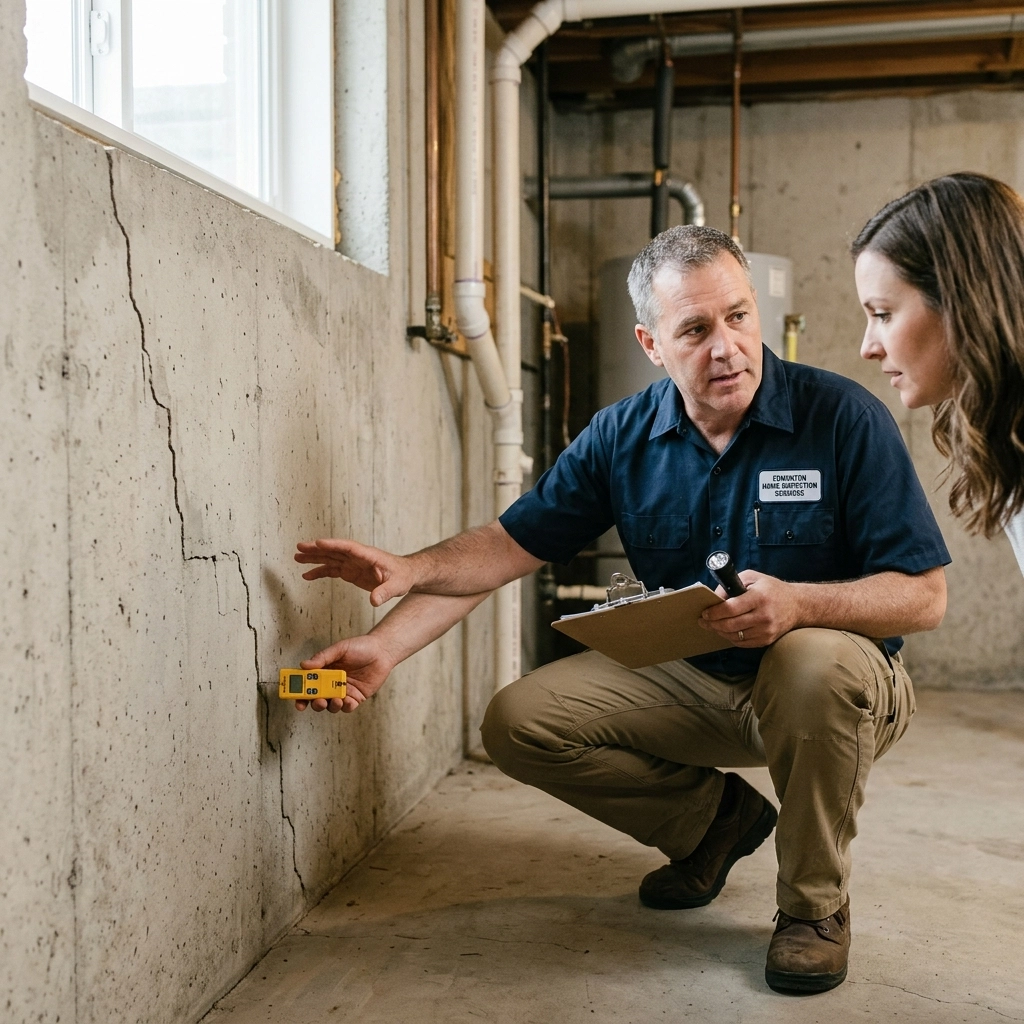
Buying or selling a home in Edmonton is an emotional rollercoaster. One moment you’re picturing where the Christmas tree will go in that beautiful Glenora living room; the next, you’re in the basement staring at a jagged line running down the concrete wall.
Your heart sinks. Is the house falling down? Is this a deal-breaker?
At InspecUs, we’ve seen thousands of foundation cracks across Alberta. We know that in our unique climate, a crack isn't always a catastrophe: but it’s never something you should ignore. Here’s the thing: Edmonton sits on a very specific type of soil that makes foundation movement almost a local tradition.
Whether you are a first-time buyer or a seasoned seller, understanding the difference between a "settling" crack and a structural failure is the key to a successful home inspection edmonton. Let’s break down exactly what you need to know.
To understand why foundations crack here, you have to understand what’s under your feet. Much of Edmonton and the surrounding areas are built on high-plasticity clay.
Clay is like a sponge. When it’s wet (like during our spring thaws or heavy June rains), it expands with incredible force. When it’s dry (during our scorching July weeks or frozen winters), it shrinks and pulls away from the foundation. This constant "push and pull" places immense pressure on concrete walls.
When you add Edmonton’s extreme freeze-thaw cycles into the mix, you have a recipe for movement. As our team likes to say, "If a house in Edmonton hasn't moved at least a little bit, it probably hasn't been built yet."

During a pre-purchase home inspection in Edmonton, we categorize cracks based on their direction, width, and "activity." Here is the general rule of thumb our experts use to distinguish between cosmetic issues and structural red flags.
Vertical cracks are incredibly common in Edmonton. Most of the time, these are "shrinkage cracks" that occur shortly after the home is built as the concrete cures.
Diagonal cracks often indicate "differential settlement." This happens when one part of the house settles faster than the rest: perhaps because the soil was poorly compacted in one corner or there’s a localized drainage issue.
If you see a horizontal crack running across the middle of a basement wall, this is where we shift from "professional observation" to "serious concern."

Anyone can see a crack. The value of a professional home inspection edmonton lies in determining why it’s there and if it’s still moving.
At InspecUs, we don’t just look at the crack; we look at the whole "health" of the property. We draw on over a decade of experience in Alberta's construction and inspection industry to connect the dots.
A dry crack is a managed problem. A wet crack is an active emergency. During our inspections, we utilize high-end thermal imaging and moisture detection tools.
Thermal imaging allows us to see "cold spots" behind finished drywall that the naked eye would miss. If a basement is finished, we can often detect foundation leaks without ever swinging a hammer. If our moisture meters spike near a crack, we know that the exterior weeping tile or the grading of the yard is failing.
"A crack in the foundation is often just a symptom," says Banti K Shaw of the InspecUs marketing team. "The real disease is usually water management. Our job is to find the source before it costs the homeowner thousands."
If you are currently living in a home or viewing one for sale, watch for these accompanying signs that a crack is more than "just settling":

Whether you're preparing for a small business inspection or a residential sale, you can mitigate foundation stress with a few simple steps:
Don't wait for the buyer's inspector to find the crack. Being proactive shows integrity. If you have a crack, have it professionally assessed and, if necessary, repaired by a reputable company before listing. This prevents "deal-kill" moments at the eleventh hour.
Never skip the inspection. A house that looks perfect on the surface might have a hidden horizontal crack behind a beautifully finished basement wall. Our condo and townhome inspections and full-detached reports give you the leverage you need to negotiate repairs or walk away from a money pit.

We are a local, Edmonton-based team. We live in these neighborhoods, and we understand the frustrations of Alberta’s climate. We don't just provide a list of problems; we provide context.
Our reports are delivered the same day, filled with high-resolution images and clear, jargon-free explanations. We want you to feel confident, not confused.
Foundation cracks are a reality of living in the Prairies, but they don't have to be a nightmare. With the right tools: like our thermal imaging: and a team that has spent 10+ years in the trenches, you can navigate your next home inspection with total peace of mind.
Ready to move forward with confidence?
Whether you’re buying a new home, selling your current one, or need a commercial property inspection, our team is ready to help.
Book Your Inspection Today or learn more about our team and our process. Let's make sure your Edmonton home stands on solid ground.
We are licensed by the Licensed Professional and certified through InterNACHI

InspecUs Home Inspection is certified in the best practices established by Internachi. Our commitment to safety includes maintaining a 6-foot distance and using personal protective equipment (PPE) during all inspections.

© 2024 InspecUs - All Rights Reserved. | Sitemap | Developed by Integrated Marketing Platform Inc.