 7132 178 St NW,
 Call us:


 Call us780-809-1056
- Mail usinfo@inspecus.ca
- Schedule An Inspection
Call us780-809-1056

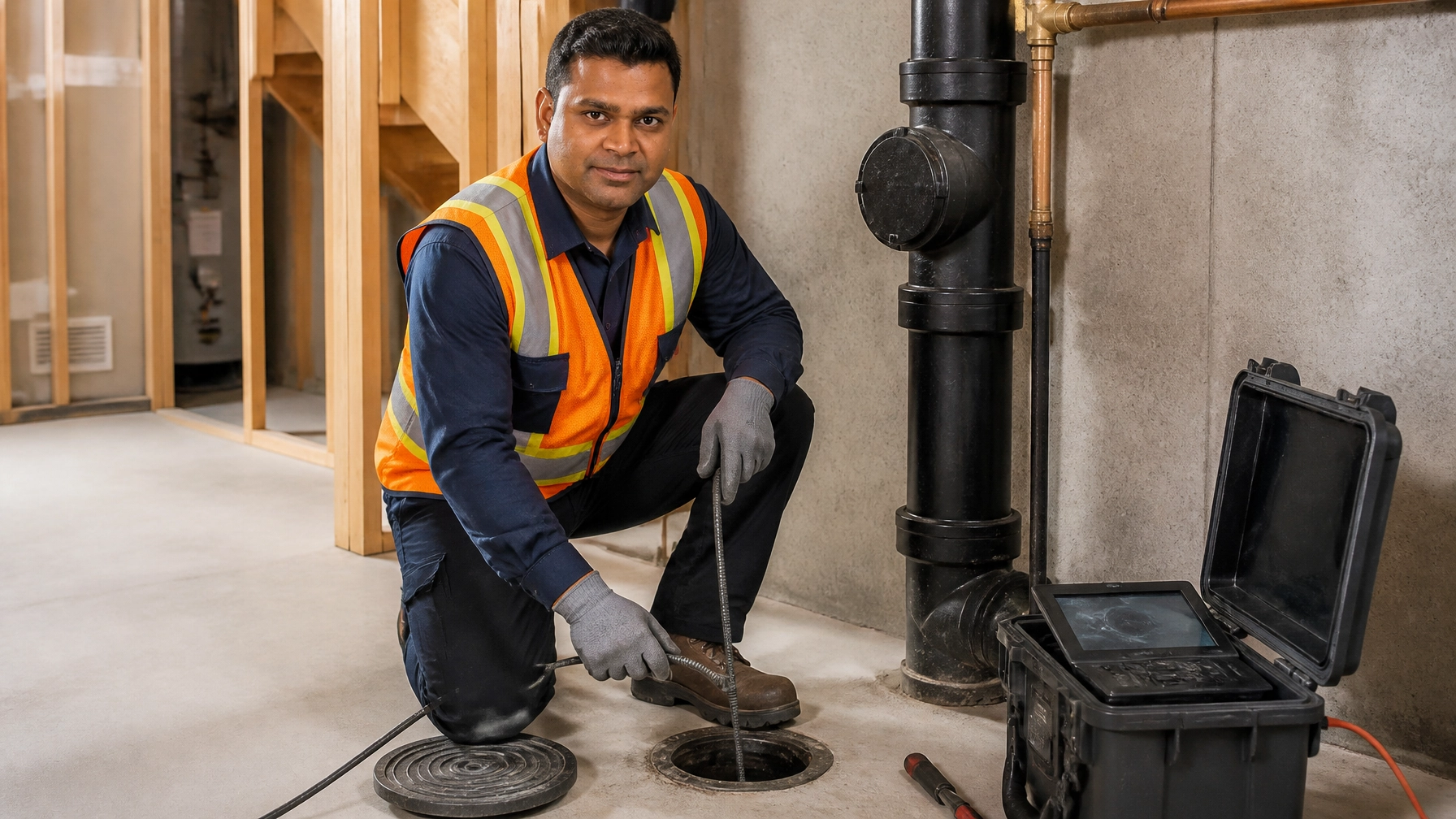
Direct answer: In Edmonton, a sewer scope inspection typically costs about $150–$250 as a home-inspection add-on or $250–$350 as a standalone service. A camera reveals roots, cracks, blockages, bellies, separated joints, and pipe deterioration: issues a standard home inspection cannot see underground.
Meta description: Learn what a sewer scope inspection Edmonton homebuyers need costs, reveals, and why inspecting the buried sewer line can prevent major repair surprises.
Could a home look perfectly maintained while hiding a damaged sewer line beneath the yard?
After more than 10 years in home inspection and construction, I have learned that some of the most expensive property problems are not visible during a walk-through. The main sewer lateral: the underground pipe connecting the home to the municipal system or septic connection: can deteriorate, shift, or become obstructed without obvious warning.
A standard home inspection evaluates visible plumbing components, fixtures, drains, and accessible piping. However, underground sewer lines are generally outside the standard inspection scope. InterNACHI explains that sewer scope inspections are separate services used to inspect the lateral sewer line.
That is why I recommend a sewer scope inspection in Edmonton when the property’s age, location, landscaping, or plumbing history suggests elevated risk.
“My job is not to create fear. It is to give you enough accurate information to make a confident decision before you commit to a major investment.” : Banti K Shaw
Are you wondering whether the price of a sewer scope is worth adding to your inspection budget?
Based on typical Edmonton pricing, you can generally expect:
Pricing varies according to the property, access point, inspection length, and whether the scope is combined with another inspection. A cleanout that is easy to access usually makes the process more straightforward. If the cleanout is buried, blocked, damaged, or unavailable, a plumber may need to provide additional access.
The cost of the inspection is small compared with the potential cost of repairing or replacing a sewer line. Depending on the location and severity of the problem, repairs may involve excavation beneath a yard, driveway, walkway, or finished area.
Pro tip from Banti: Ask whether the inspection includes video evidence, a written summary, and an explanation of where defects are located. A vague “sewer line looks okay” is not as useful as documented findings you can understand and discuss.
How can a camera inspect a pipe that is buried several feet underground?
The process is relatively simple and does not normally require digging:
Locate an access point.
The inspector identifies a suitable cleanout or other access point connected to the home’s main sewer line.
Insert a specialized camera.
A flexible cable with a waterproof camera is guided through the pipe.
Follow the line toward the municipal connection.
The camera provides a live view of the interior of the sewer lateral.
Check the pipe’s condition.
The inspector watches for structural damage, restrictions, standing water, roots, and poor connections.
Document the findings.
The results are explained using video, images, and written recommendations where appropriate.
Most inspections take approximately 30–60 minutes, although the time can vary. The camera may not reach the entire line if there is a severe blockage, collapsed section, inaccessible cleanout, or obstruction.
A sewer scope is a visual inspection. It is not a guarantee that the pipe will never develop a problem, and it may not identify every issue outside the camera’s field of view. If significant damage is discovered, you may need a qualified plumbing or sewer contractor for repair recommendations and pricing.

Could a few inches of camera footage expose a repair problem worth thousands of dollars?
Yes. A sewer scope may identify several conditions that are hidden from view during a conventional property inspection.
Tree roots naturally seek water. If a clay, cast-iron, or older pipe has a deteriorated joint or small opening, roots may enter and grow inside the line.
Observable symptoms may include:
A camera can show whether roots are minor and localized or whether they are significantly restricting the line.
A pipe may crack because of age, ground movement, poor installation, or physical stress. A severely damaged section can restrict flow or allow surrounding soil into the line.
A collapsed pipe is more urgent because it may prevent normal drainage and require excavation or trenchless repair.
What happens when a sewer line sags instead of maintaining a consistent slope?
A “belly” or low spot allows water and waste to collect in the pipe. Over time, this may contribute to recurring blockages and drainage problems. The camera can often identify standing water or a section where the pipe no longer drains properly.
The camera may reveal grease, sediment, sludge, foreign objects, or other restrictions. Some blockages can be cleared, but recurring buildup may point to a deeper issue with the pipe’s condition or slope.
Pipe sections should connect smoothly. When joints shift, the camera may show an offset, gap, or uneven connection. These conditions can affect flow and may allow soil or roots to enter.
A sewer scope may help identify whether the line appears to be clay, cast iron, plastic, or another material. It can also show visible corrosion, scaling, repairs, or changes in pipe material along the route.

Are Edmonton’s older neighbourhoods and changing ground conditions reasons to pay closer attention to sewer lines?
They can be. Older homes may have aging clay or cast-iron sewer lines, while mature trees may increase the chance of root intrusion. Edmonton’s seasonal freeze-thaw cycles and soil movement can also contribute to shifting or stressed underground components, although every property must be assessed individually.
I pay particular attention to sewer scope recommendations when a property has:
Newer homes are not automatically risk-free. Installation defects, improper slope, damaged connections, or construction debris can affect a relatively young sewer line.
If you are arranging a complete evaluation, you may also wish to combine your sewer scope with a certified home inspection in Edmonton or a pre-purchase home inspection.
Did you assume your regular home inspection automatically included the buried sewer line?
In most cases, it does not. A standard inspection may test accessible drains and plumbing fixtures, but underground sewer laterals are not normally visible or included under general home inspection standards.
You should request the sewer scope specifically and confirm:
At InspecUs, our sewer scope inspection service in Edmonton is designed to give you practical information about the condition of this important system.
What should you do if the inspection identifies roots, a belly, or a damaged section before you purchase?
First, do not assume every finding means you must cancel the transaction. The seriousness depends on the defect, its location, the severity, and the likely repair approach.
A sensible next-step framework is:
A clean sewer scope is also valuable. It gives you documented evidence that the line was functioning and appeared serviceable on the inspection date, helping you plan maintenance with greater confidence.
“I would rather help you understand a manageable repair before possession than have you discover an urgent sewer problem after you have moved in.” : Banti K Shaw
Would a few questions help you compare inspection providers more confidently?
Before scheduling, ask:
At InspecUs, we use advanced inspection tools and provide detailed reporting with high-resolution images. Our broader inspections examine more than 100 items, and we remain available to answer questions after the report is delivered.

Are you buying an older home, a property with mature trees, or a house with unexplained drainage symptoms?
In those situations, a sewer scope is often one of the most practical additional inspections you can order. For a relatively modest cost, it may reveal conditions that could otherwise lead to disruptive and expensive repairs.
If you are preparing for a purchase, I can help you understand whether a sewer scope makes sense for the property’s age, construction, access, and visible symptoms. Contact InspecUs for a quote or to schedule an inspection. There is no pressure: just a clear next step toward making a more informed property decision.
We are licensed by the Licensed Professional and certified through InterNACHI

InspecUs Home Inspection is certified in the best practices established by Internachi. Our commitment to safety includes maintaining a 6-foot distance and using personal protective equipment (PPE) during all inspections.

© 2024 InspecUs - All Rights Reserved. | Sitemap | Developed by Integrated Marketing Platform Inc.