 7132 178 St NW,
 Call us:


 Call us780-809-1056
- Mail usinfo@inspecus.ca
- Schedule An Inspection
Call us780-809-1056

Buying or selling a home in Edmonton is a massive milestone. Whether you’re eyeing a character home in Strathcona or a modern build in Windermere, the excitement is real. But let’s be honest: so is the stress. You want to know exactly what you’re getting into before you sign on the dotted line.
At InspecUs, we’ve spent over a decade crawling through attics, scanning foundations, and helping Edmontonians make confident property decisions. We get asked a lot of questions every day. Some people are worried about the "big stuff" like foundations, while others just want to know how soon they’ll get their report.
Here’s the thing: a home inspection shouldn't be a mystery. It’s a tool designed to give you clarity. To help you navigate the process, we’ve rounded up the top seven questions we hear from local homebuyers and sellers.
Let’s break it down.
You might think that because a house looks great on the surface, everything is fine underneath. But Edmonton’s climate is unique and, frankly, quite tough on buildings. Our extreme freeze-thaw cycles and heavy snow loads can wreak havoc on foundations, grading, and roofs.
We regularly find issues like "attic frost": a common Alberta problem where warm air leaks into the attic, freezes on the roof deck, and then melts, causing what looks like a major roof leak. Without a professional pre-purchase home inspection, you might miss these climate-specific red flags.
Beyond the weather, an inspection is your best defense against "unpleasant surprises." Whether it’s outdated electrical in an older West End bungalow or grading issues in a new development, we identify the risks so you can negotiate fairly or plan for future repairs.
Think of a home inspection as a "physical" for your house. We don’t just walk through the rooms; we perform a deep dive into the home’s vital systems. At InspecUs, our certified home inspections cover over 100 different items.
Our standard inspection includes:
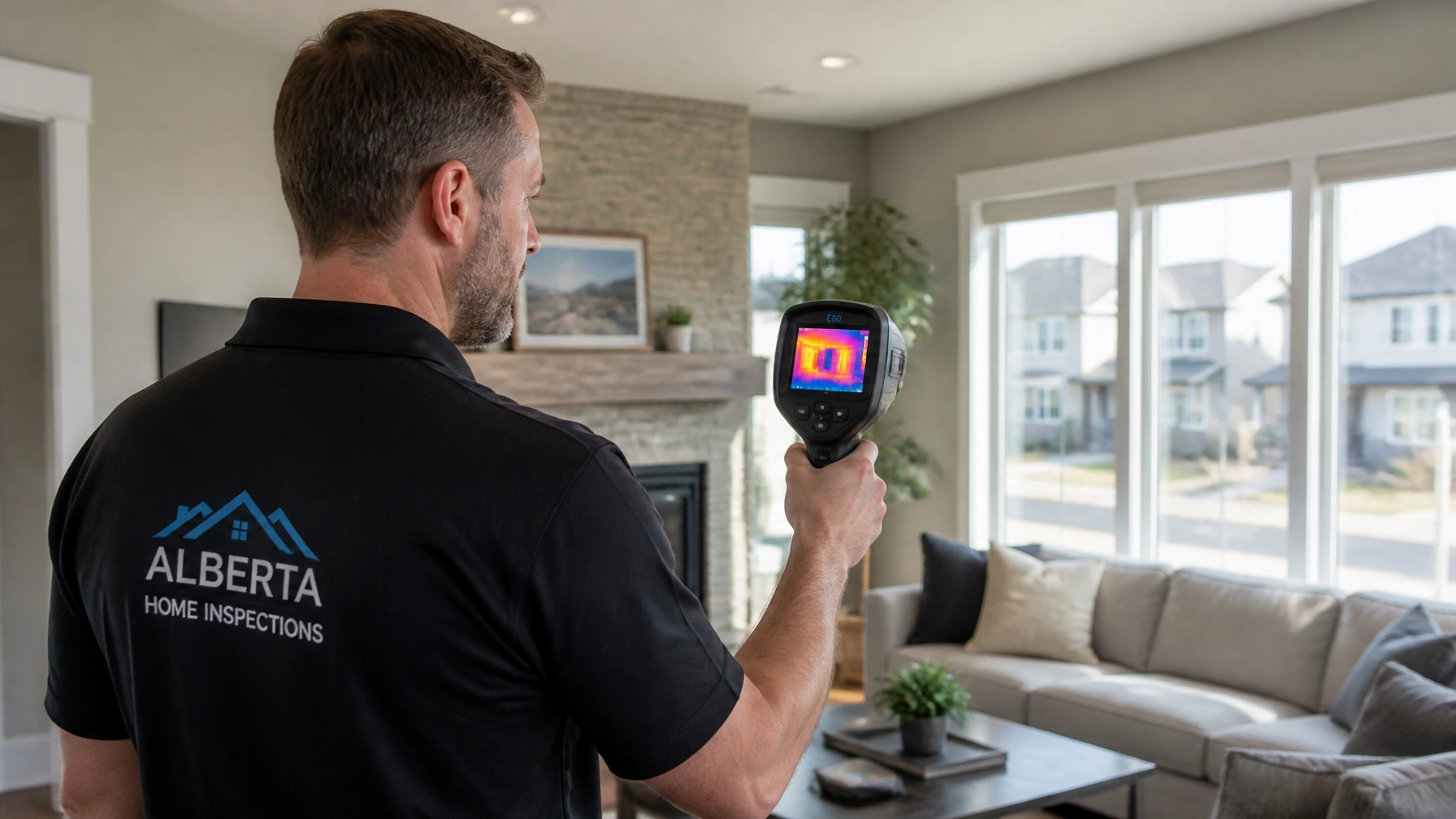
What sets us apart is that every one of our inspections includes thermal imaging and moisture detection. We use cutting-edge technology to see what the naked eye cannot.

This is where the magic (well, the science) of Thermal Imaging comes in. Many buyers worry about hidden mold, slow pipe leaks, or missing insulation that is tucked away behind drywall.
By using infrared cameras, we can detect temperature differences that often signal moisture or heat loss. For example, a "cold spot" on a ceiling might reveal a hidden roof leak or a gap in your insulation that’s driving up your heating bills.
We don't just guess; we use technology to provide an unbiased evaluation of the home's performance. This level of detail is why we are InterNACHI certified, adhering to the highest global standards for property assessments.
This is a common misconception. A home inspection isn't a pass/fail test. Our job isn't to tell you whether to buy the house or not: it's to provide you with the facts so you can decide if it's the right fit for you.
Every house has issues. Even brand-new builds often have "punch list" items that need addressing. We categorize findings into major defects (safety or structural issues), minor repairs, and maintenance items.
If we find a major issue, like a cracked foundation or an outdated electrical panel, it doesn't mean you shouldn't buy the house. It just means you now have the information needed to ask the seller for a repair, a price reduction, or to budget for the fix yourself.
Absolutely! We highly encourage you to attend. While we provide a incredibly detailed same-day report, nothing beats walking through the property with us.

When you're on-site, we can point things out in real-time, explain how systems work (like how to change your furnace filter), and answer your questions on the spot. It turns the inspection into an educational experience. You’ll leave the property not just knowing what’s wrong, but knowing how to take care of your new home for years to come.
A typical residential home inspection in Edmonton takes between 2 to 4 hours, depending on the size and age of the property. We take our time to be thorough, ensuring we hit every one of those 100+ checklist items.
We know that real estate moves fast. You often have a limited "conditions" window. That’s why we offer a 24-hour report guarantee. In fact, most of our clients receive their detailed, high-resolution PDF report on the very same day. These reports include 200+ images, clear descriptions, and easy-to-read summaries so you don't have to be a construction expert to understand them.
Yes! We strive to be a one-stop-shop for property health. Beyond standard residential inspections, we offer:

In Edmonton, the #1 cause of basement moisture is poor exterior grading. Before your inspector even arrives, take a walk around the house. Does the ground slope toward the foundation or away? Even a few inches of "negative grade" can lead to thousands of dollars in foundation repairs down the road.
Buying a home is likely the biggest investment you'll ever make. Don't go into it blind. Whether you're in Edmonton, St. Albert, Sherwood Park, or Spruce Grove, our team is here to provide the construction-backed expertise you need.
With 10+ years of experience and over 350+ five-star Google reviews, we’ve built our reputation on being thorough, honest, and fast.
Ready to get started?
Book your Edmonton home inspection online or call us today to discuss your property. Let’s make sure your dream home doesn't turn into a nightmare.
We are licensed by the Licensed Professional and certified through InterNACHI

InspecUs Home Inspection is certified in the best practices established by Internachi. Our commitment to safety includes maintaining a 6-foot distance and using personal protective equipment (PPE) during all inspections.

© 2024 InspecUs - All Rights Reserved. | Sitemap | Developed by Integrated Marketing Platform Inc.