 7132 178 St NW,
 Call us:


 Call us780-809-1056
- Mail usinfo@inspecus.ca
- Schedule An Inspection
Call us780-809-1056

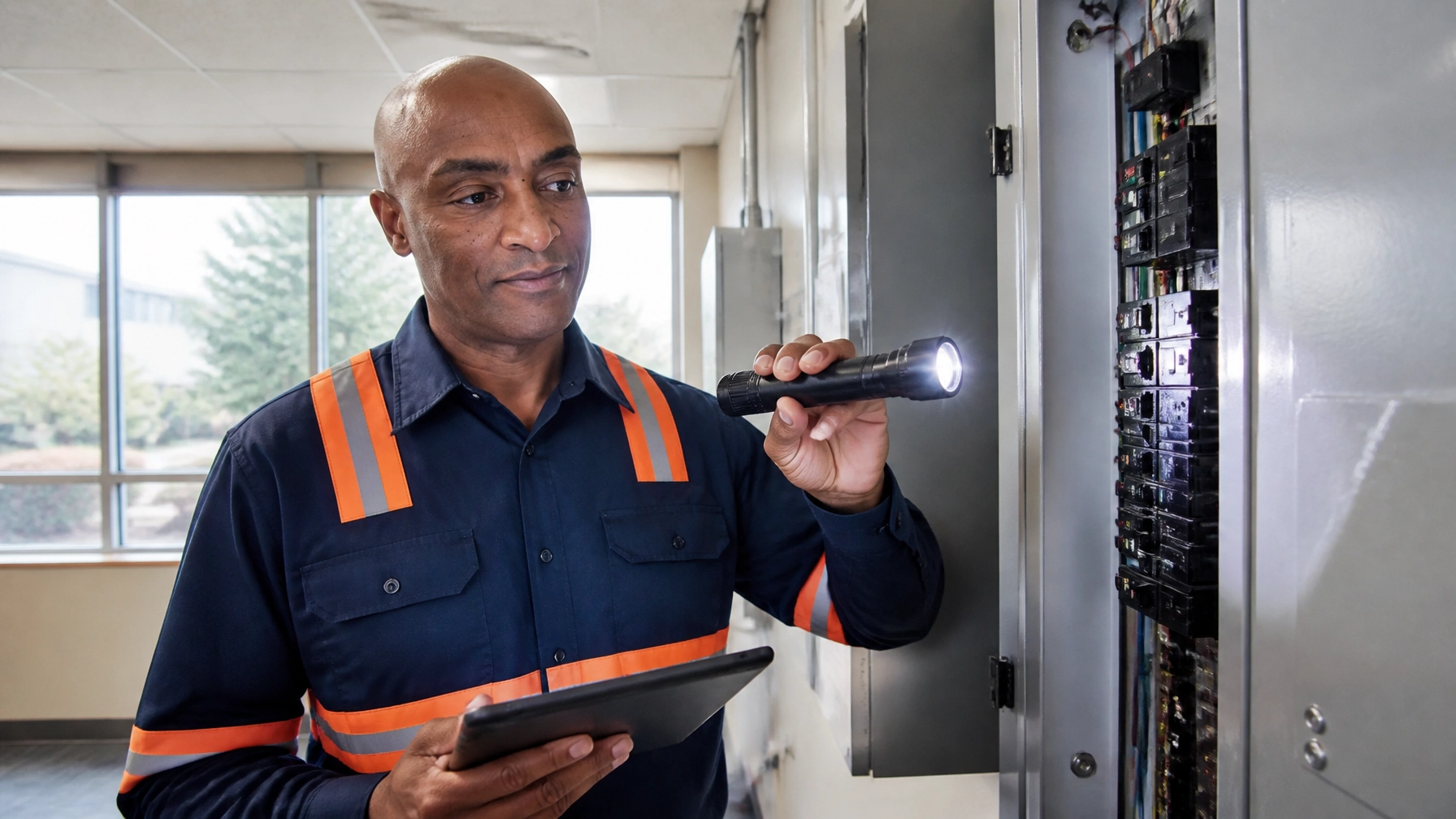
Direct answer: Before closing on an Edmonton office, retail unit, warehouse or investment property, a commercial inspection evaluates the roof, envelope, HVAC, electrical capacity, plumbing, fire/life safety, accessibility, tenant improvements, parking and deferred maintenance. The findings help you price risk, negotiate confidently and plan capital spending.
Meta description: Commercial property inspection Edmonton guide: what buyers should check before closing: roofs, HVAC, electrical, fire safety, access and deferred maintenance.
Buying a commercial property is not only a real estate decision. It is a decision about operating costs, tenant safety, business continuity and future capital expenses.
After more than 10 years in construction and property inspection, I have seen how a seemingly minor issue: such as ponding water on a roof or an overloaded electrical panel: can develop into a major financial liability. A proper commercial property inspection in Edmonton helps you understand those risks before you become responsible for them.
A commercial inspection gives you an independent view of the building’s current condition and the repairs it may require over the next several years.
You should consider one before buying:
A listing description and seller disclosure rarely provide enough technical detail to assess a property properly. Your inspection report can help you:
“My job is not to tell you whether to buy a building. My job is to give you clear, unbiased information so you can make that decision with your eyes open.”
: Banti K Shaw, InspecUs
For an overview of our commercial inspection scope, visit InspecUs commercial property inspection services in Edmonton.
What could be hidden behind the walls, above the ceiling or on the roof? A commercial inspection typically reviews the accessible building systems, site conditions and visible documentation that affect safety, performance and ownership costs.
Edmonton’s freeze-thaw cycles, snow loads and severe weather can be hard on commercial roofs. Your inspector should review:
A roof that appears serviceable from the parking lot may still have failed flashing or poor drainage. If replacement is approaching, that expense should be reflected in your investment analysis.

The building envelope protects the interior from Edmonton’s wind, rain, snow and temperature changes. We look at accessible areas of:
Observable warning signs include cracked masonry, staining below windows, failed caulking, bubbling finishes and recurring interior dampness. These may indicate water entry, movement or inadequate drainage.
A commercial inspection is generally visual and non-destructive. If I find evidence of structural movement or significant envelope failure, I may recommend further assessment by a structural engineer or building-envelope specialist.
Could an aging rooftop unit affect tenant comfort or your operating budget? Commercial HVAC systems can be more complex and expensive than residential equipment.
The inspection may include:
Ask for service records, equipment schedules and recent repair invoices. A unit that still operates may nevertheless be near the end of its expected service life.
Is the existing electrical service adequate for your business plans? This is especially important if you intend to add commercial kitchen equipment, machinery, EV chargers, additional HVAC or high-demand technology.
Your inspection should consider:
Thermal imaging can help identify abnormal heat patterns at electrical components and other systems. Read our related Thermal Imaging Inspection Edmonton guide or learn more about InspecUs thermal imaging and moisture detection.
What happens if the building’s life-safety systems have missing records or unresolved deficiencies?
Depending on the property, your inspection may review the visible condition and documentation for:
The City of Edmonton’s commercial building inspection resources and business fire safety checklist can help you understand the importance of permits, fire safety planning and ongoing maintenance.
For a broader inspection framework, review the International Standards of Practice for Inspecting Commercial Properties.
A commercial property is more than its interior. We also inspect accessible routes, sidewalks and parking areas for conditions that affect safety, usability and future upgrade costs.
Look for:

A home inspection focuses primarily on a single residential dwelling and its typical systems. A commercial inspection considers a property as a business asset, often involving larger systems, multiple occupants and more complicated documentation.
| Commercial inspection | Home inspection |
|---|---|
| May cover multiple tenant spaces or occupancies | Usually covers one residential dwelling |
| Reviews commercial HVAC, electrical loads and equipment | Reviews typical residential systems |
| Considers accessibility, fire systems and business use | Focuses on residential safety and function |
| Examines parking lots, loading areas and site features | Usually reviews driveway, walkways and yard |
| May involve leases, permits and maintenance records | May involve residential disclosures and permits |
| Supports capital planning and investment analysis | Supports a home purchase or sale decision |
Neither inspection automatically replaces an environmental assessment, structural engineering review, Phase I Environmental Site Assessment, asbestos assessment or code-compliance certification. Those services should be added when the property’s age, use or condition suggests a need.
Commercial inspection pricing is quote-based. There is no reliable flat fee because the cost depends on:
As a general budgeting guide, a small commercial property inspection may fall in the low-thousands of dollars, while larger, older or more complex properties can cost several thousand dollars or more. An inspection involving multiple buildings or specialist consultants will require a customized quote.
A residential price is not a useful comparison. For context, our Home Inspection Cost in Edmonton guide discusses residential pricing, but commercial properties require a different scope and level of planning.
Pro tip: Before requesting a quote, provide the gross floor area, building address, property use, number of units, approximate age and any available roof or mechanical records. Accurate information helps your inspector prepare a more useful scope.
A small commercial property may take approximately three to five hours onsite. A mid-sized office, retail or light-industrial property commonly requires four to eight hours. Larger multi-tenant, industrial or technically complex properties may require a full day or multiple inspection days.
The report-writing period is separate from the onsite inspection. At InspecUs, we provide same-day inspection reports within 24 hours whenever the agreed scope, access and documentation allow.
Schedule the inspection early enough to leave time for:
Who pays for a defect depends on your purchase agreement, closing date, lease terms and negotiations: not simply on the inspection report.
Before closing, the seller is generally responsible for maintaining the property as required by the agreement. However, the buyer may accept the property “as is,” negotiate repairs or request a credit. After closing, responsibility normally transfers to the buyer unless the issue is assigned elsewhere by contract.
For tenant-occupied properties, review:
The inspection identifies observable conditions. Your lawyer should advise you about legal responsibility and contract wording.

How do you turn a long inspection report into a closing decision? Sort the findings into three practical categories:
Address life-safety hazards, active water entry, electrical overheating, unsafe access routes and non-functioning emergency systems promptly.
Plan repairs for failed sealants, damaged parking areas, aging HVAC components, plumbing leaks and deteriorated finishes.
Budget for roof replacement, major HVAC renewal, electrical service upgrades, envelope rehabilitation and parking-lot reconstruction.
“A good commercial inspection should do more than list defects. It should help you understand what requires attention now, what can be planned and what may affect the value of the property.”
: Banti K Shaw
Whether you are buying an office, retail space, warehouse, small business property or commercial investment, InspecUs provides comprehensive inspections across Edmonton and surrounding areas, including Sherwood Park, St. Albert, Spruce Grove and Fort Saskatchewan.
With more than 10 years of construction and inspection experience, advanced diagnostic tools, high-resolution photographs and unbiased reporting, we help you move toward closing with better information.
Request a commercial property inspection from InspecUs or request a quote. A clear inspection is a practical next step( not a commitment to buy.)
We are licensed by the Licensed Professional and certified through InterNACHI

InspecUs Home Inspection is certified in the best practices established by Internachi. Our commitment to safety includes maintaining a 6-foot distance and using personal protective equipment (PPE) during all inspections.

© 2024 InspecUs - All Rights Reserved. | Sitemap | Developed by Integrated Marketing Platform Inc.