 7132 178 St NW,
 Call us:


 Call us780-809-1056
- Mail usinfo@inspecus.ca
- Schedule An Inspection
Call us780-809-1056

Buying or selling a home in Edmonton? You’re likely feeling a mix of excitement and a healthy dose of "what if?" What if the furnace dies in January? What if there’s a hidden crack in the foundation that’s been masked by a fresh coat of paint?
In the fast-paced Alberta real estate market, it’s easy to feel pressured to move quickly. But moving fast shouldn't mean moving blindly. We’ve been providing professional home inspections in Edmonton for over a decade, and we’ve seen it all, from the minor "honey-do" fixes to the "run for the hills" disasters.
Here’s the thing: most homeowners and buyers have the same burning questions. They want to know they aren't making a life-altering mistake. To help you navigate your next move with confidence, we’ve rounded up the five most common FAQs our home inspectors in Edmonton hear on the job. Let’s break it down.
This is probably the biggest misconception we encounter. Many buyers believe that because a home is brand new and has passed municipal "code" inspections, a private home inspection is redundant.
What this means for you: Municipal inspectors are often stretched thin and focus primarily on minimum life-safety codes. They aren't looking at the quality of the finishing, the proper installation of insulation in your attic, or whether the grading around your home will cause a flooded basement during the next spring thaw.
In Edmonton’s booming suburbs like Sherwood Park and St. Albert, homes are often built at an incredible pace. When speed is the priority, details get missed. We regularly find major issues in new builds, including:
A pre-purchase home inspection on a new build acts as your final quality control. It gives you a "deficiency list" to hand to your builder before your warranty periods expire.

Let’s clear this up right now: a home inspection is not a "pass/fail" test. It’s a professional evaluation of the property’s current condition.
As home inspectors in Edmonton, our job is to give you a detailed report card. No home is perfect, even a brand-new one will have a list of recommendations. A "fail" only happens in the buyer's mind when the cost or complexity of the required repairs exceeds their budget or comfort level.
When we deliver our same-day detailed reports, we include high-resolution images and clear explanations of every defect. This allows you to:
According to InterNACHI (International Association of Certified Home Inspectors), the goal of an inspection is to identify material defects that significantly affect the value, habitability, or safety of a dwelling. It’s about education, not a grade.
In Alberta, our climate is our biggest adversary. With temperatures swinging from +30°C in the summer to -40°C in the winter, the "freeze-thaw" cycle puts immense stress on a building's envelope.
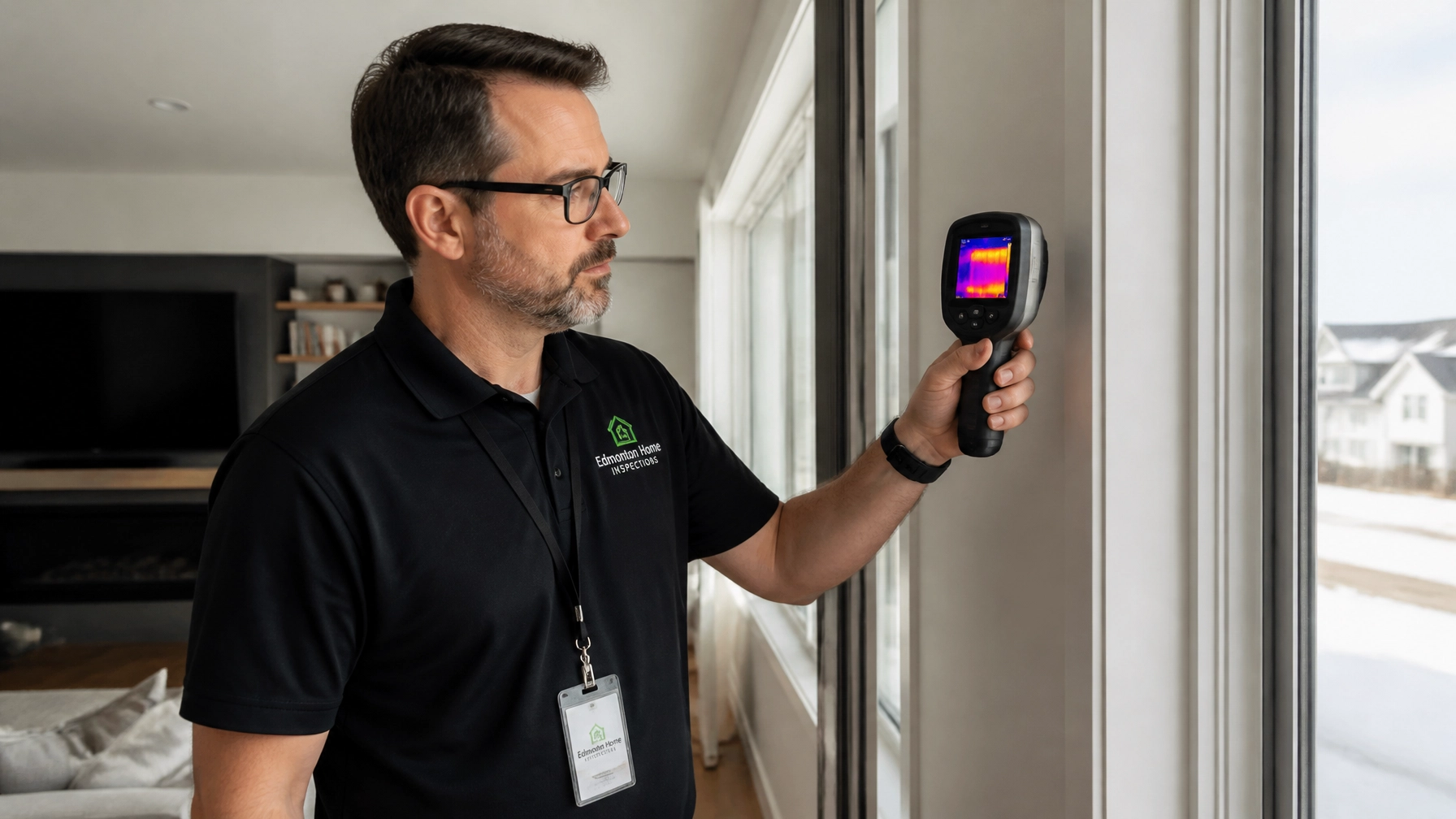
This is why we include thermal imaging and moisture detection with every single inspection. Standard visual inspections can only see what's on the surface. Thermal imaging allows us to see what’s behind the walls.
The "InspecUs" Pro Tip: Thermal cameras detect temperature differences. A cold spot on a ceiling in February could indicate missing insulation or a hidden roof leak. A warm spot behind a basement wall could point to an electrical hazard or moisture intrusion.
Without this technology, you’re essentially guessing. In a city where heating costs can skyrocket, knowing your home is energy-efficient and dry is worth its weight in gold.

If you’re looking at an older home in established Edmonton neighborhoods like Glenora, Strathcona, or Highlands, the answer is a resounding yes.
The main sewer line is the pipe that carries everything from your home to the city’s main line. In older areas, these pipes are often made of clay or cast iron. Over time, tree roots can infiltrate the joints, or the pipes can collapse or "belly" due to soil shifting.
A sewer scope inspection involves running a high-resolution camera through the line to check for blockages or damage.
Why it matters: Replacing a main sewer line can cost anywhere from $5,000 to $15,000: and it’s almost never covered by standard home insurance. We’ve seen many buyers skip this $200-$300 test only to have their basement flood with raw sewage three months after moving in. Don’t let that be you.

We always encourage our clients to attend the final hour of the inspection. While our reports are incredibly detailed (often 200+ images), nothing beats a face-to-face walkthrough.
When you’re there in person, we can:
Our goal is to leave you feeling confident, not overwhelmed. We treat every Edmonton home inspection like a crash course in homeownership.
Buying a property is likely the largest financial commitment you’ll ever make. Whether it’s a condo in Oliver or a commercial property in West Edmonton, you deserve to know exactly what you’re paying for.
At InspecUs, we combine over 10 years of construction experience with cutting-edge tools to give you the full picture. We don't just find problems; we provide the clarity you need to make a smart decision.
Ready to book your inspection?
Don't leave your investment to chance. Join the 350+ Edmontonians who have trusted us with their property assessments.
Here’s the thing: A good home inspector doesn't work for the Realtor; we work for you. Let’s make sure your next home is as safe and solid as it looks.

We are licensed by the Licensed Professional and certified through InterNACHI

InspecUs Home Inspection is certified in the best practices established by Internachi. Our commitment to safety includes maintaining a 6-foot distance and using personal protective equipment (PPE) during all inspections.

© 2024 InspecUs - All Rights Reserved. | Sitemap | Developed by Integrated Marketing Platform Inc.