 7132 178 St NW,

 Call us:



 Call us780-809-1056
- Mail usinfo@inspecus.ca
- Schedule An Inspection
Call us780-809-1056

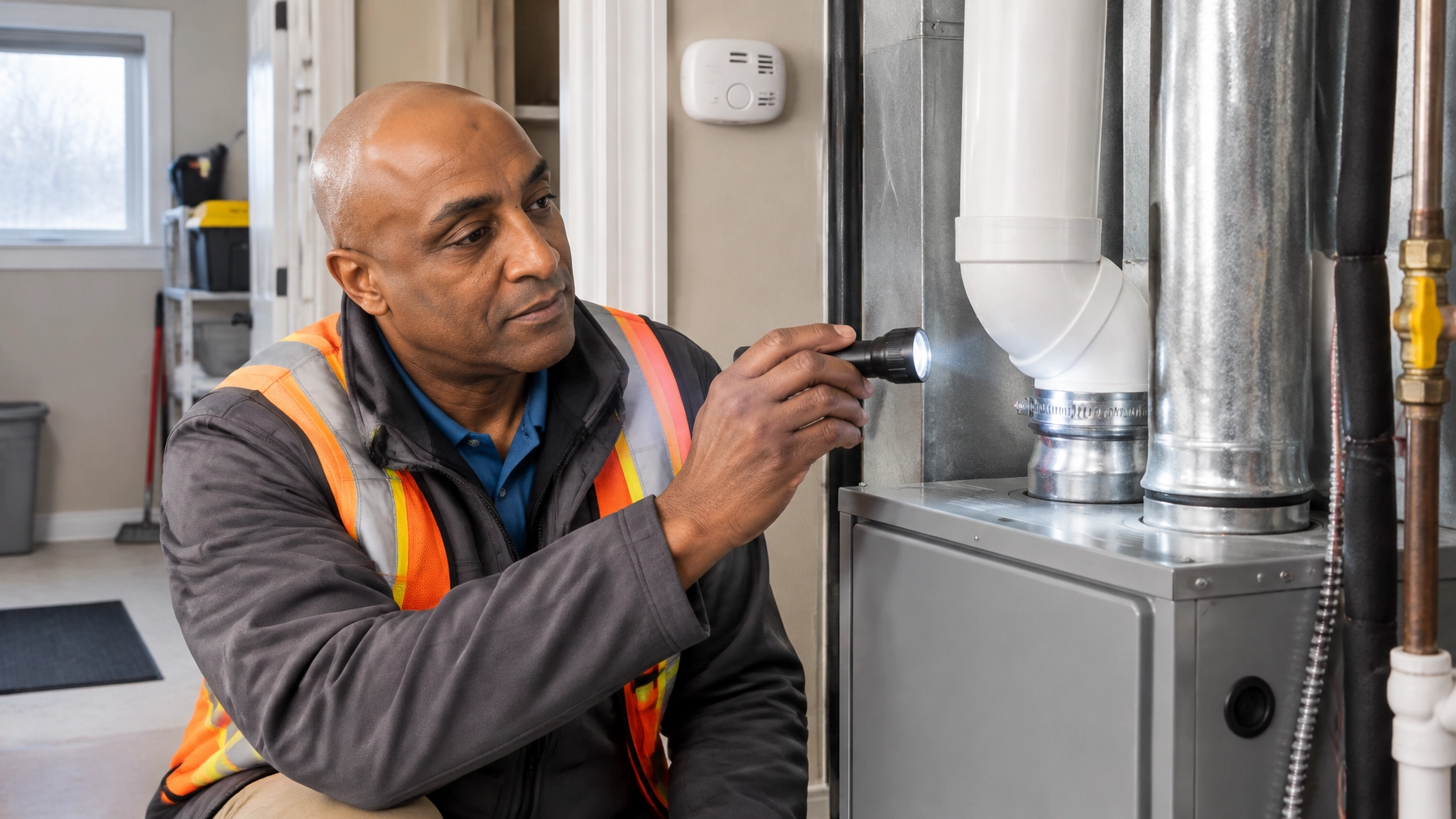
Meta description: Buying in Edmonton? Learn what a home inspector checks around gas appliances, venting and CO alarms, plus what needs a qualified gas fitter before possession.
November is when many Edmonton furnaces and fireplaces start working harder. If you’re buying a home this season, it’s a sensible time to ask how the gas appliances and carbon monoxide (CO) alarms fit together. A working furnace matters, but so does safe venting and an alarm installed where it can alert people who are sleeping.
As an Edmonton home inspector with more than 10 years of experience and a background in construction, I look at the visible condition of building systems and explain what a standard inspection can and cannot establish. That distinction is especially important around fuel-burning appliances.
What does an Edmonton home inspector check for carbon monoxide and gas safety?
An Edmonton home inspector visually checks accessible gas appliances, visible venting and clearances, and notes CO alarms’ presence, age and placement. A standard inspection is not combustion or spillage testing. Concerns should be assessed by a qualified gas fitter; verify Canadian certification and alarm placement before possession.
A home inspection is a visual, non-invasive examination of accessible areas, not a full technical test of every appliance. The InterNACHI Standards of Practice describe these limits: inspections are based on what can be observed on the inspection date, and they do not reveal every concealed or future issue.
In practice, I look at visible, accessible conditions around the home’s heating system and other included components. Depending on access and the inspection scope, that can include:
A standard inspection does not mean dismantling appliances, inspecting concealed flues, or conducting full combustion-safety or CO-spillage testing under every appliance. The InterNACHI standard also says inspectors are not required to use gas detectors or test alarms. A visual inspection is not a gas-tightness test or a guarantee that an appliance is safe in every operating condition.
“My job is to report what I can observe and to be clear when a concern needs a specialist. A visual inspection can flag a reason for follow-up, but it does not replace a qualified gas fitter’s testing or servicing.”
If you’re planning a purchase, review what’s covered in a certified home inspection in Edmonton and ask your inspector about the specific gas appliances in the property.

Alberta guidance says a home with a fuel-burning appliance or an attached garage needs CO alarms. It also specifies that alarms must be certified to CSA CAN/CSA-6.19. Don’t rely only on the word “detector” on a box. Check for the certification mark on the alarm and its packaging.
For placement, Alberta guidance calls for an alarm inside each bedroom or within 5 metres of bedroom doors. For a solid-fuel appliance, install the alarm on or near the ceiling, following the manufacturer’s instructions. The Government of Alberta’s CO alarm installation guidance provides more detail.
During a viewing or inspection, you can make a simple visual check:
Testing and upkeep matter after closing, too. Test alarms monthly, replace batteries annually, and replace the whole unit by the manufacturer’s expiry date. Follow the unit’s instructions, since a test-button response does not prove correct placement or that an alarm will identify every hazardous condition.
For more household prevention advice, see Health Canada’s guidance on preventing CO exposure.
A CO alarm is an essential warning device, but it doesn’t correct an appliance or venting problem. Fuel-burning appliances need appropriate installation and maintenance. If visible venting appears damaged or disconnected, or there are other apparent concerns around an appliance, don’t treat the alarm as a substitute for professional attention.
Health Canada recommends having fuel-burning appliances professionally inspected at least annually, or according to the manufacturer’s instructions. That is separate from the pre-purchase home inspection. Ask the seller for service records for the furnace, water heater and fireplace, and arrange qualified service if the records are missing or the inspection identifies a concern.

A typical home inspection can help identify visible concerns, but it does not establish that a gas appliance has passed a professional combustion or spillage test. If you need that answer, arrange follow-up with a qualified gas fitter before you waive conditions or take possession.
Tip: Ask about the service history for each fuel-burning appliance individually. A recent furnace visit does not necessarily confirm that the water heater or fireplace was also inspected.
Would you rely on a visual check alone if an appliance shows a concern? If there is damaged or disconnected visible venting, an apparent clearance issue, an expired alarm, or no clear maintenance history, ask what additional evaluation is appropriate.
A practical sequence for buyers is:
If a CO alarm sounds while you’re in the home, leave immediately and get to fresh air. Do not try to find the source. Once outside, call 9-1-1 or emergency services, and do not re-enter until a professional has resolved the problem. Health Canada explains what to do if an alarm sounds.

Are you clear on what your inspection will cover? Before booking, ask whether the inspection includes a visual review of the heating system, visible venting and CO alarm presence, and what requires a separate specialist. Also ask how the report will explain any access limits or recommended next steps.
If you searched “home inspector Edmonton,” the most useful next step is to compare inspection scope and ask questions about the property you’re buying, rather than assume every inspection includes the same specialist testing. InspecUs provides home inspection services in Edmonton, with findings documented so you can make informed decisions and follow up where needed.
I approach this work with a straightforward principle: report visible conditions honestly, explain the limits of the inspection, and recommend further evaluation when a question calls for a qualified trade professional. That gives you a clearer basis for deciding what to do next.
If you’re preparing to buy in Edmonton or the surrounding area, you’re welcome to send InspecUs a message to ask about an inspection.
We are licensed by the Licensed Professional and certified through InterNACHI

InspecUs Home Inspection is certified in the best practices established by Internachi. Our commitment to safety includes maintaining a 6-foot distance and using personal protective equipment (PPE) during all inspections.

© 2024 InspecUs - All Rights Reserved. | Sitemap | Developed by Integrated Marketing Platform Inc.