 7132 178 St NW,

 Call us:



 Call us780-809-1056
- Mail usinfo@inspecus.ca
- Schedule An Inspection
Call us780-809-1056

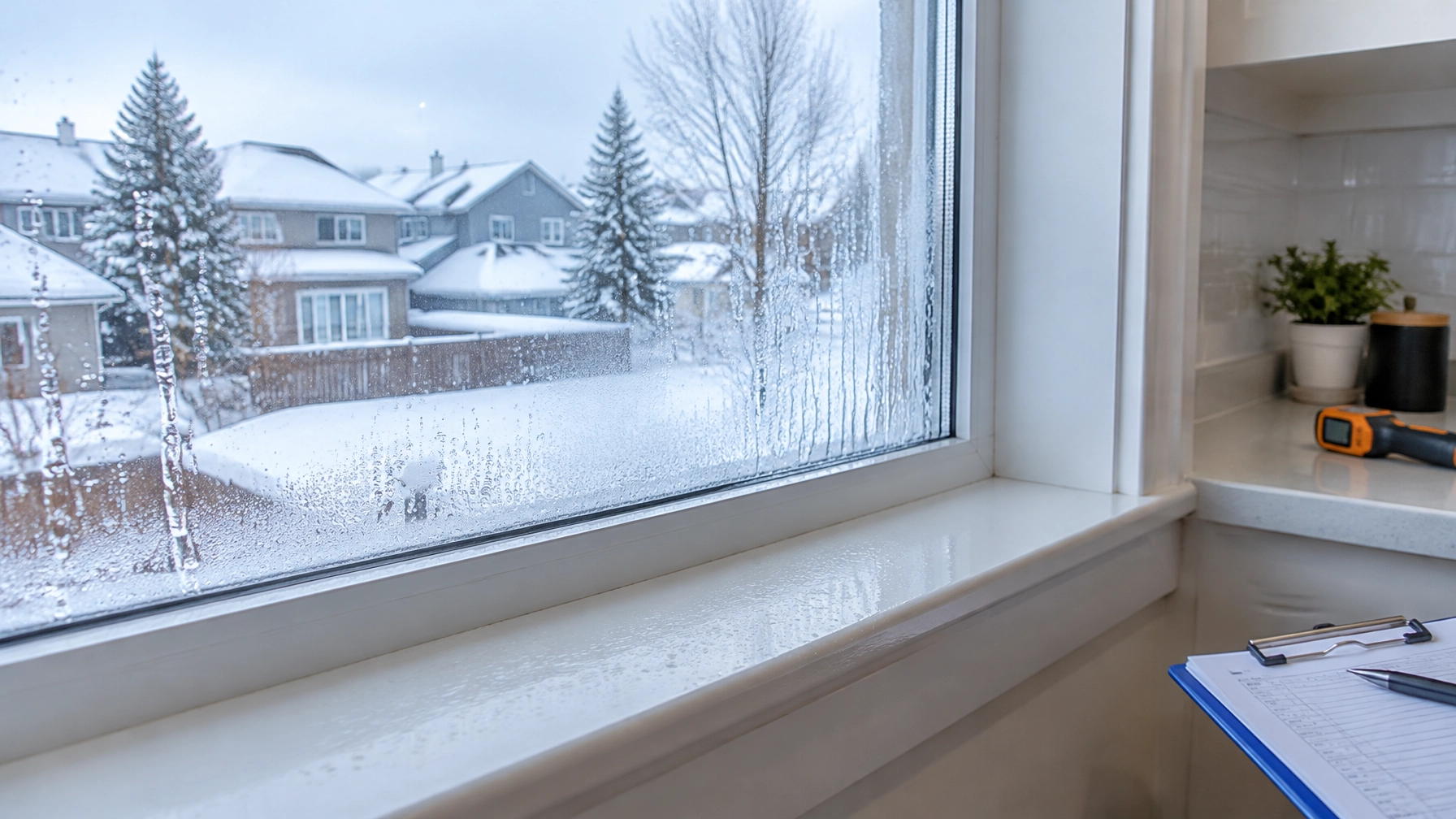
Direct answer: Edmonton winter windows sweat when warm, moist indoor air meets glass cold enough for moisture to condense. A little fog that clears is common, but daily pooling, frost, damaged paint, musty odours or mould that returns after cleaning can signal a moisture problem worth investigating.
Meta description: Winter window condensation explained: learn safe humidity levels, early mould warning signs, cleanup advice and when to request a professional inspection.
What turns a clear window into a sheet of droplets when the temperature drops?
Condensation forms when the glass surface temperature falls below the indoor air’s dew point. The warmer indoor air holds moisture; when it touches cold glass, that moisture becomes water. Edmonton’s long heating season means windows and doors stay closed for extended periods, while tightly sealed newer homes can hold onto indoor humidity if ventilation is limited.
Everyday activities add moisture, including:
CMHC notes that household activities release moisture and that condensation is more likely when moist air meets cold surfaces. The lesson I apply on inspections is simple: window condensation is a visible clue about the relationship between indoor humidity, ventilation and cold surfaces, not a diagnosis by itself.
“When I see a wet window, I look beyond the glass. I want to understand how moisture is being produced, whether it can escape, and why that surface is cold.”- Banti K Shaw
How do you tell routine fogging from a recurring moisture concern?
A light film of condensation that clears after you ventilate or reduce indoor moisture can be common in cold weather. But take a closer look if you notice:
Persistent moisture can damage finishes and create conditions for mould. If these signs keep appearing, track when and where they occur, then investigate the moisture source rather than repeatedly cleaning the surface.
For a broader overview of when signs around a property may justify further investigation, see my guide to mould inspection in Edmonton: signs, costs and what inspectors find.
What should your indoor humidity reading be when Edmonton is deep in heating season?
CMHC’s Moisture and Air Guide gives practical guidance: indoor relative humidity is generally around 30% to 50%, but it should not exceed about 45% during the heating season. In very cold weather, 30% or lower may be needed to prevent window condensation.
These are guidelines, not guarantees. The right level for your home depends on outdoor temperature, window performance, ventilation and other conditions. A low-cost hygrometer gives you a useful reading so you can adjust a humidifier or ventilation habits based on actual indoor humidity.
Pro tip: If you see condensation, lower the humidifier setting and monitor the reading. Wipe visible condensation from the glass, frames and sills daily, even while you work on reducing the cause.
Where should you look when moisture keeps collecting indoors?
I pay close attention to places where dampness, cold surfaces and limited airflow meet:
Health Canada’s guide to addressing moisture and mould indoors explains that mould in a home indicates a moisture problem. Cleaning visible growth without correcting that underlying moisture can allow it to return.

Does the fog disappear when you wipe it, or is it trapped between the panes?
The location and pattern offer clues:
Neither clue alone confirms the cause of a moisture problem. If only one window weeps, I also consider whether exterior caulking is missing, a heat register is closed or blocked, or a heavy curtain is trapping cold air around the glass.
For more about drafts, failed seals and what I check around windows, read my Edmonton window inspection guide.
What does Health Canada recommend if you find a few small patches on a washable surface?
Health Canada considers mould small when there are three or fewer patches and the total affected area is less than one square metre. For a small area, its guidance is to:
If the affected area exceeds that small-area guidance, or the mould keeps coming back, arrange a professional assessment. For larger, hidden or recurring problems, avoid assuming that surface cleaning is enough.
What can an inspection tell you without opening up finished walls?
I’m Banti K Shaw, an InterNACHI-certified inspector with more than 10 years of inspection and construction experience. For a suspected winter moisture issue, I can visually and non-invasively review accessible areas for visible concerns, staining and conditions that may be contributing to dampness.
Thermal imaging can show surface temperature patterns that may help identify areas for closer attention; it does not confirm moisture on its own. I use a moisture meter to follow up where appropriate. A standard inspection does not involve opening finished walls, so concealed conditions may require further evaluation. Remediation beyond small-scale cleaning belongs with qualified remediation contractors.
InspecUs offers thermal imaging and moisture detection and mould inspection services as part of our broader inspection lineup. If you’re searching “mold inspection edmonton” because window mould keeps returning, the important next step is finding out what moisture condition is feeding it.
“I use inspection tools to help explain what I can observe, not to promise that a camera or meter can see through every wall. My goal is to give you clear findings and practical next steps.”- Banti K Shaw
Which habits can help you catch condensation early and reduce moisture buildup?
If you are unsure whether recurring winter condensation needs a closer look, you can contact InspecUs to discuss an inspection. Our inspections cover 100+ items, include same-day reporting within 24 hours, and are backed by 250+ positive Google reviews. There’s no pressure, just an opportunity to get clear information about your next step.
We are licensed by the Licensed Professional and certified through InterNACHI

InspecUs Home Inspection is certified in the best practices established by Internachi. Our commitment to safety includes maintaining a 6-foot distance and using personal protective equipment (PPE) during all inspections.

© 2024 InspecUs - All Rights Reserved. | Sitemap | Developed by Integrated Marketing Platform Inc.