 7132 178 St NW,
 Call us:


 Call us780-809-1056
- Mail usinfo@inspecus.ca
- Schedule An Inspection
Call us780-809-1056

Meta description: Window inspection Edmonton: how home inspectors spot failed seals, drafts, rot, egress and winter risks, plus 2026 costs, repairs and rebate guidance.
Direct answer: A window inspection Edmonton homebuyers arrange as part of a pre-purchase inspection typically checks accessible windows for failed seals, drafts, damage, water intrusion, operation, locks and bedroom egress. It is visual and non-invasive, so it cannot guarantee remaining service life or test every pane’s gas fill.
Could a window that looks acceptable in September become a source of drafts, frost and expensive heat loss by January?
Early October is often your last practical opportunity to identify window problems before Edmonton’s temperatures drop sharply. Failed seals, air leakage and deteriorated exterior trim can contribute to:
As an inspector with more than 10 years of construction and inspection experience, I look at windows as part of the entire building envelope, not as isolated pieces of glass.
“A window problem is often connected to something else, such as poor drainage, failed caulking, installation gaps or indoor humidity. My job is to help you understand the likely cause and practical next step.”- Banti K Shaw
If you are buying a home, schedule your pre-purchase home inspection in Edmonton early enough to review the findings before your condition deadline.
Are you comparing an older home with single-pane windows to a newer property with triple glazing?
The window type and frame material affect comfort, durability, maintenance and replacement cost.
A window’s age alone does not prove that it needs replacement. Condition, operation, air leakage, moisture evidence and installation quality matter more than the label.
What should you expect a professional home inspector Edmonton buyers hire to examine?
A standard inspection is visual and non-invasive. I inspect and operate a representative number of accessible windows, including different window types, rooms, orientations and levels where practical.
Do you see haze or moisture that appears trapped between panes?
Persistent fogging, streaks or mineral deposits between sealed panes commonly indicate a failed IGU seal. The failure allows moisture into the space between the glass, reducing clarity and potentially reducing thermal performance.
A failed seal does not always require removal of the entire frame. Depending on the window design, a contractor may replace the sealed glass unit or sash. However, widespread failures, damaged frames or poor installation may make full replacement more practical.

Can you feel cold air around the sash, frame or trim?
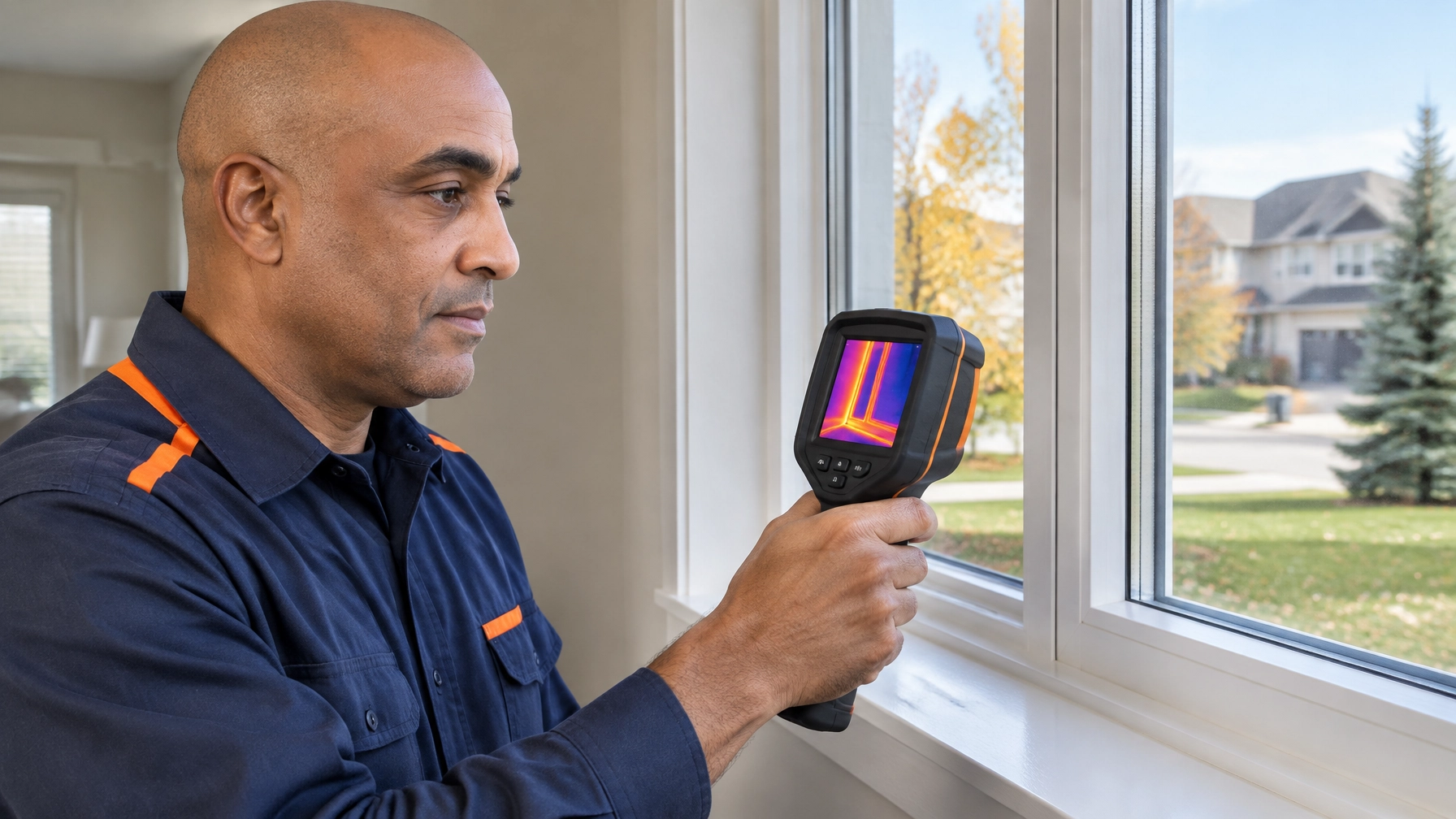
I look for obvious air leakage using several methods, depending on conditions:
Thermal imaging does not “see through” the window or prove a defect by itself. It identifies temperature differences that require interpretation. Our thermal imaging and moisture detection service can provide additional information where hidden heat loss or moisture concerns require closer attention.

Could the visible stain below a window be more than a cosmetic issue?
I examine accessible:
Water damage may result from failed sealant, missing flashing, blocked drainage paths, poor grading or leakage around the window opening. Moisture meters can help identify elevated moisture in accessible materials, but they do not replace destructive testing.
Does every window open, close, latch and stay secure?
I check representative windows for:
A window that cannot open may become a safety problem, especially in a bedroom.
Could someone escape through a bedroom window during an emergency?
Bedroom windows used for emergency escape should be readily openable and provide an adequate clear opening. A commonly referenced minimum is approximately 0.35 m², with no clear opening dimension less than about 380 mm, but requirements can vary with the home’s construction, age and applicable code.
I report visible concerns such as painted-shut windows, blocked wells, restricted openings and inadequate access. For exact compliance confirmation, consult the municipality or a qualified code professional.
Is water being directed toward your windows instead of away from them?
A window inspection also includes the surrounding drainage conditions. I look at:
A sound window can still leak if roof water drains beside it or the window well fills with water. Before winter, clean wells and direct downspouts away from the foundation.
Are you seeing moisture on the room side of the glass, or trapped between the panes?
These are different conditions:
According to Natural Resources Canada guidance on upgrading windows, lower U-factor windows generally reduce heat transfer and help keep interior glass warmer. However, even efficient windows can experience condensation if indoor humidity is excessive or installation is poor.
Pro tip: Do not cover persistent condensation with curtains or blinds and ignore it. Improve ventilation, manage humidity and investigate any staining or deteriorated materials around the window.
Are you trying to compare the cost of an inspection with the cost of replacing windows?
For planning purposes, typical Edmonton ranges are approximately:
Actual pricing depends on size, opening condition, frame material, glazing, access, trim work, rot repair and installation complexity.
A typical Edmonton home inspection may cost approximately $400–$550 plus GST for a detached home, with condos and larger or rural properties falling into different ranges. You can review our 2026 Edmonton home inspection cost guide for broader budgeting context.
Could a targeted repair solve the problem without replacing the entire unit?
Repair may be appropriate when the issue is limited to:
Replacement becomes more reasonable when:
Ask window contractors to separate glass-unit replacement, frame replacement and full-opening replacement in their quotes. That distinction can significantly change your budget.
Are you assuming a window rebate will cover a large portion of your replacement project?
Program rules and funding change frequently. The City of Edmonton’s Change Homes for Climate and home energy program information should be checked before you order windows. In 2026, the Home Energy Retrofit Accelerator has been reported as fully subscribed for new enrolments, so do not assume new applications are available.
Federal and municipal programs may require:
Check current requirements directly with NRCan’s retrofit and energy-efficiency resources and Edmonton before signing a contract.
Would a home inspection guarantee that every window will last through the next decade?
No. A visual inspection can identify observable deficiencies, but it cannot provide a warranty or predict exact remaining life.
Under the InterNACHI Standards of Practice, inspectors operate a representative number of accessible windows. The inspection generally cannot confirm:
“I provide an unbiased condition report, not a promise about the future. If I see a failed seal, unsafe operation or moisture evidence, I document it clearly so you can decide what to do next.”- Banti K Shaw
Usually, a standard home inspection includes a representative review of accessible windows. A separate assessment may be useful when you have widespread fogging, suspected water intrusion, extensive rot, or a large replacement decision.
Yes. A home inspection typically checks accessible windows for visible damage, operation, locks, failed seals, moisture evidence, drafts and safety concerns. It does not test every window or dismantle assemblies.
Fogging, haze, streaks or moisture trapped between panes that cannot be wiped away are common signs. A window contractor can confirm the condition and advise whether the IGU or complete window should be replaced.
Occasional light condensation can occur, especially during very cold weather. Persistent or heavy condensation may indicate high indoor humidity, cold glazing, poor ventilation or air leakage and should be investigated.
Often, yes. Weatherstripping, hardware, caulking, trim and sealed glass units may be repairable. Rotten frames, severe warping, widespread seal failure or poor installation may justify replacement.
Possibly, but eligibility depends on the current program, product certification, audit requirements and application timing. Confirm details with Edmonton and NRCan before beginning work.
Do you want a report that helps you make a decision before winter, not just a checklist?
InspecUs provides:
For questions, contact info@inspecus.ca or request a certified home inspection in Edmonton. A timely inspection can give you the information you need to plan repairs, negotiate confidently or move forward with greater peace of mind.
We are licensed by the Licensed Professional and certified through InterNACHI

InspecUs Home Inspection is certified in the best practices established by Internachi. Our commitment to safety includes maintaining a 6-foot distance and using personal protective equipment (PPE) during all inspections.

© 2024 InspecUs - All Rights Reserved. | Sitemap | Developed by Integrated Marketing Platform Inc.