 7132 178 St NW,
 Call us:


 Call us780-809-1056
- Mail usinfo@inspecus.ca
- Schedule An Inspection
Call us780-809-1056

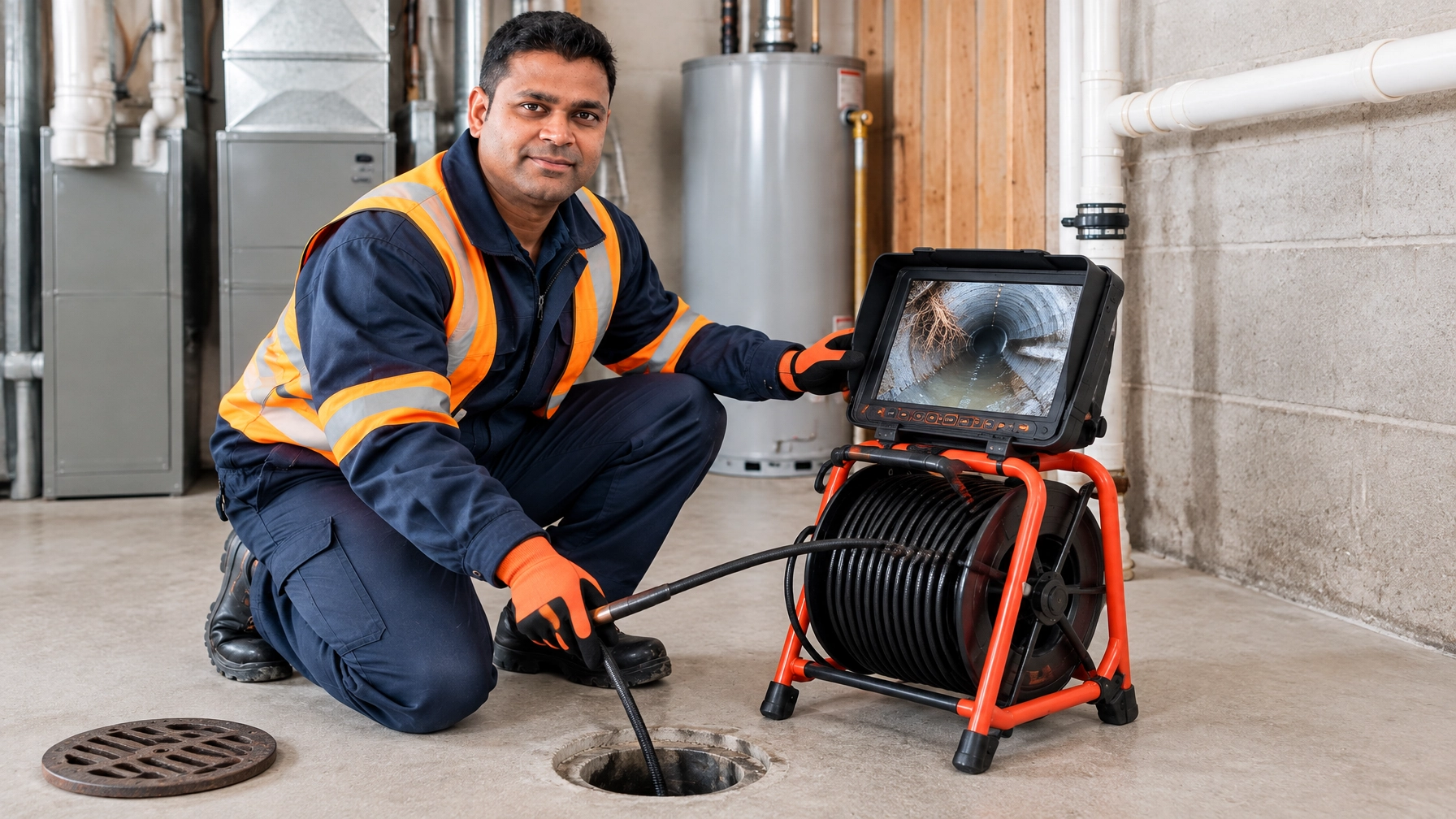
Direct answer: A sewer scope inspection uses a specialized camera to examine the underground sewer lateral between your home and the municipal connection. In Edmonton, you should strongly consider one for older homes, mature-tree lots, and properties with unknown plumbing history because replacement can cost $8,000–$25,000 or more.
Buying an older home in Garneau, Ritchie, Beverly, Mill Woods, or another mature Edmonton neighbourhood can reveal beautiful character, established landscaping, and convenient locations. But one major system remains hidden underground: the sewer lateral.
I’m Banti K Shaw. With more than 10 years of construction and inspection experience, I have seen how a home can appear well maintained while its buried sewer line is nearing failure. A sewer scope is one of the most practical ways to reduce that uncertainty before you remove your purchase conditions.
Yes. A sewer scope inspection involves feeding a small, waterproof camera through an accessible cleanout or suitable plumbing access. The camera travels through the lateral sewer line, usually from the home toward the municipal connection.
The inspection can document:
A standard home inspection is primarily visual and non-invasive. It can review visible plumbing and operate fixtures, but it does not normally inspect the entire buried sewer line. InterNACHI identifies sewer scoping as a separate ancillary service, rather than a required part of its standard home inspection.
“The sewer lateral is one of the most important systems you cannot judge from the kitchen sink or bathroom toilet. I prefer showing buyers what is actually happening inside the pipe rather than asking them to rely on assumptions.”- Banti K Shaw
For most Edmonton properties, a realistic 2026 budget is:
A smaller repair or cleaning may cost much less than full replacement. However, the final price depends on:
The homeowner is generally responsible for the private sewer service line on the property, although responsibility can depend on the exact connection and location. If a problem is found, ask for the distance to the defect and confirm responsibility with the appropriate municipal or utility authority before authorizing work.
For broader purchase due diligence, see our guide to pre-purchase home inspections in Edmonton.
A sewer scope does not merely confirm whether water is flowing. It lets you assess the condition and performance of the line itself.
Tree roots follow moisture and can enter through joints, cracks, or deteriorated pipe walls. Edmonton’s mature neighbourhoods often have large trees close to older sewer routes.
Observable symptoms may include:
Small root intrusion may be manageable with cleaning and monitoring. Extensive roots combined with broken joints or pipe deterioration can indicate a larger replacement risk.
Older homes may contain clay tile sewer laterals made from shorter sections joined together. Ground movement, settlement, or tree roots can cause joints to separate or shift.
An offset joint can restrict flow, catch debris, allow roots to enter, or eventually lead to soil loss around the pipe. One minor offset is not automatically a deal-breaker, but repeated offsets or visible cracking deserve a plumbing contractor’s opinion.
A belly occurs when a section of pipe settles and holds wastewater instead of maintaining a consistent slope.
The camera may show standing water even when the line is not fully blocked. Bellies can contribute to recurring blockages and may be difficult to correct without excavation, depending on their location and severity.
Orangeburg is a bitumen-based fibre pipe used in some older installations. Over time, it can deform, soften, flatten, or collapse.
If the camera shows a severely distorted Orangeburg line, crushed pipe, or a passage that is narrowing significantly, treat it as a substantial financial risk. Cleaning may provide temporary flow but does not restore the pipe’s structural strength.
Cast iron can be durable, but older lines may develop internal rust scale that reduces the effective diameter. Grease and waste can accumulate on the roughened interior.
A moderate buildup may be negotiable if cleaning is practical. Heavy scale, corrosion, cracks, or repeated blockages may require further evaluation and eventual replacement.

Not necessarily. The right response depends on severity, location, cost, and your ability to manage the repair.
Treat these findings as serious conditions requiring repair estimates before proceeding:
These may be addressable with cleaning, monitoring, or a negotiated credit:
Do not negotiate from the video alone. Ask a qualified plumber or sewer contractor for a written repair recommendation and estimate. A seller credit may be more useful than a promise that the line is “fine.”
The property needs reasonable access before the appointment. Ask the seller, listing agent, or property manager about:
The cleanout location
It may be inside the basement, near the mechanical room, in a crawl space, or outside near the foundation.
Previous sewer work
Request invoices, camera footage, sewer cleaning records, or documentation of repairs.
Access restrictions
Move stored items away from the cleanout and ensure locked rooms or utility areas are accessible.
Water usage
Follow the inspector’s instructions. In some cases, limiting water use during the scope helps produce a clearer inspection.
Winter conditions
Edmonton snow, frozen ground, ice, and buried exterior cleanouts can make access difficult. An exterior cleanout may need to be located and cleared before the appointment. If the only access is snow-covered or frozen, the scope may be limited or require rescheduling.

If the cleanout cannot be located or opened safely, the limitation should be documented. Never force a damaged, seized, or fragile cleanout cap without understanding the risk of breakage.
No. A sewer scope is focused on the visible interior of the accessible lateral sewer line. It generally does not:
Camera distance also is not the same as a precise surveyed location. If a major defect is found, a plumber may need to locate the line, expose it, or perform additional testing.
For more limitations buyers commonly miss, read What a Home Inspection Doesn’t Cover in Edmonton.
Usually, no. A standard home inspection can assess accessible plumbing fixtures and visible components, but a camera inspection of the underground lateral is normally a separate service.
You may have less risk with a newer home, especially if the sewer lateral material and installation records are documented. However, newer does not guarantee perfect installation. Settlement, construction debris, improper slope, damaged joints, or landscaping can still create problems.
A sewer scope is particularly sensible when the home’s history is unclear, the line has not been documented, or the cost is small compared with your overall purchase.
First, ask why access is being refused. The cleanout may be inaccessible, damaged, buried, or unknown. Your options may include:
You should not assume refusal proves a defect. But you should recognize that proceeding without information transfers the risk to you.
“My goal is not to make you afraid of an older home. It is to help you understand the cost and condition of the systems you are buying, including the ones you cannot see.”- Banti K Shaw
A sewer scope typically costs a few hundred dollars. A failed sewer lateral can cost many thousands. If you are buying an older Edmonton home, especially in a mature neighbourhood with established trees, a camera inspection may be one of the highest-value additions to your due diligence.
When you are ready, contact InspecUs to discuss a sewer scope inspection in Edmonton. We can help you choose an inspection scope that fits the property and your purchase timeline, without pressure.
Meta description: Learn sewer scope inspection Edmonton costs, the five defects cameras find, replacement risks, buyer red flags, winter prep and what to do before closing.
We are licensed by the Licensed Professional and certified through InterNACHI

InspecUs Home Inspection is certified in the best practices established by Internachi. Our commitment to safety includes maintaining a 6-foot distance and using personal protective equipment (PPE) during all inspections.

© 2024 InspecUs - All Rights Reserved. | Sitemap | Developed by Integrated Marketing Platform Inc.