 7132 178 St NW,
 Call us:


 Call us780-809-1056
- Mail usinfo@inspecus.ca
- Schedule An Inspection
Call us780-809-1056

Buying or selling a home in Edmonton is a massive milestone, but let’s be honest, it’s also a bit of a rollercoaster. Between the fast-moving real estate market and our unique Alberta climate (looking at you, -40°C winters and spring "attic rain"), there is a lot that can go wrong behind those freshly painted walls.
That’s where a professional home inspection comes in. Whether you’re a first-time buyer in Griesbach or selling a character home in Strathcona, you need more than just a quick walkthrough. You need a detailed, unbiased evaluation from someone who knows exactly how Edmonton homes are built, and how they fail.
At InspecUs, we’ve spent over 10 years climbing through attics and crawling into basements across the Capital Region. We’ve seen it all. In this guide, we’re breaking down everything you need to know about the home inspection process in Edmonton so you can move forward with total confidence.
Think of a home inspection as a "physical exam" for a property. It is a non-invasive, visual examination of the home’s current condition. In Alberta, this isn't just a casual service; it’s a regulated industry. Every inspector must be licensed by the Government of Alberta and follow strict standards of practice.
At InspecUs, we go several steps further. Our team is InterNACHI certified, meaning we adhere to the highest international standards for property assessments. We don’t just look at what’s broken; we explain why it matters and what it means for your wallet.
A home is likely the biggest investment you’ll ever make. An inspection is your "insurance policy" against hidden disasters like:
Our city has specific challenges that you won't find in Toronto or Vancouver. A "generic" inspection checklist won't cut it here. When we perform a residential home inspection, we’re looking specifically for Edmonton-centric issues.
Our extreme temperature swings cause the soil to expand and contract. This puts massive pressure on foundations. We look for specific "heaving" patterns in driveways and "stair-step" cracks in brickwork that signal structural movement.
In many Edmonton homes, improper ventilation combined with our cold winters leads to frost buildup in the attic. When it thaws, it looks like a roof leak, but it’s actually a ventilation problem. We use specialized moisture detection tools to catch this before it ruins your ceiling.
With Edmonton’s spring melt, water management is everything. We check that your lot is graded correctly to push water away from the foundation. If the ground slopes toward the house, you’re one heavy rain away from a flooded basement.

A standard inspection at InspecUs covers over 100 points, but here are the "Big Five" that every Edmonton buyer should focus on:
We check the shingles, flashing, gutters, and downspouts. In Edmonton, we also look for signs of hail damage, a common issue in Alberta that can significantly shorten a roof's lifespan.
We examine the basement walls (using thermal imaging where possible) to look for water penetration or shifting. If the home has a crawl space, we’re going in there too.
From the main service panel to the outlets, we ensure the system is safe and up to current standards. We pay close attention to older homes in central Edmonton for signs of knob-and-tube or aluminum wiring.
We check for leaks, water pressure, and the condition of the water heater. For older homes, we highly recommend a sewer scope inspection to check for tree root intrusion or collapsed clay pipes.
In a city where the furnace is a life-support system, we don't take this lightly. We check the heat exchanger, venting, and overall performance to ensure you won’t be left in the cold in January.
Gone are the days when an inspector only needed a flashlight and a ladder. We use cutting-edge technology to see what the naked eye cannot.
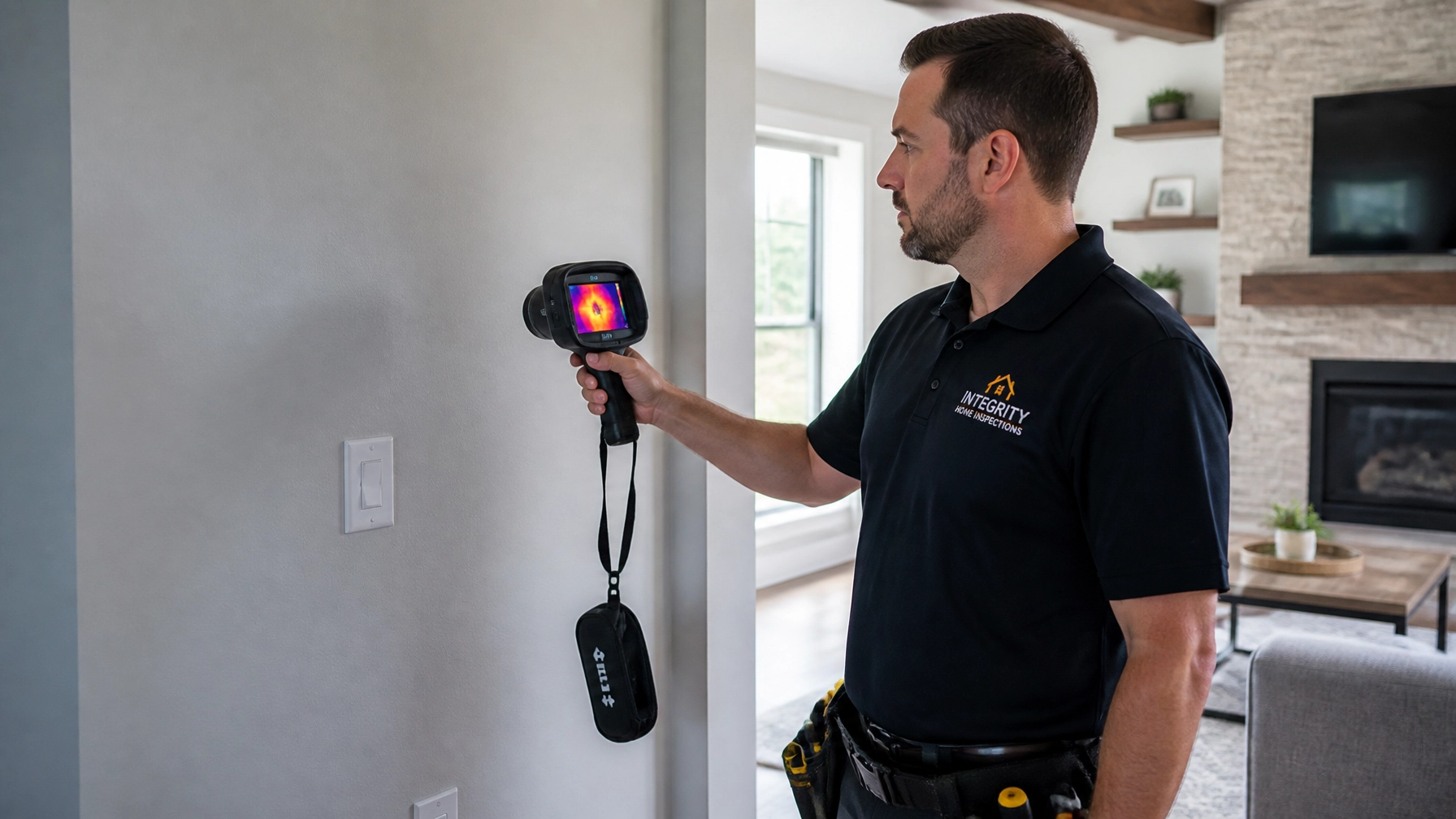
Every one of our inspections includes thermal imaging and moisture detection.
Thermal cameras detect temperature differences. A cold spot on a wall in the middle of summer often indicates moisture or missing insulation. It’s the closest thing we have to X-ray vision, and it’s included in our standard fee because we believe it’s essential for a thorough job.

In Alberta, you can generally expect to pay between $465 and $600+ for a standard single-family home. The price varies based on:
While it might be tempting to find the "cheapest" option, remember that you are hiring an expert to protect a multi-hundred-thousand-dollar investment. Saving $50 on an inspection could cost you $5,000 in missed repairs.

Q: How long does the inspection take?
A: Usually 2.5 to 4 hours, depending on the size and condition of the home.
Q: Do you inspect condos or townhomes?
A: Yes! We offer specialized condo and townhome inspections that focus on the unit itself and a visual check of common areas.
Q: What if the report finds a lot of "red flags"?
A: Don't panic. No house is perfect: not even new builds. Most issues are manageable. The report gives you the data you need to negotiate repairs or a price reduction with the seller.
Q: Do you offer commercial inspections?
A: Absolutely. We provide comprehensive commercial property inspections for small businesses and multi-family units across Edmonton.
A home inspection isn't a pass/fail test; it’s an education. At InspecUs, our goal is to ensure that when you get the keys to your new Edmonton home, there are zero surprises. With our construction background, thermal imaging tech, and commitment to same-day reporting, we provide the clarity you need to make the right choice.
Ready to book your inspection?
Whether you’re in Saint Albert, Sherwood Park, or downtown Edmonton, our team is ready to help.
Book Your InspecUs Inspection Today →
We are licensed by the Licensed Professional and certified through InterNACHI

InspecUs Home Inspection is certified in the best practices established by Internachi. Our commitment to safety includes maintaining a 6-foot distance and using personal protective equipment (PPE) during all inspections.

© 2024 InspecUs - All Rights Reserved. | Sitemap | Developed by Integrated Marketing Platform Inc.