 7132 178 St NW,
 Call us:


 Call us780-809-1056
- Mail usinfo@inspecus.ca
- Schedule An Inspection
Call us780-809-1056

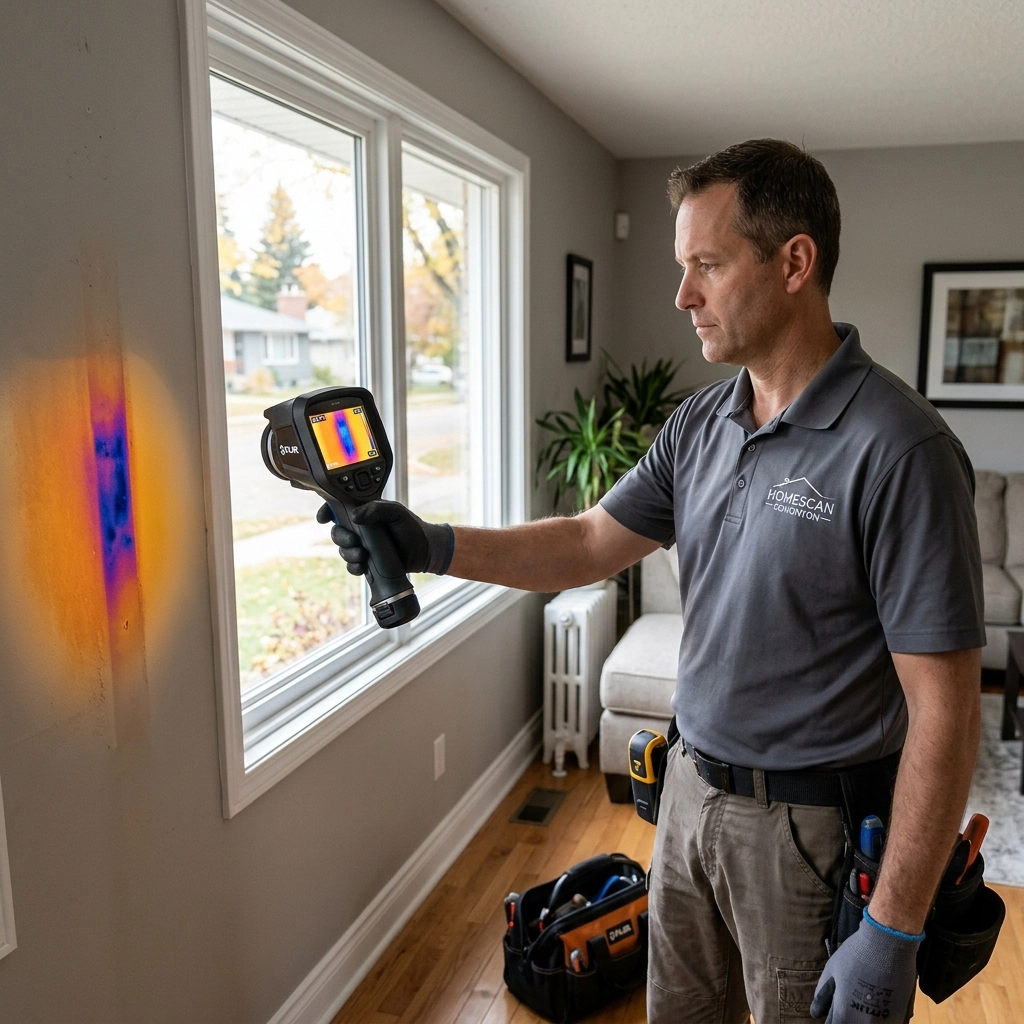
Are you currently house hunting in Edmonton? Or maybe you've finally found "the one" in Glenora or a brand-new build in Chappelle, and you’re ready to sign on the dotted line. Before you do, there is a question you need to ask yourself: Do you actually know what’s going on inside those walls?
To the naked eye, a freshly painted wall looks perfect. But at InspecUs, we’ve been in the game for over 10 years, and we know that looks can be incredibly deceiving. In Edmonton’s unique climate: where we swing from -30°C winters to +30°C summers: houses take a beating.
That’s where thermal imaging comes in. It’s essentially our "superpower" during a home inspection. It allows our team to see what’s invisible to you, identifying hidden issues that could cost you thousands of dollars down the road.
Let’s clear up a common myth right away: thermal imaging cameras do not see through walls. We aren’t Superman. Instead, these high-tech Infrared (IR) cameras detect tiny differences in surface temperature.
Everything emits infrared radiation (heat). When there is an anomaly: like a cold spot where there should be heat, or a hot spot where things should be cool: it tells us a story. At InspecUs, we use these thermal patterns to "read" the health of your potential home.
Whether it's a pre-purchase home inspection or a specialized thermal imaging and moisture detection session, this tech is our most reliable tool for finding the "invisible" deal-breakers.
In Edmonton, moisture is public enemy number one. Between the spring melt and our heavy summer thunderstorms, water always finds a way in. The problem? You usually don't see a leak until the drywall is already sagging and mold has moved in.
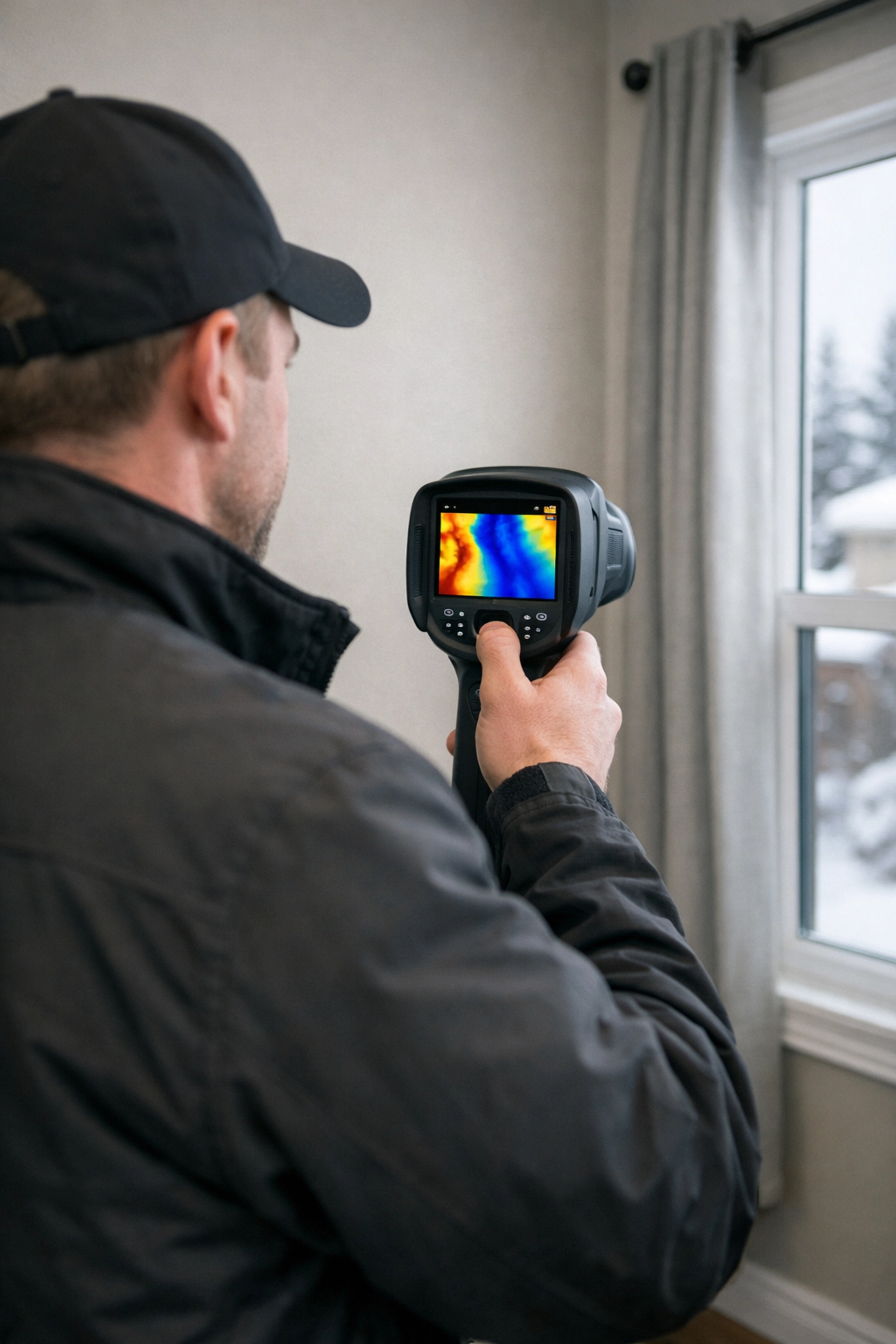
When we scan a room with our thermal cameras, moisture shows up as a distinct, dark, "cool" pattern. Because water evaporates, it cools the surface it’s on.
What we regularly find in Edmonton homes:
Identifying these early isn't just about saving money; it’s about your health. Wet walls lead to mold. If you're smelling something funky but can't see it, we often recommend our ozone treatment services after the leak is fixed to clear out those stubborn odors.
We don't have to tell you that Alberta winters are brutal. If your home has gaps in its insulation, you aren't just uncomfortable: you’re literally burning money to heat the outdoors.
During our inspections, we often find "insulation voids." This happens when insulation wasn't installed correctly in the first place, or when it has settled over time (especially common in older bungalows).
The Thermal Reveal:
In the winter, a missing pocket of insulation will show up as a bright blue/purple spot on a yellow/orange wall. It’s a glaring sign of heat loss. We’ve walked into "renovated" homes where the contractor skipped the insulation behind a new patch of drywall. Without thermal imaging, you’d never know until your first $500 heating bill arrived in January.
As Banti K Shaw from our marketing team likes to say, "A home can look like a million bucks, but if the insulation is missing, it'll feel like a cardboard box in February. We make sure you know exactly how energy-efficient your investment really is."
This is the safety aspect that keeps us up at night. Electrical fires are often caused by overheated circuits, loose connections, or DIY wiring jobs that went south.
Under normal use, your electrical panel and outlets should be at a stable temperature. However, if a circuit is overloaded or a breaker is failing, it will emit a significant amount of heat. Our thermal cameras pick this up instantly as a "hot spot."
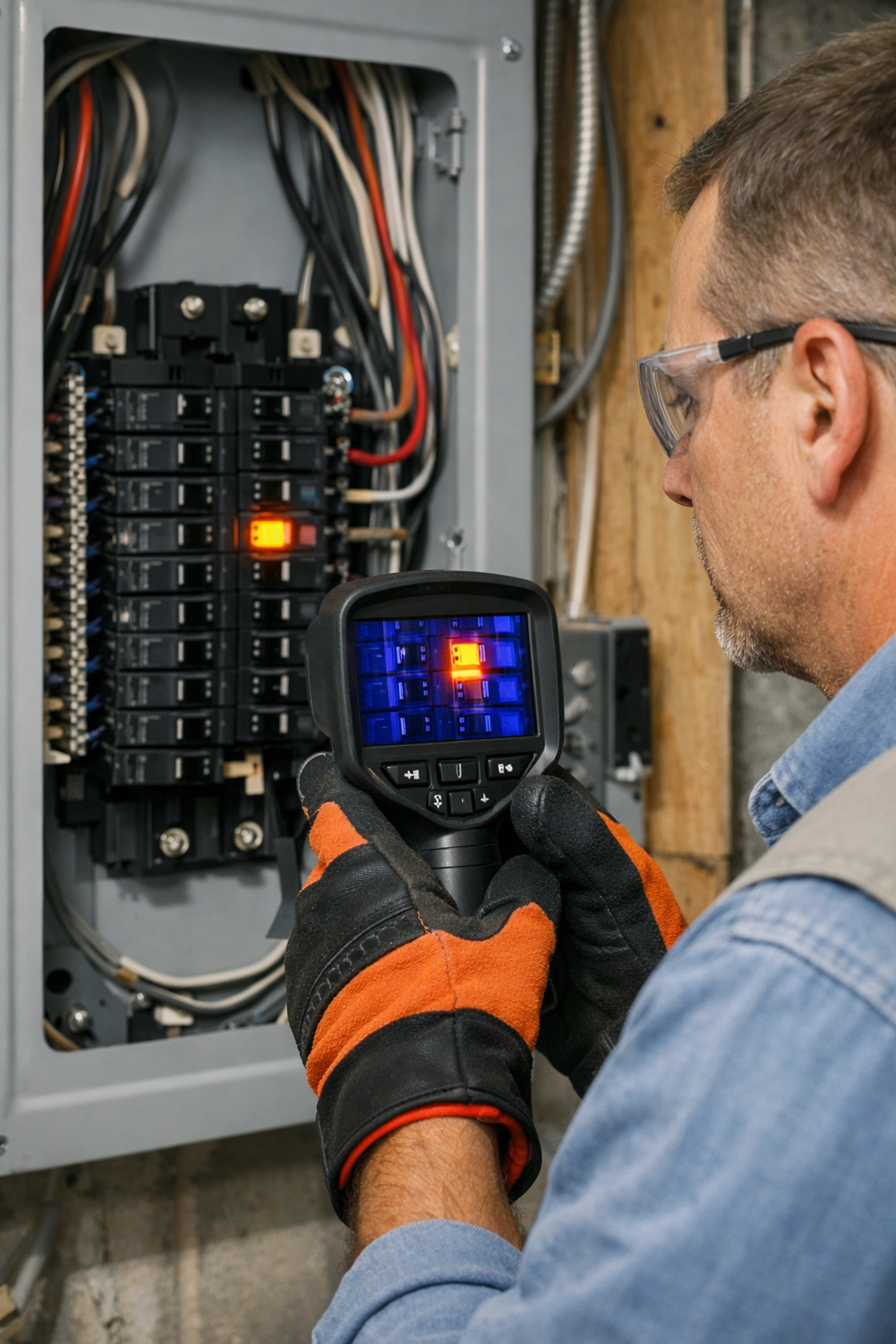
When we perform a commercial property inspection or a standard residential walkthrough, scanning the electrical panel is non-negotiable. If we see a glowing red breaker, we’ll tell you to call an electrician immediately. It’s a small find that can literally save a life.
Here’s the thing: anyone can buy a thermal camera at a hardware store. But interpreting the data? That’s where the 10+ years of experience come in.
A "cold spot" on a wall isn't always a leak. Sometimes it’s just a "thermal bridge" (a piece of wood framing that conducts cold). An amateur might see a blue spot and tell you the pipe is leaking, causing unnecessary panic.
At InspecUs, our inspectors are InterNACHI certified. This means we’ve undergone rigorous training to understand the physics of thermography. We don’t just show you a pretty picture; we explain why it matters and what your next steps should be.
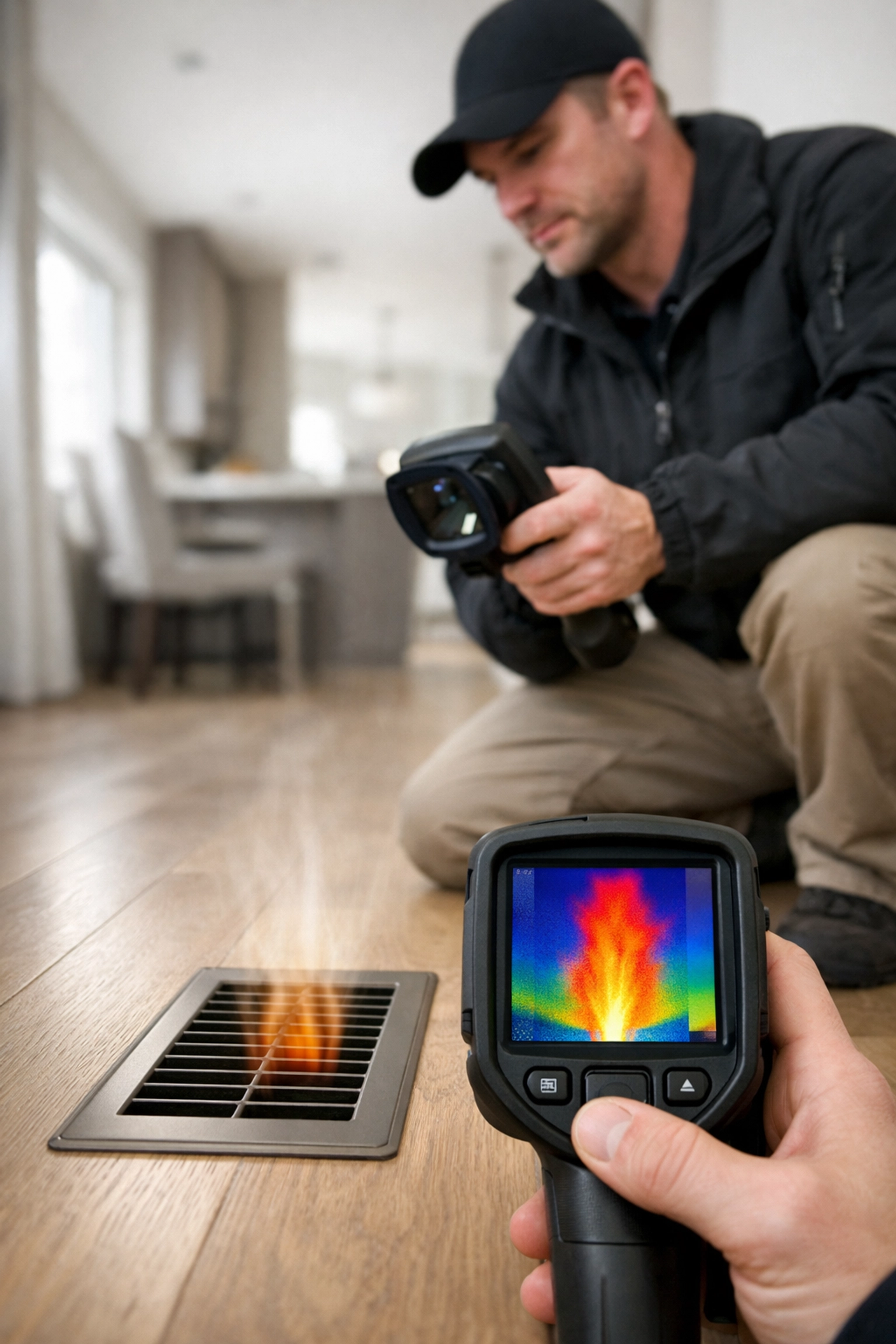
Have you ever moved into a house only to realize the back bedroom never gets warm? Or that the "luxury" in-floor heating in the master bath only works in one corner?
Thermal imaging allows us to:
For those looking at larger buildings or offices, this is a critical part of our small business inspection checklist. You don't want to sign a lease only to find out the rooftop HVAC unit is failing.
In Edmonton, we deal with "Ice Damming" more than almost any other major Canadian city. This happens when heat escapes into your attic, melts the snow on your roof, and the water refreezes at the gutters. This ice creates a dam, forcing water back under your shingles and into your walls.
Without thermal imaging, you might not notice an ice dam leak until it has caused structural rot. We scan the "top plates" of your walls (where the wall meets the ceiling) to catch the early signs of moisture intrusion caused by Edmonton's wild weather swings.
We believe in transparency. That’s why we always encourage our clients to join us for a walkthrough at the end of the inspection. We’ll show you the thermal images on the screen in real-time. It’s one thing to read about a "moisture anomaly" in a report; it’s another thing to see it with your own eyes.
If you’re a first-time buyer, don’t worry about the technical jargon. We break it down into simple terms: Is it a deal-breaker, a maintenance item, or a "good to know"?
Buying a home is likely the biggest investment you’ll ever make. Why would you rely only on what your eyes can see? Thermal imaging takes the guesswork out of the process, providing a level of security that a traditional "visual-only" inspection simply can't match.
At InspecUs, we combine a decade of local Edmonton experience with the best technology in the industry. Whether you're buying a condo in Oliver or a sprawling acreage just outside the city, we’ve got your back.
The Takeaway:
Ready to see your potential home in a whole new light? Send us a message or book your inspection today. Let’s make sure your dream home doesn't have any hidden nightmares.
We are licensed by the Licensed Professional and certified through InterNACHI

InspecUs Home Inspection is certified in the best practices established by Internachi. Our commitment to safety includes maintaining a 6-foot distance and using personal protective equipment (PPE) during all inspections.

© 2024 InspecUs - All Rights Reserved. | Sitemap | Developed by Integrated Marketing Platform Inc.